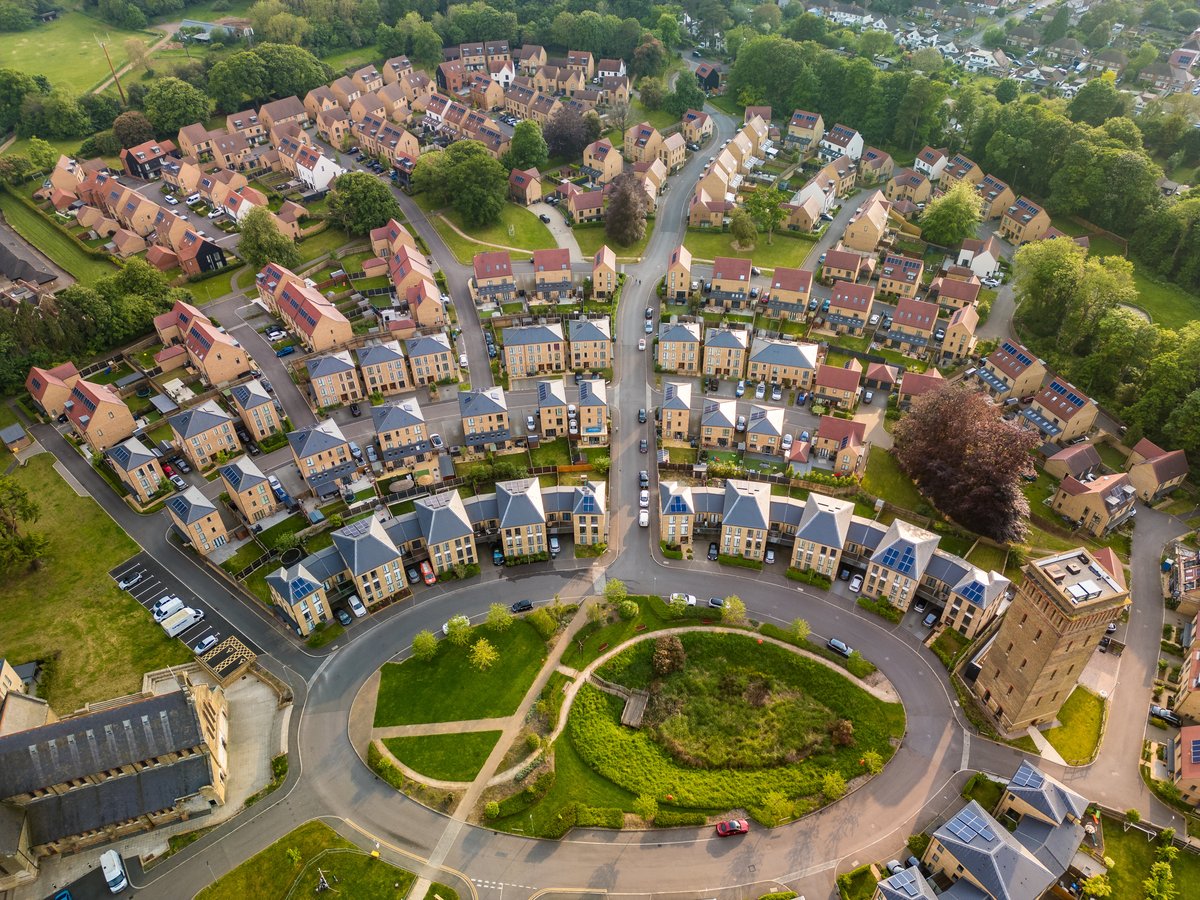
The challenge of decarbonising British homes will require capital investment which cannot be met by grants alone. Place-based approaches have the potential to offer better value for money, enabling economies of scale, unlocking access to more efficient technologies, and making it easier for households to access clean heat. Yet, projects remain stuck at the feasibility stage and appear to be held back by funding and investability challenges.
This project will consist of a discovery process to map out the economics of infrastructure projects in the UK and understand the costs and drivers of a clean heat project. It will aim to understand the barriers facing different approaches to coordinating clean heat, the resources currently available to support projects beyond feasibility, and offer some realistic models for developing clean heat at scale.
With this project, we’d like to understand:
- What are the institutions, bodies, private companies and other entities involved in funding infrastructure projects, and where would clean heat slot in?
- What realistic economic models could support decarbonisation at scale; where do they exist already and what are the challenges preventing their expansion?
- What criteria would area-based clean heat projects need to meet to make them an attractive prospect for investment?
Coordinated approaches to clean heat are gaining momentum across the UK, but funding challenges are all too often an obstacle. By mapping out the economic models of coordinated approaches to clean heat and identifying the key blockers and drivers, we want to gain an understanding of the factors holding back clean heat at scale and identify which models have scalable potential.
A rising number of local authorities have developed plans for heat decarbonisation, yet their delivery remains complex and expensive. With the success or failure of a clean heat project bearing important costs and risks, few move beyond feasibility, currently leaving the majority of householders to navigate the clean heat transition individually.
Group purchases of heat pumps, shared infrastructure projects (like shared ground loops and heat networks) can prove easier and cheaper for customers and theoretically represent a long-term source of income for companies. Yet they often fail to get off the ground or attract the necessary funding, financing and investment. We think this is likely to reflect a mixture of lack of promise of demand, subsidy schemes that can support these models, and due to a lack of tried and tested financing models.
This project aims to clarify our understanding of the economics of clean heat neighbourhoods and understand whether Nesta can play a part in developing solutions. Whether that be in convening stakeholders, supporting the development of financing models or advocating for change at regulatory or other levels.
As part of this project, we are currently engaging with stakeholders in the decarbonisation space. We want to hear from practitioners, policymakers and the finance community to understand:
- What economic models exist or might exist to develop clean heat neighbourhoods at scale?
- What is holding these models back?
- What support bodies such as local authorities and private companies might need in order to scale up clean heat neighbourhood approaches?
If you are working in this space and would like to feed into this discussion, please email [email protected]
 www.nesta.org.uk/project/unlocking-the-economics-of-clean-heat-neighbourhoods/