Cutting the sludge: 10 things governments across Great Britain should do to make getting a heat pump easier
 www.nesta.org.uk/blog/10-things-to-make-getting-a-heat-pump-easier/
www.nesta.org.uk/blog/10-things-to-make-getting-a-heat-pump-easier/
www.nesta.org.uk/blog/10-things-to-make-getting-a-heat-pump-easier/
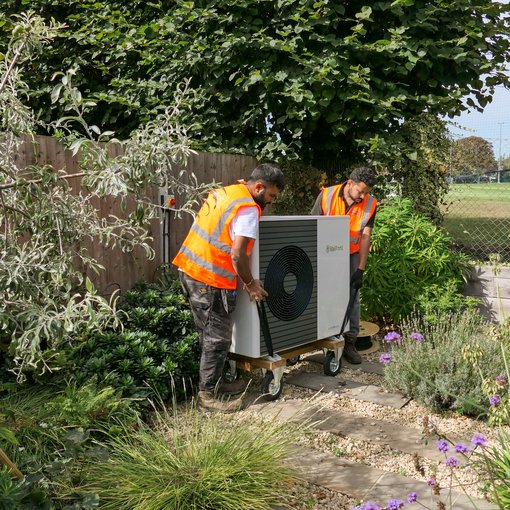
One in three homeowners in England and Wales say they might consider a heat pump if they needed to change their heating system in the next year. Yet, when their boiler finally breaks down, most default to the quickest and easiest option: another gas boiler.
This is understandable, as heat pump adopters face a series of frictions that add significant time, cost and psychological burden, what behavioural scientists call sludge. All of these add to the barriers consumers face when getting a heat pump.
Many of these barriers could be removed entirely or much improved, making getting a heat pump quicker, cheaper and much less hassle. Ultimately this can also pave the way for people to get a heat pump in a matter of days if their gas boiler breaks down.
In the recently published Warm Homes Plan, the UK Government set an ambition to enable standard heat pump installations within three days. The ambition is right, but the critical question is delivery. Drawing on our research into barriers to heat pump uptake, we set out 10 evidence-led improvements to the customer journey below.
In the Warm Home Plan the UK government sets out an ambition for consumers to be able to install a heat pump in almost all houses without needing to submit a planning application. Here are some ways to achieve this.
1) Expand permitted development rights across Great Britain: The UK, Scottish and Welsh governments should further expand the rules, including for listed buildings, so fewer homes need to apply for planning permission. We welcome the UK government’s recent announcement that they will consult this year on further expanding permitted development for heat pumps, and have made specific suggestions on this in our latest report.
2) Reform sound standards to exempt more homes: MCS, the Department for Energy Security and Net Zero (DESNZ) and the Ministry for Housing, Communities and Local Government (MHCLG) should amend the MCS020 (a) sound calculation to be more accurate, exempting more homes from expensive professional sound assessments. Nesta and MCS Foundation have commissioned research to build the case for change, which will report in the summer.
3) Empower councils to pre-approve areas: Local planning authorities across all three nations should use their powers, such as local development orders (LDOs) and local listed building consent orders (LLBCOs), to grant blanket planning permission for heat pumps across specific neighbourhoods or street types.
4) Reduce costs of heat pump planning applications: England and Wales currently operate a two-tier planning fees system where larger works are charged a higher fee (£528 and £585 respectively) compared to smaller scale works (£262 and £283 respectively). Heat pump planning applications should always be charged the lower fee. Furthermore, all three nations, including Scotland (where the flat fee is £357), should lower or cap these fees to recognise the public benefit of clean heating. Inspiration can be taken from the fact that planning fees are currently waived for works solely to provide means of access for disabled persons in both public and domestic settings.
Connecting a clean heating system to the electricity grid should be seamless. In the Warm Homes Plan the UK government set an ambition that 80% of DNO applications will be automatically approved or approved within 24 hours where a manual assessment is needed. Below we list some measures that will contribute to achieving this target.
5) Introduce a time to approve incentive for DNOs: From 2028, Ofgem should introduce strict penalties or incentives for DNOs to ensure applications are processed within a set timeframe.
6) Incentivise preemptive fuse upgrades: Ofgem should incentivise DNOs to identify and upgrade main fuses before a heat pump is requested, rather than waiting for the homeowner to apply.
7) Smarter data sharing: Ofgem and the Scottish Government should enable DNOs to access Boiler Upgrade Scheme (BUS) and the Home Energy Scotland Grant application data to support DNOs with better planning upgrades.
Heat pump grants need to be as easy as possible to apply for and receive.
8) Remove the need to have a valid EPC to access the BUS grant: We welcome DESNZ’s stated intention to do this and encourage them to ensure that any alternative approaches to evidencing a gas boiler is being replaced need to be low friction and low cost. Similarly, the Scottish Government should ensure Home Energy Scotland grant requirements do not create unnecessary administrative friction for heat pump adopters. For example by making it optional to obtain a qualifying report from Home Energy Scotland in order to access the heat pump grant.
Providing timely advice can reduce psychological barriers and prevent counterproductive choices that make future installation harder, such as removing a hot water cylinder or installing undersized radiators during a renovation.
9) Add heat pump advice to homebuyer surveys: In Scotland, home reports are mandatory; these should be updated to include a specific heat pump readiness assessment. In England and Wales, DESNZ should work with the Royal Institution of Chartered Surveyors (RICS) to regulate or mandate that routine home surveys include heat pump adoption advice.
10) Unlock Gas Safe data to target households before boiler failure: UK government should secure the release of boiler age data from the Gas Safe Register to local authorities, enabling them to proactively send tailored readiness advice to homeowners with aging systems before they face a distress purchase.
Removing administrative sludge is vital to meet the UK government’s ambition for over 450,000 annual heat pump installations by 2030. Only by making the green choice the easy and affordable choice can we hope to meet the ambitious targets necessary to meet net zero.
For more detail on these recommendations, see our newly published reports - Identifying barriers to air source heat pump adoption - and Should we be making homes ‘heat pump-ready’?
With contributions from Oli Berry, Tom Leach, Disha Tackle Alasdair Hiscock, David Bleines, Martina Kavan, Linda Yachoui, Marcus Shepheard and Elysia Lucas.