ABOUT RETHINKING PARKS
Rethinking Parks was a joint Big Lottery Fund, Heritage Lottery Fund and Nesta programme to test new ways to raise income or reduce costs for public parks in the face of significant budget cuts. This report reviews the impact of the 11 ideas we tested and the lessons learned from this experimental innovation programme, and explores the potential of new approaches for the UK's parks. More details of the projects can be found online at http://www.nesta.org.uk/project/rethinking-parks
Nesta...
Nesta is the UK's innovation foundation. An independent charity, we help people and organisations bring great ideas to life. We do this by providing investment and grants and mobilising research, networks and skills. Rethinking Parks was designed and delivered by Nesta's Innovation Lab.
Nesta is a registered charity in England and Wales with company number 7706036 and charity number 1144091. Registered as a charity in Scotland number SCO42833. Registered office: 1 Plough Place, London, EC4A 1DE.
FOREWORD

Dawn Austwick
Chief Executive
Big Lottery Fund
Through this programme we wanted to encourage parks, communities and local authorities to think creatively about how parks can thrive in the future. We all know that when a park is well cared for and the local community feels a sense of ownership it can be a vital community asset, and for some people the only accessible and safe outdoor space they have.
We've seen some interesting management and finance models being tested, including how parks can be a pathway to training and employment and how the skills and capacity of volunteers can be developed. It's these kinds of models that we're really interested in; models that support people to take the lead in caring for vital local amenities like parks.
One of the strengths of Rethinking Parks is the three-way collaboration between Big Lottery Fund, HLF and Nesta. Each of us brings a mutual interest in parks, but our different networks and reach will help to ensure the learning is shared as widely as possible for the benefit of communities across the country.

Carole Souter
Chief Executive
Heritage
Lottery Fund
For the last 20 years the National Lottery has been investing in the UK's public parks, the very spaces many lottery players regularly use and enjoy. But our State of UK Public Parks report 2014 warned that in the next few years these spaces may be at risk as local authorities struggle to find funds for their maintenance.
There is a mass of evidence to demonstrate that good parks are an essential ingredient of a healthy urban life, but if not properly funded, parks fail to fulfil their potential and can quickly turn from an asset to a liability.
Rethinking Parks helped provide funds, resources and expertise to explore and test ideas thoroughly. We did not expect a magic solution, but the work has provided valuable lessons as to how parks might be funded and managed differently. We hope you find the knowledge and experiences shared here helpful as, together, those who use, manage and own public parks look to find ways to ensure successful parks remain at the heart of our communities for many years to come.

Helen Goulden
Executive Director
Nesta
Whoever you are - whether you're young or old, rich or poor, sick or well - at some point in your life you will have played, sat, exercised, chatted or read in a park. That experience will have been free and almost certainly made you feel better; calmer, happier - particularly if your daily life is lived amongst concrete and tarmac. The current need to determine the economic business case for public goods sees us reaching for all kinds of justifications and arguments for ensuring the persistence of parks. For example, their (very real) value as ecosystem services or quantifying the financial value of the trees by showing how much CO2 they absorb. Let the arguments be won where they can be, but Rethinking Parks supported parks teams who were looking for alternative forms of revenue to sustain parks, new ways of maintaining parks that were cheaper and more environmentally friendly; and that engaged new partners in a shared endeavour to keep our parks free, open, safe and well-kept places for people to enjoy. Rethinking Parks has not produced a silver bullet; it's clear that a range of measures need to be adopted by parks owners if they are to survive. But with 45 per cent of parks owners considering selling or transferring them because they can not continue to fund them, it's vital that parks managers are supported to test what will work best to sustain these free, green spaces. The Rethinking Parks programme represents one way of providing that support.
ACKNOWLEDGEMENTS
This report was written by Lydia Ragoonanan, Rethinking Parks Programme Manager. Dan Jones, Helen Goulden, Drew Bennellick and Ella Mizon were all instrumental in shaping this report and the recommendations. Icarus Research created the 'Deep Dive' insights, based on their interviews with Rethinking Parks teams. We would also like to thank Juan Escallon for his creative input and design work, the Nesta communications team for helping share this work more widely, and Annette Holman for her tireless support and contribution to the programme. Thanks also go to the Rethinking Parks experts, Lara Soetekouw and Jennifer Marzullo, for their invaluable contributions and support to the teams, as well as their insights along the way.
Finally, we are indebted to the Rethinking Parks teams themselves and the honest insights they shared with us as their projects unfolded. Thanks especially go to Shirley Blake, Peter Neal, Mark Walton, Michael Rowland, Mark Holloway, Theresa McManus, Simon Goff, Phil Dewhurst, Tricia Brindle, Lisa Locke, Scott Sullivan, Miles Duckworth, Ann Bartlett, Victoria Bradford-Keegan, David Cooper, Helen Kramer, Paul Scragg, John Hutchenson, Andy Jackson, Simon Bartlees, Ian Goodman, Julie Procter, Danielle Johnson, Sam Perry, Fraser Bridgeford, Laura Hayton and Joe McKenna. It has been an honour to play a small part in their journeys, and we wish them all the very best for the future.
All errors and omissions remain our own.
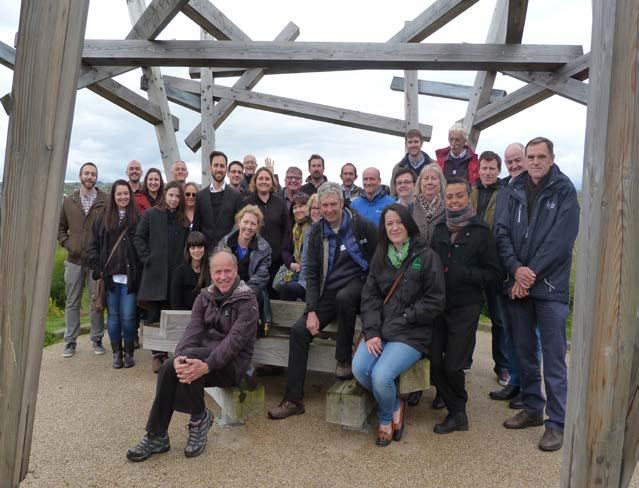
The Rethinking Parks participants, together with staff from Nesta and the Heritage Lottery Fund, at the third cohort workshop held at Heeley People's Park, Sheffield.
EXECUTIVE SUMMARY
This report brings together the insights and lessons from Rethinking Parks, a joint Heritage Lottery Fund, Big Lottery Fund and Nesta programme to test new business models for public parks. Over 2014 and 2015 we supported 11 teams to test new ideas for funding our public parks over 18 months. We can now share the ideas that show most promise, and the critical elements for future innovation to sustain public parks.
The UK's public parks are at risk. As local authority funding comes under pressure, parks face cuts of 60 per cent and more. Efficiency savings and increasing concession income won't be enough to make budgets balance. With no statutory requirement on local authorities to maintain parks, many are considering selling off or closing them. For parks that remain in public hands, the loss of funding and skilled staff raises the threat of serious deterioration.
Public parks need new solutions and new business models if they are to remain free, open and valued community assets.
This was the driver for the Big Lottery Fund, Heritage Lottery Fund and Nesta to develop Rethinking Parks. We wanted to support organisations to experiment and asses the impact of new ways to raise funds and reduce costs for public parks.
One-hundred and ninety-three organisations applied to our open call for applications. As well as local authority parks teams and Friends Groups, we had applications from arts organisations, community interest companies and architectural firms. The response demonstrated that there is an urgent need for alternative models, and that the interest and appetite to protect our parks is widely shared.
We selected 11 teams from across the UK. Between July 2014 and December 2015, we provided the teams with funding and expert support. We took them through a structured processes to gain insights, develop and test their ideas, and helped them to get access to wider networks and learn from each other.
We drew on methods from incubator programmes which support early-stage business ventures. Combining grant funding with intensive support and skills development was a different approach for most of the sector; and so were our expectations. Not all ideas were expected to succeed; but all were rigorously tested to understand what ideas had potential, and identify useful insights for the wider sector.
Of the varied ideas tested, mobilising the skills and energy of business, supporting people into employment whilst improving green space, using less intensive planting techniques and tapping into the public willingness to give have all shown impact and have the potential to achieve more. However, no one idea tested through Rethinking Parks is forecast to completely replace local authority funding. This knowledge will dishearten some people. Others will recognise that parks, like other sectors, should never rely on just one funding source.
From this perspective, Rethinking Parks has been a success. We have supported real-world testing of ideas, and now we know that they can help parks diversify their revenue. We know more too about some key limitations; for example the assumption that Friends groups will play a lead role in maintaining parks is not always correct.
We also understand more about what's needed to unlock greater innovation in the sector. Gathering accurate financial information and insights from park users, working with partners who bring new skills and resources, and testing ideas through quick and cheap real-life prototyping are all vital to finding the right mix of management practices and revenue opportunities to sustain a park. It's also clear that this kind of change requires a mandate - the permission to take risks, and access to the right resources and skills needed to bring an idea to life.
New ideas can make a real difference to the future of the UK's parks - and now we need to see the most promising models and ways of thinking applied across the sector.
Rethinking Parks Highlights
PROJECTS WITH PARTICULAR PROMISE INCLUDE
Projected Return on Investment for Bristol ParkWork and Darlington Rethinking Parks:
- Bristol ParkWork: £1 Invested, £2.4 Back
- Darlington Rethinking Parks: £1 Invested, £1.8 Back
Projected Savings for Burnley Go to the Park and Projected Donations for Bournemouth Parks Foundation (2016-2020):
A bar chart shows 'Projected Savings' for Burnley Go to the Park increasing steadily from approximately £59,743 in 2016 to £117,319 in 2020.
A second bar chart shows 'Projected Donations' for Bournemouth Parks Foundation increasing steadily from approximately £20,696 in 2016 to £43,232 in 2020.
PARTICIPANT'S EXPERIENCE OF RETHINKING PARKS
We have been able to fully test our model and take advantage of the ongoing learning from our own project, and from other projects too. Being able to compare findings from around the country has been very beneficial.
Rethinking Parks Participant
Moving from a traditional 'closed' understanding of parks and greenspaces towards a more business orientated approach has been most useful. Understanding finances, forecasting, audiences/markets and products/services represent new skills that can be applied across a range of contexts.
Rethinking Parks Participant
Summary impact of Rethinking Parks projects
The Rethinking Parks teams began with an idea, which we supported them to develop, launch and take through an initial test. In any portfolio of early-stage ventures, some will go further than others. New ideas and new businesses are likely to take longer than 18 months to generate sustained revenue.
Despite this, we can already see some real successes. Burnley Go to the Park has made savings of nearly £70,000 since its launch and is forecast to save the council 10 percent of their parks budget by 2020. The National Trust's 'Endowing Parks for the 21st century' idea, while still in development, could eventually realise £10 million of income for Sheffield's parks, meeting the total cost of parks operation. Bournemouth Parks Foundation has proved that people are willing to donate to public parks, including via text, and is projecting donations of £46,000 per annum by 2020. The Heeley People's Park subscription scheme has shown people will donate on an ongoing basis to their local park; demonstrating that it's not just flagship parks that can tap into people's willingness to give. The Bristol ParkWork project saw 40 per cent of participants transitioning into employment or training, while delivering £27,000 worth of improvements to parks across the city.
Some ideas did not work as the teams had hoped. For example, Bloomsbury were not able to progress their idea of a Parks Improvement District (using existing Business Improvement District legislation), sourcing contributions for parks from local businesses. However, the projected impact (£1.2 million revenue per annum) was significant and worthy of further experimentation in another geographical area.
We have produced descriptions of seven projects that have most opportunity for adaptation in Rethinking Parks. These provide more information on the different models, including financial projections and a step-by-step implementation guide, and are designed to help others decide which approaches could be adapted to help their parks. Model descriptors are available for:
- Bloomsbury Squared
- Bournemouth Park Foundation
- Burnley Go to the Park
- Darlington Rethinking Parks
- Heeley Subscription Society
- Park Hack
- ParkWork
DEEP DIVE
WORKING WITH NATURE, NOT AGAINST IT: BURNLEY'S GO TO THE PARK PHILOSOPHY
The UK's Victorian parks hark back to an era when there was a desire to glorify God's nature, to show how the human race could take control of plants and nature and demonstrate the finest horticultural standards. Across the generations, those who use the parks have become familiar with the high standards of maintenance, the refinement of the planting and the formal landscaping that were all instigated in Victorian times. For many, this is the archetypal park, this is what they expect to experience when they visit a heritage park.
Under the ownership of local authorities, and dependent on their diminishing budget, large workforces and resource-intensive management regimes in our parks are no longer sustainable. This was a key driver for Burnley Borough Council in exploring how it could maintain the highest level of quality for its parks against a backdrop of reducing and insecure budgets, and how it started a process of questioning its traditional approach to horticultural maintenance. But this was not to be only about the financials.
Burnley chose to think differently and to explore what permaculture could offer its parks - could mimicking the patterns and relationships in nature help reduce costs and maintain the quality of the parks as well as producing environmental benefits? In the words of Simon Goff, Burnley's Head of Green Spaces and Amenities, the authority was transitioning from a culture of “controlling nature” to one of “working with nature”.
There has been little in the way of resistance to these changes. The Council has worked hard to ensure a smooth transition. It has focused on making the biggest changes in the parks where the Friends Group have shown most enthusiasm for the potential of permaculture and where they would be advocates for this new approach with other park users.
The workforce has received training to better understand permaculture principles and has been able to learn from the experience of an established local organisation called Off Shoots. Energy has been devoted to ensuring that the meadows are gently managed and don't have an air of neglect. This has required a commitment to accepting change to acknowledging that the parks can't be maintained in the same way as they always have, yet recognising that they have an intrinsic and embedded value to local people. Such a shift of thinking takes some courage, and seeing it through takes energy and resources, and the ability to take others along with you. To have achieved this within a local authority setting is no mean feat. Significantly this has meant that the mind-set is now one that is open to change:
“we can apply this approach to other areas; we know now we don't have to keep doing things in the same way as we've always done them,” says Simon Goff. It is in this kind of environment that innovation and creative ways to solve problems can thrive.
The financial driver is not the only one - this is also the wise thing to do
Maureen Frankland,
Chair of Towneley Park Friends Group,
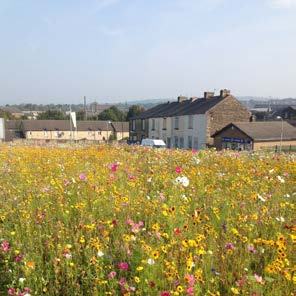
This approach has resulted in two key visual changes for those visiting the parks. Firstly, some areas have been turned over to meadows. Secondly, a proportion of the traditional beds have been planted with perennials rather than annuals, aiming to provide year round cover and colour.
Why Rethink Parks? The context
The UK has approximately 27,000 public parks. They are a core part of our heritage - a great British innovation. The first public parks of the late 18th and 19th centuries were designed to "raise the intellectual level of the lowest classes" and were laid out according to the tastes of the time. Many of these parks still exist, providing a place for rest and recreation in the 21st century and a connection to the sentiments and aesthetics of the past.
Although public parks were initially funded by a wide range of investment mechanisms, most are now local authority owned or managed, and in living memory, local authorities have been the core funding source. Local authorities and parks managers have not needed to develop commercial models or business skills.
Since 1996, investment of more than £800 million from the Heritage Lottery Fund and Big Lottery Fund, matched by huge community and voluntary efforts, have revitalised over 700 of the UK's historic parks. Public satisfaction with parks is high and Friends group memberships have increased by a third over recent years.
The future for public parks is, however, uncertain. Public parks are not a statutory service, and there is no legal obligation on local authorities to keep or maintain them to a particular standard. As councils face cuts, our public parks are under severe threat. Since local authorities can now keep 100 per cent of receipts from asset sales, there is an incentive to sell off parks for development.
The Heritage Lottery Fund's 2014 State of UK Public Parks report found 45 per cent of local authorities considering selling off or transferring parks into new ownership. Eighty-one per cent of councils have lost management roles and 77 per cent have lost frontline parks staff since 2010. Funding cuts of 60 per cent and more are projected.
There is also no organisation with a remit to support sector-wide research, capacity building and sharing of best practice. CABE Space, a quasi-Government organisation, was dismantled in 2011, and Greenspace England, a membership organising representing parks, went into receivership in 2014.
This was the context for us to create Rethinking Parks - using innovation as a deliberate strategy to stimulate new ways of sustaining public parks, testing a small number of new approaches to see what worked.
Programme approach
If I find 10,000 ways something won't work, I haven't failed. I am not discouraged, because every wrong attempt discarded is often a step forward.
Thomas Edison
Nesta supports innovation on many different topics, across the private as well as the public sector. We know that innovation is a process, in which many ideas are generated, some are tested, refined and improved on. This often involves building on existing ideas, adapting them to new opportunities or combining them in new ways, as well as coming up with completely new ideas.
In relation to Rethinking Parks, we also knew that a strategic approach to innovation - and acceptance that the process takes time, and isn't always guaranteed to deliver the desired results - was not widespread practice in the UK parks sector.
We designed Rethinking Parks to support participating teams through a structured process of innovation. We focused on the development and testing of new ideas - the early stages of innovation (see diagram) - recognising the need of the sector to surface new possible solutions.
As a first step to support parks innovation, we explored the most creative ideas to manage and run parks from across the world. The first Rethinking Parks report and Parks Living Map provided inspiration for applicants.
Rethinking Parks process
Nesta Seven Stages for Innovation
A circular flow diagram illustrates seven stages for innovation:
- Opportunities & Challenges (starting point, linked to "2013 RETHINKING PARKS REPORT")
- Generating Ideas (feeds into "Developing & Testing")
- Developing & Testing (part of "RETHINKING PARKS PROGRAMME", feeds into "Making the Case")
- Making the Case (feeds into "Delivering & Implementing")
- Delivering & Implementing
- Growing & Scaling
- Changing Systems (final stage, looping back towards "Opportunities & Challenges")
The "RETHINKING PARKS PROGRAMME" encompasses stages 3, 4, and 5.
We issued an open call for ideas, with a simple application process in order to encourage the widest range of entries. As well as sharing existing innovations, we ran webinars and open workshops across the UK, providing techniques and tools to stimulate creative thinking and generate new ideas.
We received over 200 applications from 193 organisations, including local authority parks teams, Friends groups, arts organisations, community interest companies and architectural firms. The breadth of applicants and ideas reflected both the urgency of finding new models to sustain public parks, and how widely the appetite to protect and improve parks is shared. We shortlisted 28 organisations to submit a more detailed application, present their idea at a further workshop and identify the relationships they had in place to deliver.
From this shortlisted group, we selected 11 teams and ideas which we thought showed the most promise for parks. Between July 2014 and December 2015, we took these teams through a structured innovation programme, combining funding with a variety of different kinds of support to develop and test their ideas. This included expert advice on market research, gaining insights from parks users, using small-scale prototypes for real-life testing, and business and financial planning.
We also provided the teams with tools and guidance on the innovation process - from understanding their current situation, generating new ideas, developing and testing these, assessing impact and identifying lessons and ways to improve. We helped teams access additional specialist support for their particular idea, introduced them to wider networks and ran regular workshops for them to learn from each other. While not that common in the public sector, this kind of structured programme is similar to incubator programmes which support innovative early-stage business ventures.
Teams found the specialist financial, user insights and marketing support extremely useful. They also valued the external challenge, the requirement to complete regular learning logs and focus on impact - these have helped teams shift their overall thinking and approach to innovation. The opportunity to meet with other teams each quarter was valued highly as a space to share and test concerns and insights, and exchange ideas.
When you are very close to the day-to-day development of the project it is useful for someone with more distance (but relevant skills and experience) to ask searching questions and to provide new insights.
Rethinking Parks participant
Rethinking Parks Process Flowchart
This flowchart illustrates the stages of the Rethinking Parks programme:
Sector Stimulus:
* PARKS CHALLENGE WORKSHOP (JULY 2012)
* Open Invite workshops
* RETHINKING PARKS REPORT (2013)
* Parks Living Map
* Launch Fund (November 2013)
These activities "Stimulate the interest in the challenge for parks, and the opportunity of the programme" and "Expose people to innovation skills and examples". This leads to AWARENESS RAISING.
Expressions of Interests:
* 209 Expressions of Interest Received
* Idea (represented by a lightbulb icon)
* Pitch (represented by a presentation icon)
This leads to APPLICATION.
Final Selection:
* 28 Finalists
* Finalist Selection Based on Innovation, Capability, Sustainability, Impact
* Finalists Workshop: Pitch Outline Business Model
* Assess Applications
This leads to PROGRAMME BEGINS JULY 2014.
Rethinking Parks Cohort Programme Flowchart
This diagram illustrates the "Participant Journey" and "Programme Support" for the 11 Funded Projects.
Participant Journey (blue circles):
* User Insights
* Theory of Change & Impact Measurement plans
* Prototyping
* Measure Impact
* Adjust Model Based on Impact
* Financial Forecasting
* Future Business Model Planning
All participant journey stages are connected in sequence.
Programme Support (purple circles):
These support elements branch off or interact with the participant journey, particularly at the "PROJECTS 'SOFT' LAUNCH" point, which occurs after "Prototyping" and before "Measure Impact".
- Support Plans to Measure Impact (connected to "Theory of Change...")
- Costumer Research Marketing Expert (connected to "Prototyping")
- Governance Legal Structure Advice (connected to "PROJECTS 'SOFT' LAUNCH")
- Seven Cohort Reflection Events (connected to "PROJECTS 'SOFT' LAUNCH")
- Active Support (connected to "Adjust Model Based on Impact")
- Expert Financial Advice (connected to "Financial Forecasting")
- Quarterly Parks Sector Newsletter (connected to "Future Business Model Planning")
The overall message is "FUNDS + SUPPORT + NETWORK + REFLECTION" under the "Rethinking Parks Cohort Programme".
Seven habits for parks innovators
Through the Rethinking Parks programme, participants have developed key new ways of thinking and working. Applying these habits will be critical for parks teams seeking to adapt Rethinking Parks models to their own contexts, or to develop their own solutions.

1. DIVERSIFY INCOME STREAMS
No business should count on one source of income alone
Andy Jackson,
Manager, Heeley Development Trust
No one model is likely to completely replace the need for local authority grant funding. However, we have found a variety of new ways for parks to raise income to help meet the funding gap and be more resilient in case of future changes. Business contributions, public donations, volunteering and changing planting regimes can all generate revenue or save costs. Burnley's Go To The Park project has both shown the value of combining different approaches and income streams, and even the ambitious Endowing Parks for the 21st century model will require new forms of income together with a large endowment. Rather than searching in vain for a silver bullet, parks teams should identify all the opportunities they have to raise income or reduce cost across all aspects of their operations.
2. UNDERSTAND WHERE YOUR MONEY IS GOING
A lot depends on the state of the data at the start of the process - a clear understanding of the finances, asset base and workforce relating to parks is vital.
Joanna Caldwell,
National Trust, Endowing Parks for the 21st century
The starting point for managing the costs of parks maintenance is to understand it. Better business planning, financial management, forecasting and routine monitoring of return on investment (financial and social) need to become the norm for the sector. The Rethinking Parks teams spent significant time unpicking where money was spent and on what, including staff, overheads and other sometimes hidden costs. Expert financial advice was extremely useful in understanding which activities represented value for money and where there were opportunities for savings. For example, the Bloomsbury Squared team mapped the scope and demand for improvements across the nine squares included in the project. This exercise identified where further investment was most likely to yield a good return, and be attractive to users and business being asked to support a levy for parks.

3. INVOLVE PEOPLE
You have to get to know your local context...and build relationships with people who use the park.
Danielle Johnson,
Community Manager, Groundwork London, Park Hack
The best idea will only succeed if works for the people its aimed at. It's essential to understand what people are looking for from their parks, both in terms of what you need to protect or enhance, and to identify unmet needs and opportunities for new solutions. Take time upfront to observe, ask and engage parks users and other target audiences for their perspectives, insights and ideas when developing a new approach. Make sure you get plenty of feedback and involve users once you begin implementation. Rethinking Parks teams surveyed and interviewed parks users, ran public events and built in plenty of opportunities for live feedback. For example, early research by Heeley Development Trust identified that people would be more willing to contribute for improvements to parks, rather than routine maintenance. Park Hack placed white cubes in parks as a prompt for the community to offer their ideas on how the spaces could be better used, whilst Bournemouth Park Foundation observed visitors interacting with their installations to understand where and how improvements might be made.
4. WORK WITH OTHERS
With public sector resources shrinking, partnership working is even more critical to make positive change happen.
Scott Sullivan,
Thames Chase Trust, Eastbrookend Rekindled
Rethinking Parks has shown that a huge variety of people and organisations are keen to shape and contribute to parks. The teams drew on the ideas, skills, resources and networks of businesses, community groups, public services and others to help them deliver their ideas. These included existing partnerships as well as new ones developed for the programme. For example, Bournemouth Borough Council worked with their bereavement team to develop an appropriate legacy request for residents. ParkWork drew on insights from Bristol Council's employment teams to inform the design of their project. ParkHack built new relationships with local creative businesses to develop new ideas for parks, and in Darlington the team's partnership with the local corporate social responsibility network, Darlington Cares, was essential to get introductions to businesses.
5. TEST AND ADAPT, AND THEN DO IT AGAIN
Ensure you learn from your activities and are able to change quickly and act on the learning.
Danielle Johnson,
Community Manager, Groundwork London, Park Hack
Teams that tested their ideas on the ground made progress faster than those who tried to move into fully fledged implementation without testing and adapting first. For example, The Park Hack partnership quickly learned that group bookings were more popular than individual spaces in their Tree X Office, the opposite of what they'd identified in the planning stages. In Darlington, the team found that volunteer numbers dipped in August, despite their original assumption that this might be a popular time for corporate volunteering given the good weather. It was only by trialling their idea in practice that they could find out the impact of holidays, and adjust their schedule of activities accordingly. Bloomsbury Squared were told business had no interest in supporting parks, but running events in one square opened up new contributions and engagements.
6. BE OPEN
We don't have to keep doing things the same way as we've always done them.
Simon Goff,
Burnley Borough Council, Burnley Go to the Park
Being passionate and confident in an idea at the same time as being open to changing tack is a tough balance to strike. All new ideas need to be tested to see if they work, and none will be perfect at first. Parks teams and organisations need to be open to new ideas to develop, and the chance of failure as it is tested. Enlisting trusted advisers (or critical friends) to challenge assumptions, and introducing decision points can help give permission to exit. Bloomsbury Squared identified gateway decision points throughout the project, to create formal opportunities to check on progress and call time on things that weren't working without losing face.
7. SECURE A MANDATE TO OPERATE
Regular dialogue between all parties was key to managing expectations and ensuring we were all working towards the same agenda.
David Jamieson,
Edinburgh City Council, MyParkScotland
Without a mandate to experiment, original ideas may never get off the drawing board. The Rethinking Parks teams knew the importance of securing buy-in early, and actively sustaining it, particularly in a local authority context. It's important to demonstrate how your project is aligned to a wider strategic agenda, and identify how risks will be managed. This includes the risk that things might not work, where it may be helpful to frame the project as a small-scale or short-term prototype. Groundwork coordinated closely with Hackney Council's business development and parks teams on the Park Hack project, and regular communications with the planning department meant obtaining permissions to construct the Tree X Office was a smooth process. All relevant teams within the local authority were well briefed and supportive of the project, which used parks to meet the authority's strategic aim to deepen the creative and tech industries' sense of attachment to Shoreditch. By contrast, a few teams could not progress because the mandate was not in place at either political or operational levels. Eastbrookend Rekindled struggled to get the relevant permissions as different teams in the local authority differed over their proposed approach.
THE 11 RETHINKING PARKS PROJECTS: INSIGHTS AND ADVICE BY THEME
The Rethinking Parks projects fall under five broad themes:
- New forms of management
- New uses of buildings
- Engaging business
- Public donations
- Wider benefits
This section summarises each project, and provides specific insights and advice aligned to each theme. These sit alongside the seven habits, which apply to every theme.
Map of UK with Rethinking Parks Project Locations and Teams
A map of the UK shows 11 numbered locations, each corresponding to a Rethinking Parks team and project:
TEAMS
- My Park Scotland, Edinburgh and Glasgow
- Darlington Rethinking Parks
- Go to the Park, Burnley
- Heeley Park Subscription Society, Sheffield
- Endowing Parks for the 21st century, Sheffield
- Bloomsbury Squared, London
- Park Hack, Hackney, London
- Eastbrookend Rekindled, London
- Coastal Parks and Garden Foundation, Bournemouth
- ParkWork, Bristol
- Everton Park, A Community Hub, Liverpool
Alternative models of management
Bringing in new organisations and people to maintain and manage parks
PROJECTS:
- Endowing Parks for the 21st century
- Everton Park Community Hub

THEME
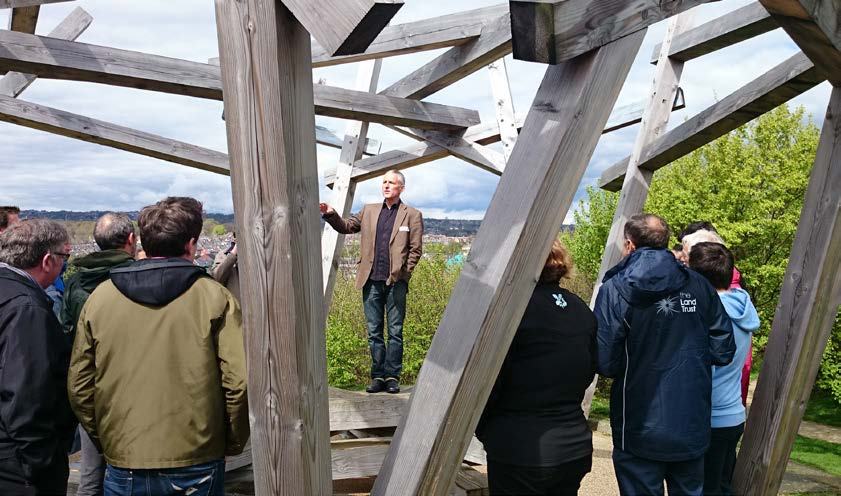
These projects explored whether different people or organisations could take a more active role in the day-to-day management of parks. The Land Trust worked with Friends of Everton Park to see if the Friends could take on the long-term management of the park in the Everton Community Hub project (The Land Trust are in discussions with Liverpool City Council about the park being transferred to the trust). The National Trust's Endowing Parks for the 21st century project with Sheffield City Council is exploring how a separate organisation could be established to take on board the long-term management and operation of all Sheffield's parks.
INSIGHTS
These projects showed that the transition to a different model of parks management will take a long time. Although the sector places great hope in these approaches, and the public are not necessarily opposed, the implementation of new management models is difficult to pursue from both political and practical perspectives.
For example, despite clear evidence of the benefits of parks for health, there is not yet a quantifiable case for health trusts to invest.
The Everton Community Hub Project demonstrates limitations for Friends groups in taking on longer term management. The Friends of Everton Park, a well-established and active organisation, had the initial ambition of growing their membership and skills to maintain Everton Park themselves. However, as the size and complexity of the task dawned on the Friends group they realised that they would be best placed to complement, rather than lead, the core maintenance function. The Land Trust have now brought on board other partners with skills in volunteer recruitment, coordination and horticulture training. This partnership approach has worked particularly well for defined tasks or areas of the park. For example, the Friends worked alongside the Cass Foundation to volunteer in a nature garden previously closed to the public.

The Endowing Parks team knew politicians would be concerned that the public would not accept the shift from local authority control to a new form of management. However, research carried out as part of their project showed that people want parks to be managed well, and are less concerned about who plays this role. Their findings underpinned the wider evidence from the programme that people value their parks, and when made aware of the financial pressures they are open to supporting alternative ways of keeping parks open and free. The research also revealed people's preference for a dedicated trust, funded by an endowment, as an alternative option for looking after greenspace. Participatory budgeting or other ways to engage residents in making decisions and finding solutions for parks could be something to explore further.
The Endowing Parks for the 21st century project will continue into 2016. The National Trust is scoping out what would be required to establish a separate charitable organisation to manage and maintain Sheffield's parks. Their objective is to create an endowment to fund the organisation, alongside income from trading and events. Initial discussions suggest that both public sector bodies (such as health trusts) and businesses (such as water companies) recognise that parks make a valuable contribution to their objectives (e.g. well being or flood defence). However, obtaining investment from organisations that have not traditionally funded parks is likely to be difficult.

Alternative models of management: Advice for others
Although both the Endowing Parks and Everton Community Hub models are still in progress, their experiences have shed light on factors others pursuing new management models should consider:
SECURE BUY IN FROM KEY STAKEHOLDERS
Having a strong senior officer champion for the project is essential, the local authority needs to drive the process, navigating political processes and providing access to relevant staff and information.
Joanna Caldwell,
Programme Coordinator, National Trust
Both the Land Trust and National Trust's projects have required buy in from the local authority. It's essential to bring in key influencers and decision-makers early, get a resource commitment as soon as possible, and keep them in the loop over the long haul. The research into public opinion and parks user attitudes that Rethinking Parks teams conducted can be very helpful to give local authorities more confidence to act.
MEASURE CURRENT COSTS AND CONDITIONS, AND PROJECT FUTURE NEEDS
The teams spent months working with local authorities to compile the financial data for an informed assessment of the existing costs of parks management, the condition of parks and robust future cost projections. This is essential for any organisations considering taking on parks management, fully or in part.
BUILD CAPACITY TO ENSURE A SMOOTH TRANSITION
Organisations considering transferring management should ensure that whoever is taking on more responsibility has the relevant skills, knowledge and resources. This is likely to mean investing time and expertise in assuring or even building the capacity of the new manager. The Land Trust brought on board organisations skilled in supporting horticultural volunteers to help build the capacity of Friends of Everton Park. Beyond Rethinking Parks, Lambeth Cooperative Parks has introduced a public interest test for new community management organisations, so that the council can be assured that they are well placed to maintain the park.

DEEP DIVE
The idea of citizens taking a substantial role in running public services has been growing for some time. Everton Park Community Hub sought to test this proposition for parks: can a group of volunteers take over the day-to-day management of a large city park?
There is no doubting the commitment of local volunteers to Everton Park. However, John Hutchinson from the Friends group suggests that there is a fundamental question that similar groups need to ask before considering a more active management role:
Do we want to see this done or do we want to be responsible for doing it ourselves?
John Hutchinson
Working in partnership with the Land Trust, Friends of Everton Park were initially enthused by the opportunity to improve the park, increase their membership and take on a greater role in management and maintenance. However, as time has progressed the scale of this ambition has proved overwhelming. The Friends now understand much more clearly the level of management involved in a park of this size, and the scale of the commitment this would require from a group of volunteers. The Friends remain committed to contributing to this task, but as a partner, rather than taking on sole responsibility.
So, could a Friends group ever run a city park like this? From John's perspective, “it can be done and it could be done here”.
But to be successful, the Friends group has to be willing to take on the challenge; they shouldn't feel that they've been backed into a corner. Some people in the neighbourhoods around Everton Park for example have deeply ingrained views that the park is wholly a City Council responsibility. It would take some time to encourage them to get involved in voluntary management activities.
There need to be enough volunteers with the right skills in land management to oversee, as well as help deliver, all aspects of park maintenance. The group would also need funding for staff and/or contractors as required.
The Friends of Everton Park have learnt a lot about their capacity and their ambitions. They have also made practical advances on a smaller scale. Working with the Cass Foundation, the Friends have made a concerted effort in the existing Nature Garden. The garden has been improved and is now opened to the public more often, and more volunteers have come forward to participate. This has been a helpful example of what Helen Kramer from the Land Trust has described as “allowing people who were daunted by parks management on a large scale to learn new skills and get involved in something on a more manageable scale.” As confidence and engagement grows, so too may responsibility.
New uses of buildings
Finding new uses of parks buildings and spaces to raise revenue for parks
PROJECTS:
- Eastbrookend Rekindled
- Park Hack* (separate model descriptor available)
*More details available online

THEME
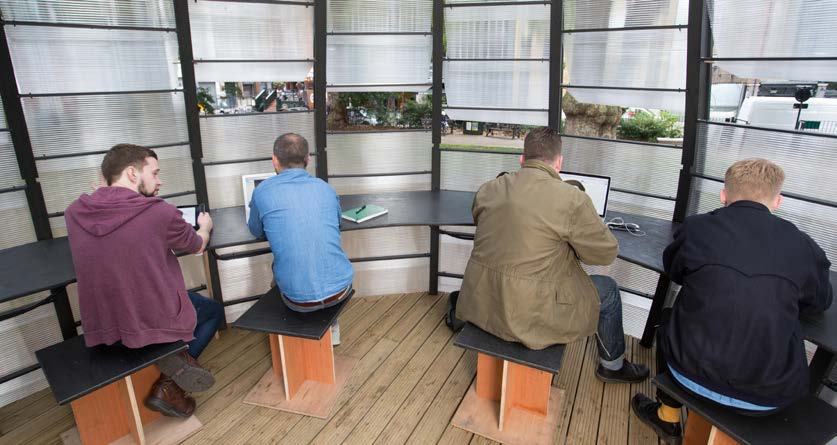
Two projects explored whether new uses of buildings could generate income for parks. Eastbrookend Rekindled planned to bring in new tenants to the under-used Millennium Centre at Eastbrookend Country Park, attracting more visitors and generating new income for the park. The Park Hack team built a temporary space (the Tree X Office) to test whether they could raise revenue from shared work and group meeting space.
INSIGHTS
Generating additional income from new uses of buildings and parks requires careful planning and understanding of the local market. Demand for spaces is critical, and varies from park to park. The condition and size of existing buildings, transport links, footfall and wider amenities available all influence potential profits, while zoning and planning conditions (e.g. green belt restrictions) may present opportunities or limitations in new uses.
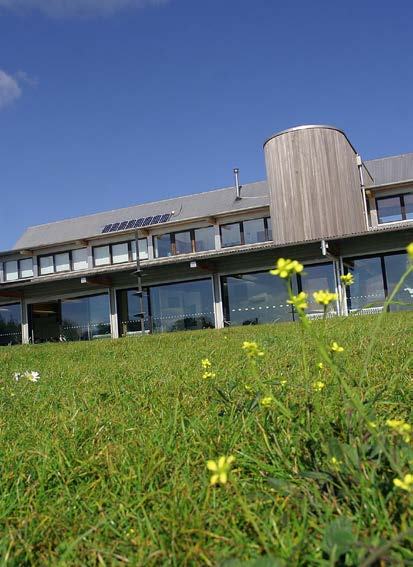
Initial audience research for the Eastbrookend Rekindled project suggested that the Millennium Centre building in the country park could be attractive to environmental businesses. A cafe was also identified as a much needed core amenity for park users and potential tenants. Unfortunately, the team found their options were considerably restrained by competing perspectives across the council. The planning team were concerned about the park's green belt planning designation, whilst others were concerned about the potential competition with a purpose built business centre.
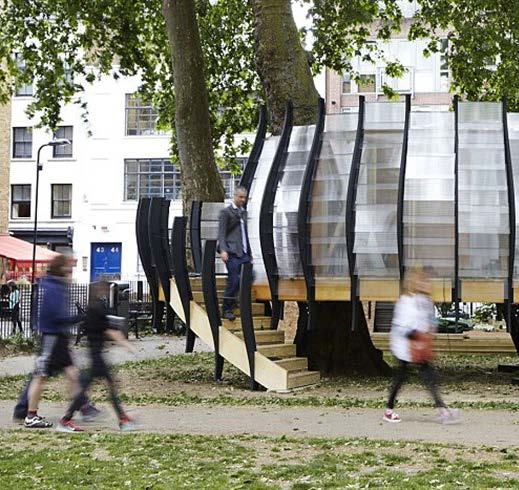
Park Hack's Tree X Office received high levels of public and press attention, but the volume of bookings did not meet expectations. There were also a lot of break-ins and vandalism. In this sense the location of the Tree X Office was a mixed blessing: its proximity to bars, clubs and restaurants generated high initial interest but also meant the space became a haven for revellers and rough sleepers at night.

New uses of buildings: Advice for others
KNOW YOUR MARKET, AND WHETHER YOUR PARK WILL MEET THEIR NEEDS
Understanding market rents and demand for spaces has to be the starting point for exploring new income from parks buildings. These factors are highly location specific, and potential income stream will depend on your park, the kind of space you can use, and above all on local market conditions. The Park Hack team invested time in conversations with potential clients and shared workspace companies to test the market ahead of building, and used their prototype to test actual demand.
LOOK AT WHAT WORKS ELSEWHERE
Both projects took inspiration from approaches that worked in different environments. Visits to other locations, observing what works, and research to understand how spaces can be used in different ways can all stimulate ideas. The Eastbrookend Rekindled team visited other locations and buildings to look at everything from the layout of temporary buildings to the range of food and drink provided at cafes.
TEST BEFORE YOU INVEST
Creating a low-specification prototype can deliver practical insights about what potential tenants/ users need, and possible problems. Park Hack's prototype was more fully developed, and low-cost testing of how the building would work in practice could have offered invaluable insight.
I would definitely say there is a big value in having something physically placed in the park, as online consultation for a physical space doesn't always match up.
Danielle Johnson, Groundwork
ENHANCE THE PARK'S WIDER VALUE
New sources of income don't need to be at odds with the needs of the public, or detract from the park's aesthetics. The Tree X Office provided an excellent demonstration of a crowd-pleasing new use of space. Careful design and good community engagement are important to bring parks users with you.
DEEP DIVE
DID 'X' MARK THE SPOT? INSIGHTS FROM PARK HACK'S TREE X OFFICE
Engaging local businesses in conversations about Hackney's green spaces was a new experience for Hackney Council. Along with project partner, Groundwork London, staff from the Council's Parks Department tapped into an existing network of Shoreditch businesses and collected ideas for investment opportunities. From these early consultations came the concept of creating rentable outdoor workspaces, an idea that did not instantly appeal: “I was fairly sceptical at the beginning. I couldn't quite imagine how it would work and didn't think we had the budget to create something,” recalls Sam Parry of the Parks Department.
But in a stroke of luck, ArtsAdmin, a local charity, approached the project team and offered to contribute towards the cost of building a tree office. From this point a design team came together, a temporary structure was built very quickly in Hoxton Square and it was possible to test out this new idea.
With an eye-catching transparent exterior, the creative design of the workspace attracted a huge amount of local interest and national and international media attention. Initially, the levels of usage were promising at 25-50 per cent, but this early interest waned as it became apparent that the design was not weatherproof or secure, and therefore susceptible to regular break-ins and vandalism. This was always intended as a temporary structure and after a few months it was dismantled. So, was this exercise a waste, or a valuable opportunity to test out and evolve a new idea?
A lot was learnt about the costs associated with running a business of this kind - most notably it was discovered that running shared workspaces needs substantial input and a high quality build. In the words of Sam Parry of Hackney Council, “we thought that the management of the building would run itself – people would book online and then get a code to open the door – but in reality the day to day operation required close coordination and management”. The team did not anticipate the need for routine inspection or managing the high levels of break-ins.
Opportunities to secure private sponsorship for a project of this kind were uncovered: had the timing been right there was the offer of £30,000 from a multinational technology company.
Most promising was the influx of requests, near the end of the project, for a bookable pop-up space. It became clear that startups are looking for short-term exclusive hire of attractive spaces where they can launch a product or test out their market at low risk. Requests for bookings for pop-up exclusive hire amounted to nearly £28,000 and, although this couldn't be realised, it highlighted an unexpected market opportunity, as summarised by Sam Parry. “We hit upon something with the pop-up idea and there may be an opportunity, either with a new build or with existing buildings. This model could work elsewhere. There will always be new business emerging across the country. It doesn't have to be a trendy tech start-up. It could be a café or a hairdressers or a dog grooming parlour for example. If you had a space that you could rent out for a few months for those sort of businesses to try out, then it could work in any area where there is a reasonable population nearby.”
The project highlights that new ideas have to be tested and, even if the outcomes are not what were anticipated, there are always opportunities to learn. The partners all agree that they are now in a much stronger place to move forward with their plans to attract investment into the parks. Danielle Johnson, the project lead from Groundwork London, explains: “We've learnt that you have to get to know your local context and you have to build relationships with the businesses and local people who want to use the park. The best way to do this is to talk to them and then find out ways to put their ideas into practice. You need an initial investment to make this happen but from here things can grow and evolve.”
Business engagement
Bringing the resources and skills of businesses to support parks
PROJECTS:
- Darlington Rethinking Park* (separate model descriptor available)
- Park Hack* (separate model descriptor available)
- Bloomsbury Squared* (separate model descriptor available)
*More details available online
THEME
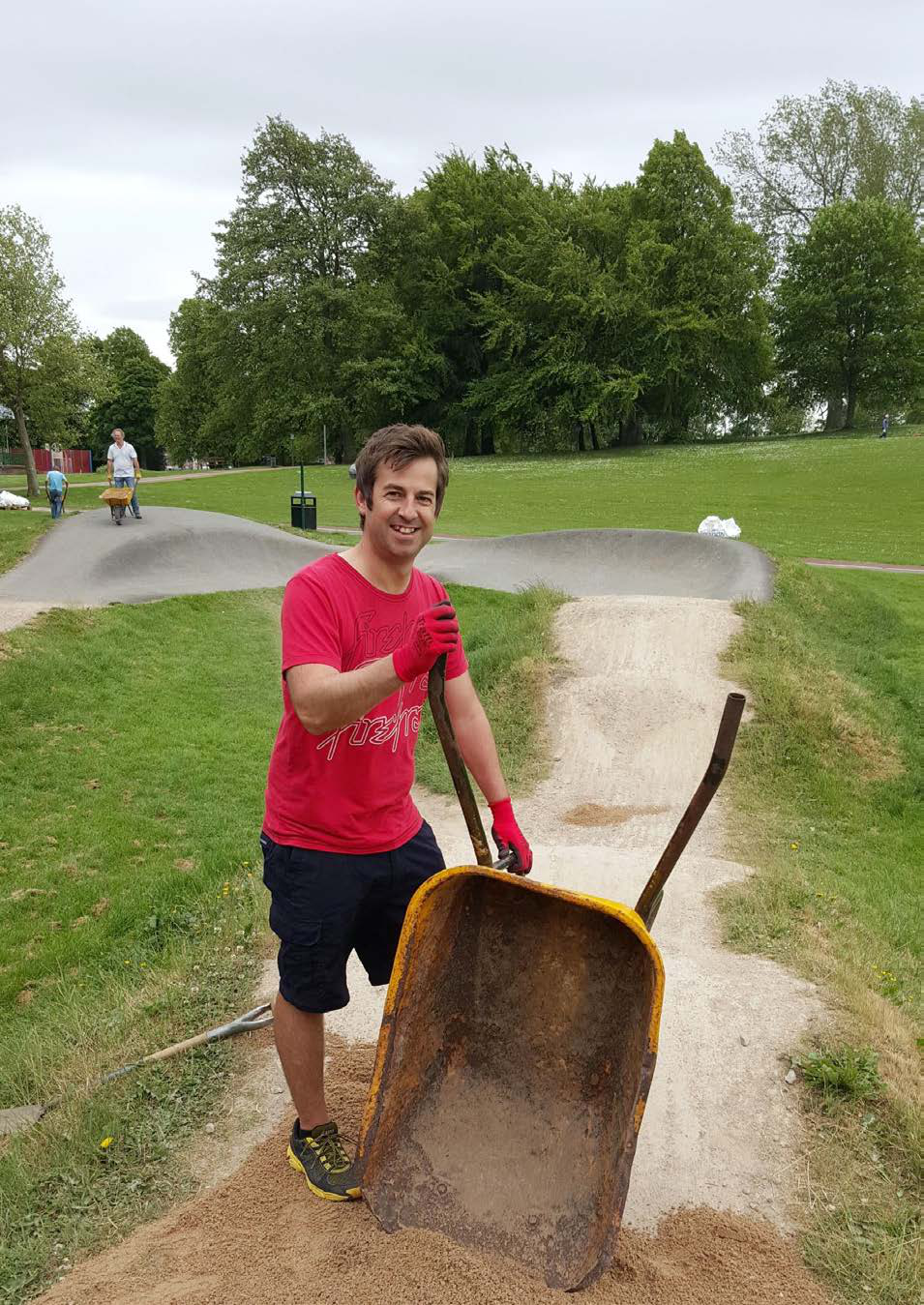
These projects tested whether in-kind or direct contributions from businesses could make a positive impact on parks. Darlington Rethinking Parks got businesses to volunteer regularly in three local parks. Park Hack drew on the ideas and expertise of creative businesses, whilst London Borough of Camden tested the business appetite for a compulsory levy for parks in Bloomsbury. These projects illuminate the value of parks to businesses, and the variety of opportunities to bring them on board.
INSIGHTS
Corporate sponsorship and concessions are established ways to raise funds from businesses for parks, but these approaches are not always welcomed by the wider public. The Rethinking Parks teams focused on testing new ways to encourage businesses to give their time or money to parks, without excluding parks users and other stakeholders.
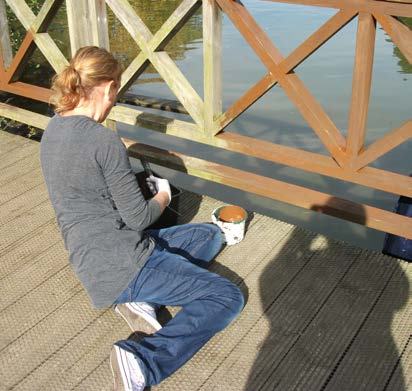
All projects worked closely with a wide range of stakeholders (including residents and Friends groups), to build a coalition of support from day one. Darlington Rethinking Parks initially assumed that businesses would work directly with Friends groups, and while this wasn't the eventual model, Friends and the public have remained supportive of the regular corporate volunteering.
Park Hack invited the whole community to make suggestions to improve the squares in London's Shoreditch area, and then involved resident representatives in the Park Hack Innovators (a group of business who developed new ways to improve parks). The Park Hack Innovators proved an incredibly popular forum with local creative businesses and wil be supported by London Borough of Hackney into 2016. The Park Hack team are now keen to complement the energy of small creative organisations by engaging larger organisations that can help fund new ideas.
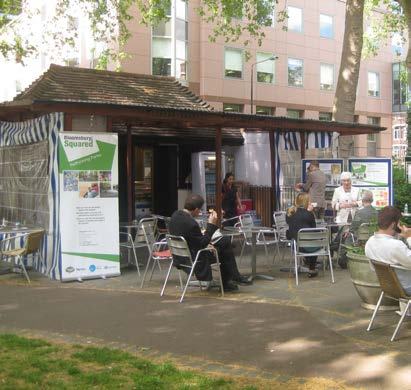
Both Groundwork North East (who led Darlington Rethinking Parks) and Groundwork London (who led Park Hack) formed partnerships with existing business networks. Groundwork North East partnered with Darlington Cares, the local corporate social responsibility umbrella group, to make initial introductions with businesses, and the Park Hack team worked with London Borough of Hackney's business development team.
Business engagement advice for others
DON'T RELY ON GENTLEMEN'S AGREEMENTS
Rethinking Parks teams have found that partnerships have been successful where there is a strong shared vision, expectations are aligned and accountabilities are clear. It's worth making sure that commitments are written down and all parties are clear about what's expected upfront.
FIND THE FIT WITH LOCAL BUSINESSES
Teams invested time in understanding the particular strengths and needs of businesses in their community, and developed their approaches and their offer to suit. For example, the Darlington Rethinking Parks volunteering programme provided helpful team building days for corporates, whereas Park Hack responded to the desires of people in smaller creative businesses.
All the teams actively involved community groups in shaping and contributing to ideas, including formal membership of steering groups. This ensured projects were aligned with both business and parks user interests.
DON'T FORGET ABOUT CASH
Make sure you understand the costs of running your model, and reflect this in the contributions you seek from businesses. The Darlington team are now exploring charging businesses for corporate volunteering days, and Park Hack have learned that they need to complement the bright ideas of creative organisations with sponsorship from larger businesses.
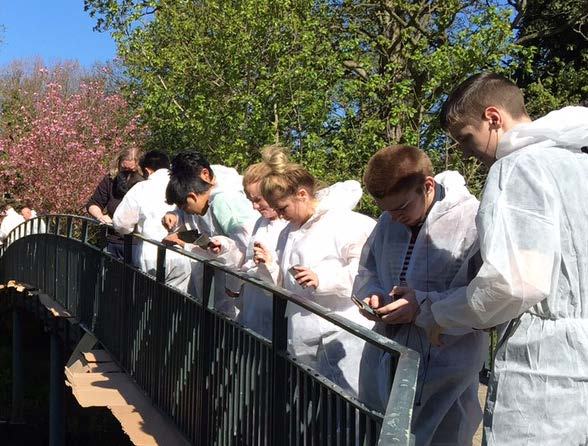
DEEP DIVE
CREATING AN OFFER THEY CAN'T REFUSE: INSIGHTS FROM DARLINGTON RETHINKING PARKS
Corporate volunteers have been working in the parks of Darlington for some time. But until recently just a handful of businesses were involved and volunteer input tended to be one-off and dispersed across a number of different sites. Darlington Rethinking Parks provided an opportunity to take corporate volunteering to a different level. The ambition was to involve more businesses in fewer sites so they could make a meaningful and sustained contribution to the maintenance and upkeep of the city's green spaces:
“We had this ambition that we could get businesses to emotionally attach to a particular park and then commit to regularly take on park management responsibilities” describes Lisa Locke, Project Co-ordinator, Groundwork NE & Cumbria.
To achieve their goal, the project partners knew that they would have to build relationships with businesses and make an offer that aligned what they want with what parks need. In practice, this meant three things: 1) making it easy for businesses to get involved; 2) addressing barriers faced by staff; and 3) targeting resources wisely.
Make it easy for businesses to get involved.
Although many larger businesses have Corporate Social Responsibility (CSR) commitments, managers don't always have time to get opportunities off the ground. To make it easy for businesses to get involved, the Darlington Rethinking Parks team offered to facilitate and coordinate the whole process of enrolling volunteers. This meant going into organisations, talking directly with the staff, promoting opportunities and then signing them up. This is a resource-intensive process that requires sensitive facilitation and excellent communication skills.
Address barriers faced by staff.
The team discovered that there were practical barriers that were getting in the way of volunteering, as described by Lisa Locke: “Our breakthrough moment came when we realised we needed to engage with staff at all levels of the business and listen to why they don't currently use their CSR opportunities.”
Sometimes employees didn't know how to book time off for volunteering, and sometimes they had concerns about the kinds of things they would be expected to do. Lisa explains what this meant for the approach to employees: “Listening to them allowed us to iron out any practical problems and then put together a programme that appealed to different people”. This programme consisted of over 16 different activities, which included resurfacing a bike track, fence painting, bulb planting and building bird boxes.
Target resources wisely.
As well as putting time into the recruitment of volunteers, the team had to ensure that when volunteers got on site, they were safe and well-supported. All of this is very demanding on resources, so targeting these resources wisely to ensure a 'good return' is essential. The team learnt that it helps to focus on a small number of sites and engage bigger businesses, as described by Rob George the Parks and Countryside Development Manager at Darlington Council: “Most businesses don't have targets associated with corporate responsibility so there is no real impetus for them to commit to projects. It is easier to engage very large businesses because they have to report their CSR targets within their annual reports.”
As well as working with large businesses, it helps to work with businesses across different sectors says Katie Blundell of Darlington Cares: “Sometimes business priorities can change quite quickly and this can be sector wide. Negative impacts are mitigated if you have a diverse range of businesses on board.”
Since Darlington Rethinking Parks was launched, long-term relationships have been established with five businesses and the volunteer contribution to date has been calculated to be around £18,000. A lot has been learnt about how to engage businesses in the maintenance of the city's parks and optimise the contribution of volunteers. At the same time, there is recognition that ongoing and sustained commitment from businesses to the upkeep of parks requires buy-in at a very high level within an organisation as well as long-term commitment of resources to ensure good fit between what businesses want and what parks need.
Voluntary Giving
Public donations for parks
PROJECTS:
- Bournemouth Parks Foundation* (separate model descriptor available)
- Heeley Subscription Society* (separate model descriptor available)
- MyPark Scotland
*More details available online
THEME
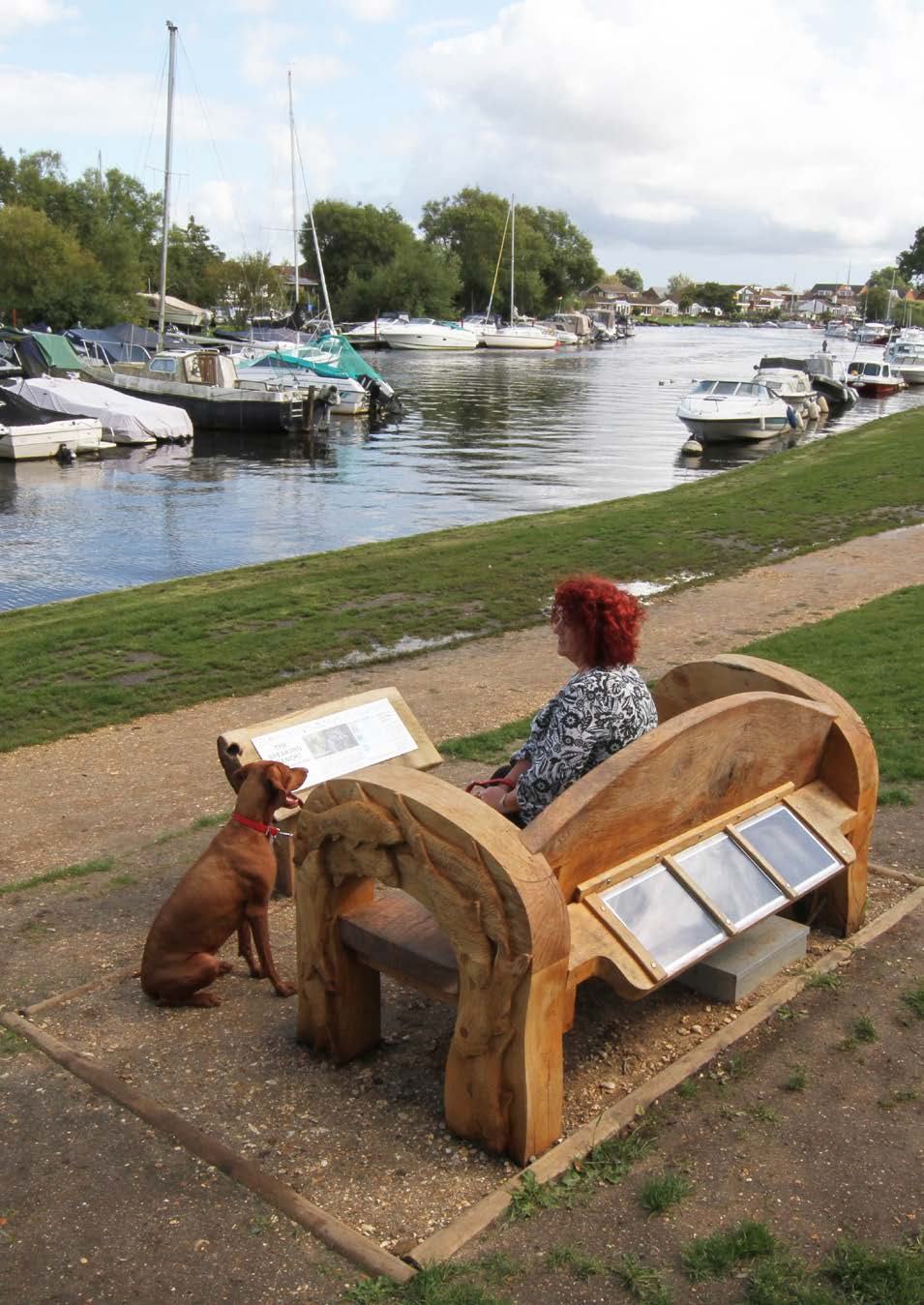
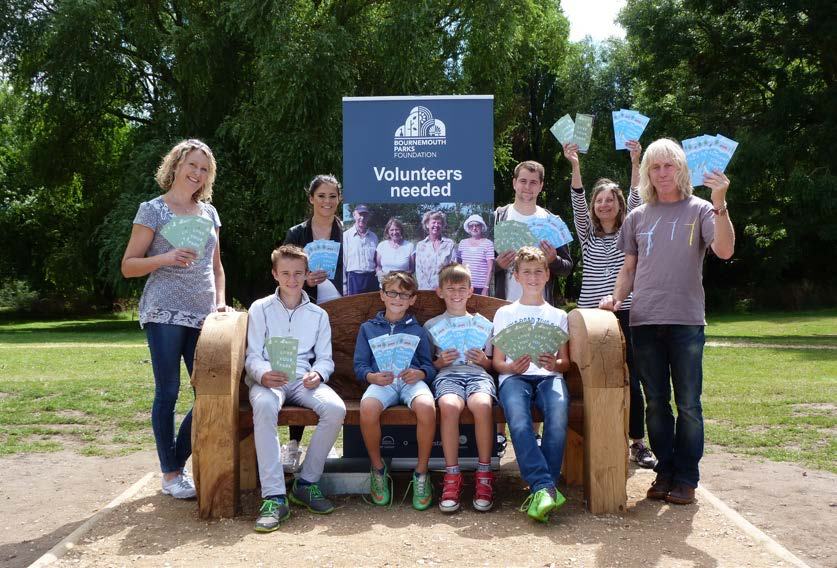
These projects all tested whether the public would make voluntary donations for the upkeep of public parks. Bournemouth Borough Council established an independent parks foundation, based on models found in the United States. Heeley Development Trust created an online donations platform and a subscription scheme for people living around a community managed park in Sheffield. Greenspace Scotland developed a website (MyParkScotland) where people in Glasgow and Edinburgh could find out about parks facilities and events, and crowdfund parks projects.
INSIGHTS
The projects raising voluntary donations for parks are still in their infancy. Setup and operating costs are high, and generating donations requires a lot of effort. Given this, not all of the models tested in this project are predicted to be viable in the longer term.
Covering a significant geographic area (a region or devolved nation, for example) may help in achieving adequate return on investment, by allowing for economies of scale on operating costs. Alternatively, where an organisation is already delivering improvements or managing a park, some administration and overhead costs may be covered from existing income streams.
The teams also identified a need for a shift in public consciousness for people to start donating significantly to parks. As Andy Jackson, of Heeley Development Trust, reflected "With hindsight such a radical departure from what folks are used to was bound to take time to sink in"


Voluntary giving advice for others
DON'T REINVENT THE WHEEL
Consider using an existing product or service to collect donations. For example, MyParkScotland required significant investment to be established; it may be better to use existing crowdfunding sites with a trusted brand, rather than building a new one. Heeley Development Trust underestimated the value people place on the Gift Aid/Just Giving brands, and learned from feedback that making these more obvious would enhance people's trust in their site.
PLAN FOR THE LONG HAUL
Give yourself time and capacity to grow awareness, trust and profile within your community
Andy Jackson,
Heeley Development Trust
Sustainable voluntary funding models for parks will rely on people continuing to feel a connection, donating or volunteering their time, and recruiting others to donate too. Bringing a community with you doesn't stop at launching a website. Both MyParkScotland and Heeley Subscription Scheme had early successes, and then realised that grabbing people's attention was only the start of the journey. It's critical to keep people engaged over time. Use specialist communications, branding and marketing support to develop and deliver your message and brand effectively.
BE SPECIFIC IN YOUR REQUEST
"Being asked for £1 a month towards a £45,000 goal is dispiriting, but £1 a month towards a new £45 light sounds just much more achievable." Explain why you are asking for donations. People need to know what they are giving to and what difference their gift makes. Remember to communicate the benefits of giving - the offer and not just the request.
DEEP DIVE
GETTING THE ‘ASK' RIGHT: EXPERIENCES OF HEELEY SUBSCRIPTION SOCIETY
People value their local green space and green spaces have a value in terms of their contribution to health, happiness and wellbeing. So might people be interested in helping to pay for their local park? It certainly sounds logical, and this was the premise behind the Heeley Subscription Society. But how do you sell this idea to local people? How do you overcome their perceptions: that the park is already paid for through taxation; they don't use it so therefore don't need to contribute towards it; or that parks are a free resource?
Heeley's experience has been telling. It has become clear that this is much more than an awareness-raising or marketing task. This is about challenging the prevailing culture. In the words of Andy Jackson from Heeley Development Trust, “selling the gain rather than the loss is interesting”. This isn't about a threat, that the park will be lost to the local community per se. Rather, it's about demonstrating that there is real value in community stewardship of green spaces.
Heather Ditch, a trustee and designer involved in developing the park branding and marketing, describes the problem the Trust faced: “there was so much thinking to be undone [among residents] before we could do anything”. As Andy explains, “this needs a collective shift in mass consciousness about an issue”. Local people need to see their park as community asset, and be helped to develop a sense of ownership of and commitment to it.
So what is the driver that will enable the community to see the benefits of investing in the park, both financially and emotionally? Rebranding it as 'Heeley People's Park' has been a key step to sign-posting it as community asset, managed by and for the local community. This connection needs to be developed further; the story needs to be continually told and re-framed given that the park is not reliant on local authority funding – that is, your contribution helps to pay for the park to be looked after for your benefit.
To do this the Trust needs to be drawing on its networks across the community, meeting face to face with local people, and having the kinds of conversations that will ultimately lead to subscriptions growing.
It's a process of education and information, working with individuals to change hearts and minds until there is a critical mass of local people in the Subscription Society.
The Trust is well-placed to do this. It is a respected local organisation that has already been managing the park on a long lease for a substantial period. There is genuine local affection for the park that can be tapped into, but people need to know that their contribution can and will make a difference. They need to buy into a vision for the park and know that any contribution has an impact. Being asked for £1 a month towards a £45,000 goal is dispiriting, but £1 a month towards a new £45 light sounds just much more achievable.
But it is not only what people are being asked to pay towards, but also how they are expected to pay. While local people have been happy to throw cash into buckets, they have been reluctant to use the online platform and, in the words of Simone Abram, the Chair of the Trust, “this is a significant issue for signing people up”. This reflects two key factors: that people are sceptical about giving their bank details to less familiar websites; and not everyone is happy to pay for things online.
It has become clear that the subscription scheme will be one of several sources of funding for the park. Income generation, rent revenues, public sector funding and grants should all play their part in the future.
What is particularly interesting is the extent to which this project is impacting on the Trust as a whole. It has emphasised the limitations of a single source of income; that the Trust has been right in its strategy to move away from relying on grant revenue alone. “This has contributed massively to our thinking as an organisation” says Andy.
Wider benefits
Improving parks whilst addressing wider social or environmental issues
PROJECTS:
- ParkWork* (separate model descriptor available)
- Burnley Go to the Park* (separate model descriptor available)
*More details available online
We have been delighted with the success of ParkWork, it has given valuable work experience to many volunteers, several of whom have gained full time employment as a result. In addition, Bristol's parks have been significantly improved beyond our normal budgeted level.
Di Robinson,
Service Director,
Neighbourhoods and Communities
THEME
These teams explored ways to maintain parks whilst also addressing wider social and environmental problems. The idea was that these dual benefit models would be more attractive to local authorities and other funding bodies, as well as the general public.
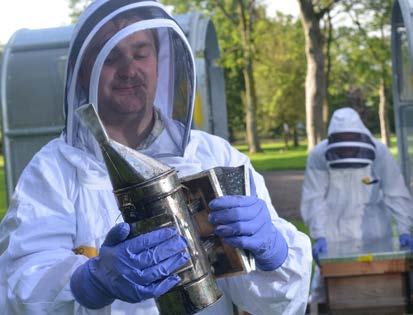
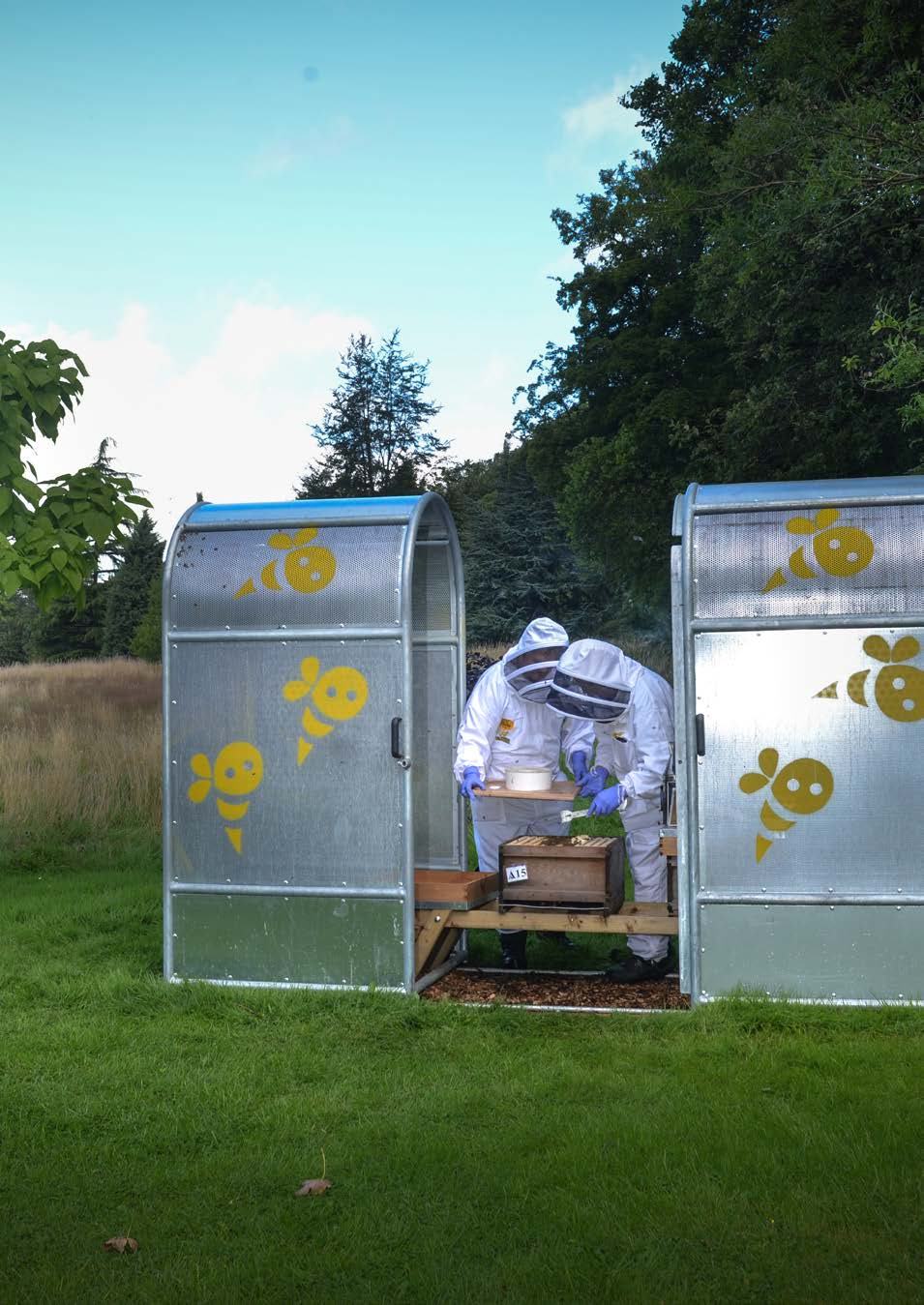
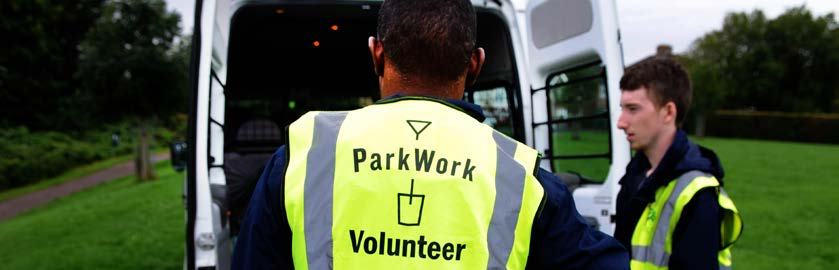
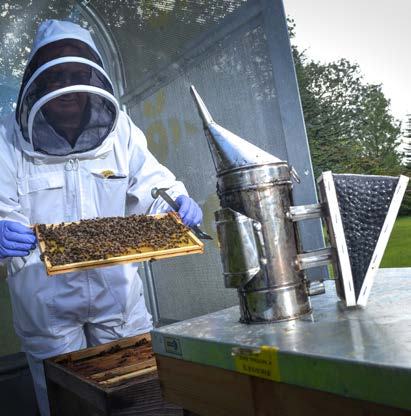
Bristol ParkWork ran a series of eight-week training programmes in parks for people with limited skills or employment experience. The tasks were carefully selected to build participants' employability at the same time as improving parks. Burnley's 'Go to the Park' project brought together a range of less expensive parks maintenance and planting techniques, along with a volunteering programme. Introducing changes such as perennial planting and wildflower meadows saves on parks maintenance and increases biodiversity. Burnley Go to the Park also developed urban bee cages in parks. These structures have become a useful representation of the link between changes to the park and increases in biodiversity.
INSIGHTS
ParkWork and Burnley Go to the Park are promising examples of approaches that can help meet the funding challenge and achieve wider benefits at the same time. ParkWork delivered over £27,000 of improvements across Bristol parks and seven of the 17 participants (40 per cent) entered employment or training as a result of the scheme. Burnley Go to the Park realised savings of £62,000 in its first year, improved staff wellbeing, and contributed to biodiversity.
Local authorities who contract these services out may not have the necessary flexibility to benefit from these approaches.
The projects worked well in part because of the existing in-house maintenance arrangements in both Bristol and Burnley. Council and project teams could work together to shape what tasks were carried out, and by whom. Direct engagement and communications with parks staff helped incorporate their ideas and address their concerns.
Both projects also drew on other partners to assist with development and delivery. Bristol City Council partnered with Bristol Parks Forum to develop ParkWork. Forum members helped with strategy development and programme management. Since Friends' groups are closely linked to the Forum, they are happy to offer contracts to ParkWork for grant-funded parks improvements. Burnley Borough Council worked closely with Offshoots, a social enterprise with permaculture expertise.
Burnley Go to the Park and ParkWork are both continuing into 2016, funded by the local authorities in recognition of the multiple benefits achieved. In future, ParkWork will seek to build more project work, as contracted services will subsidise the costs of delivery for the council.
Wider benefits advice for others
WHO MIGHT FUND DELIVERY
ParkWork assumed that agencies placing people with the scheme would fund their coordination and equipment costs. However, they turned out to provide very limited funding. Instead Bristol City Council is funding the scheme for 2016 in recognition of the dual parks improvement and employment benefits. Parks pursuing similar models are advised to spend time researching and testing funding sources thoroughly rather than relying on assumptions about how practices work in other sectors or areas.
KEEP IN TOUCH
Building in time to keep in touch with and learn from participants can lead to a better project. Burnley Borough Council and Offshoots invested time to keep volunteers and staff on board, and reflect back achievements as the project progressed. They worked closely with parks rangers and observed how their well-being improved as they worked more often with volunteers, rather than alone. In response, they extended their wellbeing survey to staff as well as volunteers. ParkWork found they needed to factor in time to keep contacting agencies who refer participants. Joe Mckenna, ParkWork Coordinator, advises: “Participant recruitment and retention is crucial to the success of a project like this. Participants come and go so time needs to be allowed to keep contacting agencies, put out information and support the current team members."
GO WHERE THE ENERGY IS
Implement changes where people are most positive and use these successes to convince doubters.
Simon Goff,
Burnley Borough Council
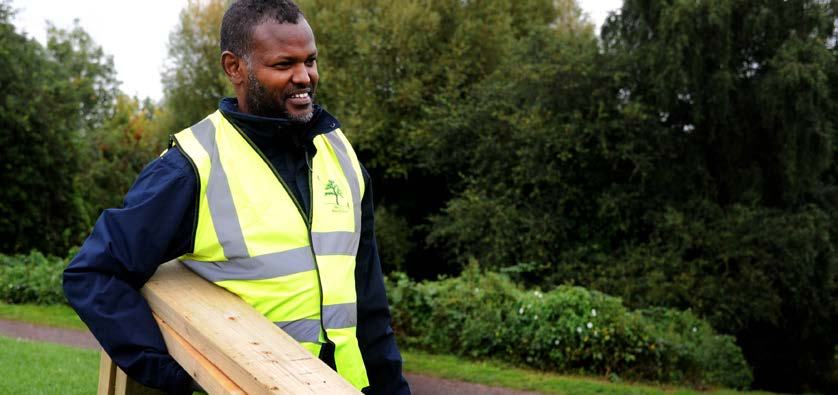
Changes to much loved parks can be unwelcome. Both Burnley Go to the Park and ParkWork invested time in engaging people and finding out who was most likely to embrace their idea. Go to the Park launched in the parks where Friends groups were most supportive. ParkWork communicated regularly with Friends groups to share the positive aspects of the programme, and fed back benefits for parks and participants at Parks Forum meetings. It's worth remembering that these people and organisations will enjoy hearing about success, and in turn communicate this to others in their network.
DEEP DIVE
THE FUNDING MAZE: THE PARKWORK EXPERIENCE
The process of finding money for a good parks project can be likened to the experience of navigating a maze. There is a starting point, an end goal and a network of convoluted paths through which a route has to be found; along the way there are hurdles to negotiate and overcome.
ParkWork has had first-hand experience of the funding maze. The project's end goal was to identify the best business model for the ongoing engagement of volunteers in improving Bristol's parks. The starting point, according to project leader Fraser Bridgeford of Bristol Parks Forum, was a set of assumptions about the model: “We set out with the expectation that volunteers would come through employment agencies and other charitable organisations. These volunteers would be on the route to employment and looking for structured opportunities to gain valuable work experience. Our assumption was that agencies would pay us to offer placements for the volunteers.”
What the team actually discovered when they approached such agencies was quite different. “We found that whilst it was possible to recruit suitable volunteers, the funding that they came with was not sufficient to cover the costs associated with their co-ordination, training and support,” recalls Fraser Bridgeford. To overcome this obstacle, and achieve their goal of identifying a viable and sustainable business model, the team would need to identify alternative income streams.
Raising funds from charitable sources, such as Trusts and Foundations, was one option the team explored. This would entail establishing ParkWork as an independent organisation, separate from Bristol City Council. But it was soon apparent that this pathway was also obstructed, as Alison Hope, the fundraising advisor, explains: “What became quite clear is that for parks to benefit we needed to recruit volunteers who were physically capable of doing the work, reliable and motivated. This target population is not particularly attractive to charitable trusts that have moved, over the years, towards funding activities directed at people with more complex needs.”
These setbacks mean that progress towards ParkWork's end goal has been slower than initially anticipated as Alison Hope acknowledges: “We are probably around a third of the way towards proving this is a viable business model."
Nevertheless the ParkWork team has made significant advances through their maze. First, new income streams have come to light such as the opportunity to secure short-term contracts from the council to carry out volunteer-led park improvements. Second, the team has hard evidence of the financial benefits of engaging volunteers: “We have been able to demonstrate to the council that every £1 invested in the project delivery generates a £2 return in volunteer hours” states Fraser Bridgeford. Third, the team now has a much better understanding of how to balance the needs of volunteers with the needs of parks. They appreciate that compromise is sometimes necessary, as described by Fraser Bridgeford: “If people are on an eight week volunteer programme, you don't want them laying a path or sweeping leaves for eight weeks. You need a variety. It's about finding a balance because sometimes you are undertaking work that just gives people valuable experience rather than being a priority for parks."
The team is continuing their journey towards identifying a sustainable business model. They are aware that they could explore many different directions – corporate volunteering is one, for example. However, as Fraser Bridgeford admits, “It is also possible to get lost in many directions.” There is a level of confidence within the team that, given time, they can identify the best business model, but also a degree of realism that this may look very different to the one they envisaged at the outset.
THE RETHINKING PARKS LEGACY
Many of the Rethinking Parks projects supported will continue into 2016, with funding from local authorities and/or new sources. The teams have shown that it is worth pursuing alternative sources of revenue and new approaches to maintaining our public parks.
The Rethinking Parks programme has sparked incredible national and international interest. We know that other organisations are actively interested in adapting models from the programme for their own parks.
The methods and approaches used in delivering Rethinking Parks have also helped the Heritage Lottery Fund and the Big Lottery Fund develop their thinking about how to support further innovation in the parks sector.
While we are hopeful that this report and the accompanying project descriptions will provide inspiration and insights for many more parks to be sustainable, there is still much to be done to secure the future of our public parks.
RETHINKING PARKS RECOMMENDATIONS
Rethinking Parks has shown the potential of new approaches to raise funding or cut costs in way that help sustain public parks. To make a real difference to the UK's parks, we need to see these new models, and the new habits that underpin them, adopted and applied across the sector.
Nesta is making the following specific recommendations, based on the lessons we've learned from the programme:
RECOMMENDATIONS FOR PARKS TEAMS AND LOCAL AUTHORITIES
1 Don't expect one answer to solve everything. Diversify your income and find new ways to maintain and manage parks at lower cost.
2 Draw on financial skills and business expertise - inside or outside your team - to understand your current costs properly, and identify opportunities to save money as well as generating additional income. Monitor spending and income in real time so that you fully understand the impact of new approaches.
3 Involve people - parks users, local businesses and residents, and others who care about parks. Understand what they need from parks, what they value and what they can contribute. Involve them in designing and delivering new ideas.
4 Look for other organisations who can address skills gaps, inject new thinking, move more swiftly, mobilise a wider network or provide capital, and build formal partnerships with them to make this happen.
5 Test your ideas in practice with small-scale prototypes. Build in as many opportunities for feedback as you can. Learn and adapt as you go.
RECOMMENDATIONS FOR FUNDERS
9 Provide targeted funding and support for teams to establish sustainable business models. This should include access to specialist financial and business advice, and building the capacity of parks teams to innovate and take risks. The Heritage Lottery Fund's Catalyst Programme was a great example of this kind of funding, and the lessons from Rethinking Parks must inform HLF's approach to resilience funding.
10 Deploy different funding models to help parks focus on sustainability, such as mixed grant-loan funds, setting up endowments for parks, or investment readiness support.
11 Encourage collaborations across sectors where parks can make a valuable contribution, such as health and wellbeing, environment, employment or education, as well as business and resident engagement.
RECOMMENDATIONS FOR GOVERNMENT AND POLICY MAKERS
6 Invest in tools and methods to help the sector understand and share evidence for the financial, environmental and social value of parks. This is essential for parks teams and local authorities seeking to build a business case or attract new investment and support for parks.
7 Explore ways to help parks managing authorities build alternative long-term income streams. For example, consider how capital funding, BID levies, receipts from asset sales or planning gain could be converted into parks endowments.
8 Encourage innovation and appropriate risk taking across the parks sector. Share good practice, celebrate and endorse the pioneers from Rethinking Parks (and elsewhere). Provide sufficient funding to support the development and testing of new business models for parks.
Contact Information
1 Plough Place
London EC4A 1DE
[email protected]
http://www.twitter.com/nesta_uk
http://www.facebook.com/nesta.uk
rethinkingparks
parksmatter
http://www.nesta.org.uk
February 2016
Nesta is a registered charity in England and Wales with company number 7706036 and charity number 1144091.
Registered as a charity in Scotland number SCO42833. Registered office: 1 Plough Place, London, EC4A 1DE.