Partners
Ctrl-Shift is proud to be working with the following sponsors who have made this important research possible.
Aimia
Aimia is a global leader in loyalty management, owning and operating loyalty programs for some of the most visible global brands and offering a full suite of capabilities including analytics and insight, channel and employee engagement and event management. Customer data is at the heart of everything Aimia does.
Henderson GLOBAL INVESTORS
Henderson is an independent global asset manager, specialising in active investment. With over 80 years of investment advice and accumulated business experience, Henderson Global Investors is one of Europe's largest independent pure asset management houses with over 1,000 employees worldwide and assets under management of £79.2 billion (as at 31 March 2014). Henderson’s global client base includes individuals, private banks, third-party distributors, insurance companies, pension funds, government bodies and corporate entities.
Nesta...
Nesta (www.nesta.org.uk) is the UK’s innovation foundation. Nesta helps people and organisations bring great ideas to life. It does this by providing investments and grants and mobilising research, networks and skills. Nesta is an independent charity and its work is enabled by an endowment from the National Lottery.
OIX OPEN IDENTITY EXCHANGE
The Open Identity Exchange (OIX) is a non-profit trade organisation of market leaders from competing business sectors e.g. the Internet (Google, PayPal, etc.), data aggregation (Equifax, Experian, etc.) and telecommunications (AT&T, Verizon, etc.) driving the expansion of existing online services and the adoption of new online products. OIX helps develop and register trust frameworks.
Vodafone
Vodafone is one of the world's largest telecommunications companies and provides a range of services including voice, messaging, data and fixed communications. Vodafone has mobile operations in 27 countries, partners with mobile networks in 49 more, and fixed broadband operations in 17 markets. As of 31 March 2014, Vodafone had 434 million mobile customers and 9 million fixed broadband customers.
Foreword by Sir Nigel Shadbolt FREng
Chairman and Co-Founder, Open Data Institute and Professor of Artificial Intelligence, University of Southampton
Big changes are sweeping the world of data. Rich new data sources are coming on stream. Open Data, social media data, data from the Internet of Things are creating new opportunities. But no matter how rich or extensive any particular organisation's data may be, it's tiny in comparison to the data that lies beyond its organisational boundaries.
Data sharing is increasingly key to added value. As data becomes a resource defined by superabundance and not scarcity there are some critical trends that many have overlooked. A high proportion of the ‘Big Data’ that’s now being collected is actually personal data - information about people, their attributes, behaviours and transactions.
"Ctrl-Shift has kickstarted the urgent and important task of sizing the prize and identifying where the biggest opportunities lie."
And the faster the costs of collecting, storing, analysing and distributing data fall, the more valuable data becomes, not just to organisations but to individuals too. This is now an epicentre of innovation. New Personal Information Management Services (PIMS) help individuals do with data what organisations have long done: use it to drive administrative efficiencies, identify patterns and trends, gain new insights, inform better decisions and plan, organise, coordinate and orchestrate complex tasks and processes.
As PIMS gain critical mass, they are bringing far-reaching changes for legacy organisations, affecting what data they can collect and use, how they engage with customers, what value propositions they offer and how much it costs them to do these things. As PIMS emerge it is essential that trust and equity are at the heart of this new market and that individuals are genuinely empowered.
But just how big are the new value opportunities? What are the implications for individuals, organisations and the economy as a whole? And where will these impacts be felt most?
In this important piece of work Ctrl-Shift has kickstarted the urgent and important task of sizing the prize and identifying where the biggest opportunities lie. Much more needs to be done to understand key barriers and enablers, what the new business models look like, how to realise the opportunities, how to ensure a trusted and equitable situation for all concerned. By building on and extending this work we can find the answes to these crucial questions faster.
Executive summary
A new market is emerging for Personal Information Management Services (PIMS) - services that help individuals gather, manage and use information (including personal information) to make better decisions and manage their lives better.
Ctrl-Shift finds that a mature market for PIMS will be worth £16.5 billion, making up 1.2% of the UK economy: with a larger total income than the automotive (0.7%) and pharmaceutical industries (0.97%).
Key findings
1PIMS are emerging as a critical and overlooked element of the 3rd industrial revolution that is slashing the costs of collecting, storing, analysing and distributing digital information.
2PIMS fill value gaps left unaddressed by traditional industrial age business models. In particular, they provide individuals with the ability to:
* gather, store, manage, use and share their own data under their own control (personal data management services);
* make better life and purchasing decisions (decision support services); and
* manage information-intensive aspects of their lives better e.g. planning, organising, coordinating, integrating and administering life tasks and processes such as 'manage my money' or 'move home' (life management services).
PIMS are different to today’s organisations and social media - they
* Enable a step-change in trust by giving individuals control over their own data;
* Make the individual the point of integration of data about themselves;
* Help individuals to manage their relationships with many suppliers (rather than helping organisations manage relationships with their many customers);
* Help individuals specify their wants and needs, and making this available to suppliers in the marketplace.
"A mature market for PIMS will be worth £16.5 bn, making up 1.2% of the economy. This compares with the automotive (0.7%) and pharmaceutical (0.97%) industries."
3. The business impact of PIMS will be far-reaching
PIMS present significant opportunities for brands, particularly in:
* Marketing: Access to richer, more rounded and up-to-date data about customers improves relevance and targeting.
* Products and innovation: Richer customer insight from new data sets and individuals’ volunteered information opens opportunities to develop new information services and inform product/service development.
* Customer contact: Access to new and potentially more efficient channels enables organisations to better reach, communicate with and sell to consumers.
* Risk and compliance: Compliance risk and cost can be reduced by enabling permissioned, trust-based data sharing.
However PIMS also present new risks, including:
* Customer churn and margins: Price and margin pressures may intensify and churn may increase as PIMS provide increased transparency and easier price, product and service comparisons.
* Disintermediation: PIMS may insert themselves into existing relationships between brands and their customers.
* Commoditisation: PIMS may subsume existing products and services into bigger, broader solutions.
* Customer visibility: PIMS may help customers 'go dark' on brands they do not trust or do not want to do business with.
"PIMS create opportunities for organisations to cut costs and improve marketing, innovation, channels to market, and risk and compliance. They also create new risks for organisations."
They also have significant implications for existing customer-facing intermediaries and 3rd party services.
* New intermediary competitors: PIMS represent a competitive threat to existing intermediaries e.g. retailers acting as distribution channels for suppliers, media owners acting as communication channels and brokers acting as sales channels.
* Disrupted 3rd parties: By creating new sources of rich, permissioned customer data PIMS displace some services provided by advertising agencies, data brokers, credit reference agencies, CRM software vendors, loyalty scheme operators and market research companies.
4. The impacts from PIMS will vary by sector
PIMS’ impacts will be felt differently across the sectors, for example in:
* Financial services and energy: new threat of disintermediation; an opportunity to offer new levels of customer value.
* Retailing and motor industries: ability for many to build direct relationships with customers for the first time; increasing price transparency, risk of margin pressure and customer churn.
* Telecoms: leveraging their vast data assets; finding trusted ways to use this data to provide information service to their customers.
* Health and government: an opportunity to shift to digital customer
5. Together, PIMS represent a significant economic impact
PIMS’ main economic contribution is to help drive a progressive reduction in the many layers of today’s economic waste by:
* matching supply to demand (knowing exactly what to supply and how much of it to supply when and where)
* connecting buyers and sellers (all the searching, navigating, communication, negotiation and other tasks that result in transactions).
PIMS help reduce guesswork and waste at every level of production, distribution and communication.
In a mature market, the combination of personal data management services, life management services and decision support services could create a new market of £16.5 billion.
"Whether organisations benefit or are harmed depends largely on the nature and timing of their response."
What does this mean?
The market for PIMS is evolving rapidly. Ctrl-Shift’s market monitoring is identifying one new service launched every week.
These new market entrants are exploring a ‘gap in the market’ by creating new layers of value for customers, organisations and society. This research confirms there is a significant ‘market in the gap’.
Whether organisations benefit or are harmed by the rise of this new market depends largely on the nature and timing of their response.
Broadly speaking, customer-facing brands have three core options:
* adopt PIMS as new channels, enabling new ways to engage with customers;
* compete by offering their own PIMS services; or
* combat them, refusing to do business with them.
The most risky response is to ignore the new market until it is too late.
1. Context: Pervasive Digital Disruption
We are in the midst of a third industrial revolution. The costs of collecting, storing, using and distributing information are falling faster than the costs of any other commodity in history, sending shockwaves of change, disruption and opportunity through our economy.
These shockwaves include the rapid rise of e-commerce, social media, the Internet of Things, smartphones and related services such as digital wallets, quanitified self, Open Data and Big Data. But there is one common factor that cuts a horizontal slice through each of these powerful trends. To a large degree they all create or consist of personal data, raising new questions about whose data it is, who should benefit from its use and how, and what rules and restrictions should apply to its collection and use.
"Personal data cuts a horizontal slice across all key information economy mega-trends. Fail to get personal data right, and you fail to get the mega-trend right."
Whichever aspect of the information economy organisations focus on, if they fail to get their personal data strategy right - to sustain customer trust, ensure ongoing access to the best quality data etc. - they put entire projects at risk.
But the world of personal information is changing fast. Public opinion, technology, services and legislation are converging to form a 'perfect storm' around personal data. The norms, rules and tools relating to its collection and use are questioned, debated and being re-written.
An emerging market
Part of this perfect storm is the emergence of new Personal Information Management Services (PIMS) that help individuals collect, control and use their own data for their purposes, make better decisions and manage their lives better. PIMS are a new market sector that is accelerating and deepening existing digital disruption by filling key value gaps in today's consumer markets. In doing so, it is changing consumer attitudes, expectations and behaviours.
PIMS are an emerging market in the UK and we see one new services launching every week. Our analysis suggests that this market could be worth over £16bn which this report sets out as a significant opportunity for organisations. £11.5bn comes from helping indiviuals manage their data, and a further £5bn from helping them make decisions. However this analysis only covers the first order impacts - the impact of money changing hands with PIMS. The wider impacts can be categorised as:
- 'Second order' impacts - knock-on effects for the organisation’s internal activities, such as changes to its priorities or strategies.
- 'Third order' impacts - knock-on external effects for third party suppliers and society.
| Wave of impact |
Definition |
Example - Electricity |
| First order |
Direct impacts on how much money changes hands between who |
Money paid by customers to electricity suppliers |
| Second order |
Knock-on internal impacts on organisations’ strategies, activities and priorities |
The extraordinary array of devices that use the electricity that is being supplied |
| Third order |
Knock-on external impacts on parties beyond the organisation and in society generally |
The effect the introduction of TV had on cinema going and consumer lifestyles |
Figure 1: Framework for analysing first, second and third order impacts of PIMS
Assessing the impacts
This paper establishes a first top line estimate of the potential size of the emerging market for PIMS (first order impact) and provides a top-line analysis of their second and third order impact on organisations.
"PIMS' main economic contribution is to reduce the many layers of waste currently embedded in how organisations and individuals go to market and do business with one another."
By definition, the first order impacts are the most immediate drivers of organisation and customer behaviour change. But the knock-on second and third order impacts are potentially much, much bigger. These include:
- Permanent and far-reaching changes in the ways customers and organisations do business with one another.
- A change in what value looks like and how it is delivered - via information services. To achieve their goals, customers and organisations alike need to identify, sift and weigh available options and courses of action, and make and implement plans. These are information intensive tasks where the over-arching information services take pride of place and traditional products and services become adjuncts with supporting roles.
- A transformation of the personal data climate, tilting the balance towards personal control over personal data and trust, with business models needing to adapt to this climate change.
It is therefore important that organisations understand these different impacts.
2. A New Market Forming
A new market for personal information services is emerging. It has the potential to become a £16.5 billion industry triggering far-reaching changes to consumer attitudes, expectations and behaviours, and new risks and opportunities for both private and public sector organisations.
Filling value gaps
PIMS use modern technologies to fill consumer value gaps left largely unaddressed by traditional product and service suppliers.
The three most important value gaps are:
- The ability for customers to manage their own data. Individuals cannot function effectively in a digital world without managing data to some degree or other, whether it is deciding what information to put into and leave out of a Facebook profile, finding and presenting documents and certificates needed to fill in a form and apply for something, or being able to prove you are who you say you are when dealing with an organisation. Managing one’s own data is an intrinsically 'person-centric' task and overlaps only slightly with organisations' need to manage their data. This value gap is being addressed by the rise of a new set of personal data management services[^1].
- The ability for customers to make better decisions. This has two dimensions: a narrow one of making better product and purchasing decisions and the broader one of making better ‘life’ decisions. For example, a price comparison site might help consumers compare energy tariffs but a broader decision support service might help a household recalibrate its total energy consumption, including installing alternative or renewable energy sources, home insulation, and changes to lifestyle and behaviour. This value gap is the focus of decision support services[^2].
- The ability for customers to organise and manage their lives better. Modern industrial structures are built around the requirements of efficient supply, not efficient use or consumption. The financial services industry is constituted of many separate financial products such as current accounts, savings products, loans and credit cards, but none of them address the central task of help me 'manage my money'. This is the focus of life management services.
"PIMS address consumer value gaps left unaddressed by traditional industrial age business models."
Current approaches to the collection and use of personal data evolved in a lopsided way. For the last 40 years, only large organisations were really active, collecting information about customers and using this information to streamline, enrich and improve the running of their operations.
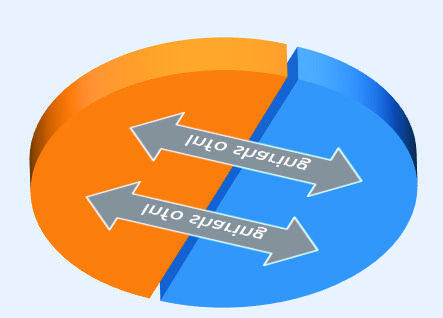
The diagram titled "Figure 2: Key phases in the evolution of personal data collection and use" illustrates three phases:
Phase 1
Depicts an orange 3D pie chart segment labeled 'ORGANISATIONS', representing a system where traditionally only organisations collect and use customer data to drive their own processes: sales, marketing, billing, customer service, customer insight etc.

Phase 2
Shows a 3D pie chart split into two segments (orange and blue), with two horizontal arrows labeled 'into spring', and segments labeled 'INDIVIDUALS' and 'ORGANISATIONS'. This phase represents individuals beginning to collect and use customer data to improve daily admin tasks, make better decisions and organise and manage life tasks and processes.
Phase 3
Displays a 3D pie chart with two unequal segments (orange and blue), with labels 'ORGANISATIONS', 'Info sharing', 'Info sharing'. This phase signifies that as PIMS evolve, they enable richer, real-time information sharing between individuals and organisations.
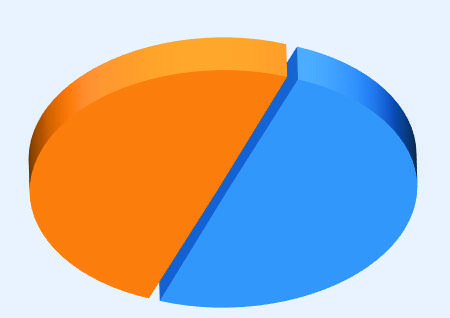
PIMS usher in a second phase of personal information collection and use which redresses this imbalance. With PIMS, individuals also become active collectors and users of personal information, using this information to streamline, enrich and improve the running of their own lives. In doing so, they generate new information and create pictures of their activities, circumstances and transactions that are much richer and more rounded than siloed suppliers can normally create. Phase three follows quickly: increased permission-driven information sharing between customers and
Why are PIMS different to social media and today's organisations?
At one level a newspaper is a form of information service. So are Google, Facebook, Twitter and LinkedIn. But PIMS are different, especially when it comes to individuals being able to control their data and and the purposes to which this data is used. PIMS:
* Enable a step-change in levels of trust by giving individuals much control over their own data;
* Provide information as a tool in the hands of the individual (as opposed to traditional organisation’s systems which have information as a tool in the hands of the business);
* Make the individual the point of integration of data about themselves;
* Help individuals manage their relationships with many suppliers (as opposed to helping organisations managing their relationships with their many customers);
* Enable 'Volunteered Personal Information' (VPI) - helping individuals specify their wants and needs, and making this rich information available to the marketplace[^3].
PIMS business models
PIMS business models vary. They include:
* Annual fee for access to the customer;
* Annual fee for access to (permissioned) customer data;
* Payment per transaction. Commission via normal advertising mechanisms, with consumers being forwarded a percentage of the commission;
* Consumer 'pays' a subscription but this is set off against all commission, which is forwarded to the consumer; and
* Consumers simply pay for the service.
Sizing the prize
To model the potential size of the PIMS market Ctrl-Shift extrapolated from the service offerings, revenue streams and business models of existing PIMS (see Appendix III) to create a 'parallel universe' where PIMS have reached their full market penetration and are now a mature market.
This enables a clear 'compare and contrast' exercise vis-a-vis the status quo. It does not address related questions of how PIMS are going to overcome barriers on the journey and how long it will take them to do so. Answering these questions needs separate studies.
Ctrl-Shift analysed the number of supplier relationships individuals need to manage. It varies between 30 and 95 relationships across key life depart- ments such as home, money, health, career and so on (See Appendix I).
Our research shows PIMS charging organisations an average of £3-5 per person per relationship per year for permissioned access to individuals’ data and permissioned communications with customers. Assuming an average of £4 and taking a middle figure of 65 key relationships per person perhousehold (a very conservative estimate) we calculated the total potential size of this aspect of the market to be £11.5bn.
Figure 3: Calculating the size of the market for personal data and life management services
| No. of relationships per household/ individual |
Type of relationship |
No. of households/ individuals (UK, millions) |
Total no. of relationships (millions) |
Cost per relationship (£) |
TOTAL (£) |
| 20 |
Household |
26.4 |
528 |
4 |
2112m |
| 45 |
Personal |
52.1 |
2344.5 |
4 |
9378m |
| 65 |
|
|
2872.5 |
|
11490m |
In addition, we estimate that a total of £5 billion will be paid to decision support services in the form of commission, fees etc. for help in reaching, engaging and selling to customers. This figure is based on an analysis of:
* Different categories of household spending.
* Likely market penetration of decision support services for each category.
* Commission rates paid (based on evidence gathered from our research).
3. Business Impacts
PIMS have potentially far-reaching impacts on core customer - facing activities of companies including:
1. Customer acquisition and retention, including advertising and loyalty;
2. Value propositions, brand and strategy, including customer insight and new product development;
3. Customer service and operations, including data management; and
4. Risk management, including identity assurance.
PIMS impacts are driven by the new things they bring to the party, such as:
* providing individuals with easy-to-use tools to act on concerns about personal data collection and use, thereby making trust paramount;
* integrating multiple, diverse data sets around the individual to provide a complete view of their transactions, contexts and circumstances, thus creating a genuine single view of the customer unconstrained by organisational data silos; and
* enabling the articulation and expression of ‘the voice of demand’ - the volunteered personal information that empowers individuals to come to market saying 'this is who I am, and this is what I want and need'.
"For businesses, PIMS impact customer acquisition, value propositions, brand strategies, customer services and operations, risk management and compliance."
There is no one, single 'answer' to the question 'what are the business impacts of PIMS?' because the answer depends on the organisation's response. A PIMS impact may represent an opportunity or a threat. Organisations can adopt defensive postures, for example trying to 'lock customers in', or they can be pro-active, being determined to innovate and explore and embrace new business models.
Appendix III contains diagrams which show these impacts by busienss function.
3.1 Customer acquisition and retention
PIMS create opportunities for marketers addressing customer acquisition and retention issues in three main ways.
* They make available richer, more rounded and up-to-date data which is the key to more efficient marketing.
* They create new and potentially more efficient channels to reach, communicate and sell to consumers.
* They generate new consumer insights from new angles which can help fine-tune offerings and drive innovation. For example, decision support services can help brands better understand consumers’ decision-making
journeys and processes, while life management services throw new light on the contexts in which consumers behave.
At the same time, PIMS also create new risks and challenges:
* Customers may use their increased ability to control information sharing to 'go dark' on some brands.
* Increased transparency and easier comparison creates price pressures and may increase customer churn.
* New services that enable individuals to better manage daily tasks and processes may insert themselves between customers and existing brands, creating the double risk of disintermediation and commoditisation (as the brand’s offering becomes a mere component of a bigger solution).
* For traditional loyalty schemes, which are already facing competitive pressure from new online cash-back and other promotion and incentive services, there is intensified pressure and opportunity to use the data they gather to add more value for customers.
Questions organisations need to ask
* Do we need to redesign marketing communications content and channels to connect to consumers via PIMS?
* How will a proliferation of trusted, permission-based direct customer channels inform marketing’s creative and planning activities?
* How can our brand strategies include trust around personal data and related issues?
* Is there an opportunity to differentiate marketing with customer innovation, including providing new information services as part of the PIMS sector?
* How will PIMS disrupt our own advertising/media partners and their digital value chain?
* Do we need to renegotiate relationships with traditional third parties and intermediaries as consumer time, attention, trust and money is diverted to new PIMS services and channels?
3.2 Value Propositions, Brand and Strategy
PIMS create opportunities in value propositions, brand and strategy to:
* build brand trust by partnering with PIMS that help individuals manage, control and get value from their data;
* enable organisations to re-define their product and service portfolios to include new PIMS-style information services (perhaps via white-labelling); and
* open up strategic options via new business partnerships.
PIMS also create new risks:
* Brand reputation if the brand is perceived as not moving with the times in terms of respect for customer data or innovation;
* Customers transfer their trust from existing brands to PIMS;
3.3 Customer service and operations
- Customers deal with suppliers via PIMS thereby reducing suppliers’ control over customer interfaces and experiences; and
- PIMS disintermediate existing brands.
Questions organisations need to ask
* Do new entrant, competitive PIMS impact today’s revenue streams and business models, and what is our strategic response?
* How do we put trust at the centre of our strategic brand agenda, specifically around the collection and use of customer data?
* Is there an opportunity to address customer value gaps through new propositions and brand positioning (with data trust and control, decision support and 'life management' services)?
* How can we build on the organisation’s skills and expertise to innovate and differentiate products and services, notably by adding layers of 'information service' for customers?
In customer service and operations PIMS offer organisations opportunities to:
* build self-service 'customer managed relationship' or CMR systems that empower customers while reducing data management and other costs;
* use verified attributes and other data to reduce cost to serve by (for example) reducing the cost of Know Your Customer (KYC) processes, reducing the costs and risks of identity assurance processes, and reducing pressure on call centres[^4]; and
* use close liaison with life management services to optimise customer service (for example, by using richer, rounder data to fine tune service offerings).
PIMS also create new risks:
* for customer satisfaction levels as customer expectations of personalised support, impartial advice and service rise; and
* if the ability to control the customer experience as customers deal with the organisation via PIMS is reduced.
Questions organisations need to ask
* Should we review our customer channel strategies to reflect customer adoption of PIMS and their changing expectations and behaviours?
* Do we need to develop relationships with PIMS to ensure continued, permissioned access to the customer data we need to improve customer experience while reducing cost to serve?
* Can we use new data sources and services, such as encrypted identity tokens and verified attributes, to personalise and differentiate our customer service?
* How can we use newly available, trusted customer data to transform the costs and processes around customer issue resolution and order fulfilment, for example customer deliveries?
3.4 Risk Management
Business today faces a perfect storm of controversy and debate about how organisations collect and use customer data, who gets the value, and how much control individuals should have. In this context, PIMS have potentially far-reaching impacts on compliance and risk management.
PIMS open up opportunities including:
* Putting customers in control of their data, organisations can reduce compliance risks and costs. Organisations already struggle with the costs and risks of privacy and data protection regulation. In the absence of PIMS each service provider has to invest separately in capabilities to manage these issues. Connecting with PIMS lets them handle many of the complexities of permissioning data sharing.
* Using permission platforms enables compliance officers to say 'Yes' to data-based innovations rather than 'No'.
* Accessing richer more up-to-date data from customers reduces waste and risk of inappropriate decisions and actions based on wrong, incomplete or out-of-date data.
* Using new approaches to identity assurance - where individuals can carry digital tokens of identity and related verified attributes around with them as they travel through the internet - reduces both the costs and risks of checking the credentials of new and existing customers.
PIMS create the new risk that:
* Instead of providing extra levels of consent and permissions, customers withdraw permissions making it harder for organisations to a) collect data and b) use what data they do collect.
Questions organisations need to ask
* How will PIMS change the organisation’s risk management strategies and processes, specifically around digital identity, fraud and liabilities? And do new value opportunities change the risks?
* How will changing customer expectations impact our own customer terms and conditions?
* Can PIMS help the organisation earn consumer consent and permissions to access and use the data it needs to innovate, differentiate and build new revenue streams?
4. Sector Impacts
Every industry has different dynamics and pressures, from price and growth to cost structures and consumer habits, so naturally the impact of PIMS on each industry is different. Here are some top line findings from our research.
Banking
Banking is already largely a digital information service. Its big challenge is that its core operational infrastructure and cost structures (and therefore business models) have not fully caught up with this fact. With PIMS, banks have a complex mix of opportunity and threats.
* Increased customer churn and margin pressure. For decades banks have been able to rely on secure revenue streams and margins from a customer base whose key characteristic was inertia. With greater transparency and lower switching costs that’s beginning to change.
* Rise of money management services. There is a gap in the market for new money management services that integrate data from multiple service providers to create a holistic view of the individual’s financial affairs, to enable more useful, detailed analysis and insight, and to use this insight to set and reach financial goals. Banks either seize this high ground for themselves or risk being reduced to mere component providers for other players’ services.
* Data management services. People trust banks to store their money safely, so why not their data? Banks are well placed to use their advantage to enter the new market - if they can also reassure customers that they won’t do the equivalent of mis-selling with their data.
* Digital payments. Mobile wallet and other digital payment mechanisms are potentially transformational for banks and banking, blurring industry boundaries (for example between telcos and banks) and creating new competitive sets. Digital payments extend the possibilities of data capture, to create rich new pictures of individuals’ transaction histories. This is a potential springboard for new PIMS, or connections/partnerships with new PIMS.
* The market for verified attributes. Banks are in a good position to become a lead provider in the fast emerging market for verified attributes. For example, by adding an encrypted verification token to banking data released under the midata scheme, individuals can use their digital ‘statements’ not only to access the data itself but to help them to verify identities, relationships (e.g. regular payments), ability to pay for services etc. Verified attributes are just one element of the information services banks could provide[^5].
"Banks are already information services. With the rise of PIMS they have new incentives to fully embrace this fact."
Energy
Smart meters are shifting the energy industry from data poor to data rich.
* Increased customer churn and margin pressure. In the short term, incumbent energy providers face increasing market share and margin pressure as price comparison and next generation intermediary services encourage and facilitate a small but accelerating consumer shift to small 'challenger' energy companies offering lower tariffs[^6].
* Information services. At the same time, new technologies are making it possible to add new layers of value to commodity markets for gas and electricity via tools that help individuals monitor and manage their energy consumption. There is already intense activity in these markets.
* Energy management services. Longer term, energy companies are well placed to use their expertise to help households manage their overall energy needs better - including home insulation, managing appliances, use of alternative energy supplies (such as solar) and changing household behaviours. These are effectively PIMS services.
"The energy industry is on the journey from being information poor to information rich. Provision of PIMS services is a natural outcome."
Retail
Retailing adds value for customers by integrating three tasks for shoppers: search (for the right product), payment and fulfilment. For the last ten years retail strategies were dominated by the shift from bricks and mortar business models to multi-channel. The next ten years will see increasing separation of search, payment and fulfilment with information-empowered consumers transforming the way they search for and buy products and services.
* Threat of disintermediation. The more shoppers use mobile decision support tools and services to search for the products they want, independently of any particular retailer, the more retailers' 'destination' status is threatened.
* Connecting with customers. Some retailers are still data poor: they don’t know who their customers are. A growing range of PIMS that help consumers build and share profiles of interests, preferences and intentions could help these retailers identify and connect with their customers for the first time.
* Building new information services. Retailers with rich customer databases can 're-mine' this data to make it the core of new information services to customers, analysing spending patterns and trends, identifying alternative new 'next best' purchases, etc. Digital receipts, managing warranties and insurances, repairs, servicing, accessories and upgrades are all essential information services for tomorrow's retailer.
* Protecting core assets. Retailers with successful loyalty schemes and online retail operations pride themselves on the richness of their data. Rich as this data is, however, it only reveals that individual’s transactions with retailers participating in that loyalty scheme. By working with PIMS or creating their own PIMS, retailer loyalty schemes can enhance and enrich their data, building more comprehensive pictures of individuals’ transaction profiles across multiple retailers.
“Multi-channel’ has been the buzzword of retail for the last decade. Meeting the information needs of shoppers is the challenge of the next ten years."
Telco
After decades of rapid growth most telcos’ core revenue streams are under pressure as growth in core markets such as voice and data falls and over-the-top competitors grab market share.
* Leveraging existing assets. In one sense, telcos are perfectly positioned to profit from the PIMS economy: they are sitting on huge, rich and valuable data assets (especially as more interactions and transactions go mobile) and they provide a 'must have' consumer tool: the phone/network. The critical challenge for telcos is how to leverage these assets to create new information services with new revenue streams. Is this by acting as a platform for information services, or by developing their own?
* Sustaining trust. Given the richness and sensitivity they hold, telcos face an urgent need to reassure customers that 'your data is safe with us'. This brand/communication challenge is a sine qua non for further leverage of existing data assets and customer relationships.
Health
The common theme in health is improving patient outcomes whilst reducing cost. In health services themselves, it's how to reduce the cost of treating patients, especially those with endemic ailments such as heart disease, diabetes, obesity and cancer. Pharmaceutical companies are desperate to find more cost efficient ways of bringing new drugs to market.
* Manage my condition. Successful health treatment is not just about taking a drug or having an operation. It's a highly interactive and ongoing process of monitoring and diagnostics. Successful treatments require positive behaviour on the part of the patients, whether its 'compliance' to drug taking regimes or changes to lifestyle. Existing health care providers are not set up, or incentivised, to meet these holistic health care needs. PIMS focused on aggregating and providing everything that’s needed to manage a chronic condition - from appointments management, to record keeping, to access to information, advice and peer support - offer potential breakthroughs in the cost and quality of health care.
"The big challenge for telcos is how to turn the vast quantities of data they are now sitting on into genuine value for customers."
Traditional third party service providers to organisations (including advertising agencies, CRM software vendors, credit reference agencies, data brokers and market research companies) all rely heavily on the use of customer data. To the degree that PIMS provide organisations with better, cheaper access to customer data, incumbents are threatened by the rise of PIMS. Likewise PIMS could compete with traditional intermediaries such as insurance brokers, retailers and media owners (acting as advertising and distribution channels) for consumer time, attention and money.
However, third parties and intermediaries can open up new opportunities by working with PIMS or developing PIMS offerings themselves.
Appendix I: Methodology
To calculate the business and economic impact of PIMS Ctrl-Shift has developed a model that takes account of the impacts on the five key parties in the ecosystem:
* Individuals
* PIMS
* Traditional suppliers of products and services (e.g. banks, retailers, telcos etc.)
* Traditional third party service provides to suppliers (such as advertising agencies, CRM software vendors, data brokers etc.)
* Traditional intermediaries such insurance brokers, retailers and media companies (as advertising vehicles)
Every individual, PIMS and organisation has its own unique pattern of costs and revenues, but the numbers relating to this unique pattern can be captured by a model that accounts for them at a general level.
Different forms of payment affect economic incentives. For example, the behaviours engendered by a once-only payment for an app will be different to those engendered by a separate payment for each transaction, an annual subscription, or the provision of a 'free' service paid for by other means. The model therefore captures details of these different forms of payment, to help assess their impact on incentives and behaviours.
Data gathering
We spoke to 20 organisations including four telcos, three banks, two retailers, advertising agencies and market research companies. We also researched 30 PIMS by survey, interview and desk research, choosing PIMS to make sure we covered all the main consumer 'life departments'. Not all the companies we spoke to wished to be named.
Scope of this study
This particular study focuses primarily on direct, quantifiable first order effects - immediate changes to individuals' and organisations' costs and benefits triggered by particular PIMS services. We include second order effects (changes in organisations' strategies and individuals' go-to-market behaviours) and third order effects (changes to market structures and incentives) as part of the narrative to help gain a complete picture of the implications of PIMS, but we restrict our modelling and quantitative analysis of the immediate first order effects.
Approach
Long term, the biggest impact of PIMS is actually on the second and third order effects, which we conclude will be many multiple times the immediate impacts. The immediate quantifiable effects are the ones that matter in the short term - the ones that trigger the initial behaviour change.
In keeping with PIMS’ raison d'etre, we adopt a user-centric perspective focused initially not on existing industry sectors and product markets but on individuals’ 'jobs to be done'. At the highest level these include: 'manage my home', 'manage my money', 'manage my health and wellbing', 'manage my learning and work', 'manage my trave;', 'manage my shopping and lifestyle' and '; mange my citizenship'. Accessing and using the data needed to do all the above jobs. This includes keeping records of contracts, guarantees etc., managing my credit record, managing what data I choose to share (e.g. Facebook or LinkedIn profiles), and so on.
Figure 4 sums up how PIMS address these different life departments. Some are general 'horizontal' services spanning all life departments, but many are highly specialised focusing on a particular life department such as health or money.
Figure 4: The relationship between PIMS and life departments illustrates a grid with 'Life departments' as column headers (Home, Money, Health & Wellbeing, Learning & Work, Travel, Shopping & Lifestyle, Citizenship) and 'Services' as a row header.
The diagram indicates that the following types of services apply across all listed life departments:
* Niche and general Decision Support Services
* Niche and general Life Management Services
* Niche and general Personal Data Management Services
We identified PIMS already working within these broad categories and analysed their service offerings to identify, at a top level, what sorts of impact they have on existing providers, where. This analysis of top level impacts helped us identify the key questions and data points we needed from organisations. By analysing impacts on activities and processes across all companies (e.g. 'acquire and use customer data') we could extrapolate (broadly) up from one detailed case study to the market as a whole.
In undertaking these analyses we asked some simple but fundamental questions about each service. In a mature PIMS market:
* Volume: how many people will use this service? (e.g. what proportion of the population?)
* Frequency: how often will they use this service?
* Value: what money changes hands and generating what revenues?
For every service individuals and households have to manage relationships with relevant suppliers. Ctrl-Shift modeled the growth of the PIMS market on the basis of how many of these relationships need to be managed. This table sums up this analysis.
Figure 5: Analysing the number of core supplier relationships managed by individuals
| Life department |
No. of relationships |
Core relationships |
| Manage my home |
5-16 |
Water, energy (gas, water, alternative/renewable), buildings insurance, contents insurance, home maintenance/tradesmen (plumbing, electrician, general repairs), garden, communications (landline phone, mobile phone, Internet connection, subscription TV). |
| Manage my money |
4-12 |
Current account, savings, loans, credit cards, life insurance, pensions (state, private), credit reference, wealth management. |
| Manage my health and wellbeing |
3-10 |
Acute conditions (e.g. GP), chronic (NHS), dentist, fitness, sports, other specialist (e.g. physiotherapy, chiropractor, psychotherapist etc.). |
| Manage my learning and work |
2-7 |
Schools, university, employer x 3 (including training, professional development, additional qualifications), skills/interests x 2. |
| Manage my travel |
3-10 |
Commute (bus, train), holiday, business, (airlines, hotels) local, travel insurance, car insurance, car licence, parking permits. |
| Manage my shopping, lifestyle |
12-30 |
food (2-4), home decorating, furnishing, fixtures, fittings (2 - 4), social (1-3), clothing and fashion (3 - 7), technology (2 - 5), media (2 - 5), personal events (2 - 4 e.g. weddings). |
| Manage my citizenship |
4-10 |
This includes managing eligibilities and qualifications including relationships with (for UK) HMRC, DWP, Passport Office, local government departments. |
| TOTAL |
33-95 |
|
Different services have different volumes, frequencies and values. For example, the job 'select my mortgage provider' is likely to be once every seven years or so and is a high value transaction. The job 'renew my car insurance' is once a year and medium value. And so on.
Likewise with volumes. A specialist service helping an individual 'manage my diabetes' will have a maximum market penetration of around 3 million, or 4.6% of the UK population (the total number of diabetes sufferers). The maximum market penetration of a service helping me 'select and manage my utility providers' is likely to map closely to the number of households in the country; whereas a service that helps me 'manage my personal data' is likely to map more closely to total number of adult individuals.
By analysing the jobs individuals have to undertake in each life department we were able to build up a picture of a mature future state, comparing and contrasting it with the present to identify the size of the prize: the total potential impact. This approach helps us a) model the potential size of the market and b) determine where these potential impacts on organisations’ functions and processes will be felt most.
Doing so (deliberately) side-steps two questions that have to be the subject of different research projects:
* What are the current barriers and constraints limiting the growth of the PIMS market - and, therefore, its impacts?
* How fast will these barriers and constraints be overcome (if at all)?
Decision Support Services
To calculate the potential size of the decision support market Ctrl-Shift analysed categories of spending such as 'housing, fuel and power', 'transport' and recreation and culture, and made a rule-of-thumb assessment as to whether the likely mature market penetration of decision support services was likely to be high (75%), medium (50%), low (25%) or very low (0%). For example, we categorised insurance as 'high' and alcoholic drinks and tobacco as 'very low'. We applied a ball park average figure of 5% commission as the amount of money decision support services could earn in these markets. Using these calculation, we estimate that a mature decision support market could account for a total of 2% of total consumer spend.
Analysing impacts
Different stakeholders - individuals, PIMS themselves, the organisations PIMS deal with on behalf of individuals, and other intermediaries and third parties that may be affected by PIMS - experience different impacts.
To analyse impacts, we worked through the different ways a PIMS service could impact another party. For example, for organisations, PIMS could generate:
* New payments to PIMS.
* Internal cost reductions (e.g. from new efficiencies).
* Internal cost increases (e.g from the need to meet new customer service, product or other requirements).
* Reduced payments to other suppliers (e.g. because of the emergence of better, cheaper sources of data or channels to market).
* Increased payments to other suppliers (e.g. for services that help the organisation seize on opportunities or reduce threats).
* Lost revenue streams (e.g. from increased price competition or churn).
* New revenue streams (e.g, by offering PIMS services themselves).
For individuals we need to model:
* Non-monetary 'personal' cost reductions/inceases e.g in time spent, hassle, satisfaction etc.
* Money spent versus money saved.
Appendix II: Examples of PIMS
We researched over 30 PIMS by survey, interview and desk research, choosing PIMS to make sure we covered all the main consumer ‘life departments'.
Allfiled
Allfiled is an independent trust platform that puts consumer interests first, helping to bring trust into the next generation currency for business. The Allfiled trust platform provides consumers a way to share accurate and relevant data with businesses they trust in a mutually rewarding exchange. Its technology, and the next generation of services built on it, makes marketing, products and services more cost effective, relevant and timely.
Bought By Many
Bought By Many is a group buying service for insurance. By clubbing together individuals with shared insurance needs, the service can negotiate lower premiums with insurers. Using the service, individuals benefit from an average 18.6% discount, and/or extra insurance coverage.
billmonitor
billmonitor helps individuals analyse their mobile phone use data, to not only select the right provider but also to help them make the most out of the tariffs they are currently on and avoid extra charges. It's estimated that billmonitor's service saves the average user 2.5 hours and £340 per 24-month contract - though, interestingly, the service’s users say its biggest benefit is peace of mind: simply being reassured they are on a good deal and not being ripped off or wasting money being on the wrong tariff. By using real customer data to help individuals find the right contract or tariff, billmonitor also reduces customer acquisition costs for mobile phone operators. Launched in 2008 and headquartered in Oxford, UK, the service has been approved by telecommunications regulator Ofcom. Similar services could apply across a range of household bills, from energy to insurance.
BlaBlaCar
Other PIMS join the trend towards car-sharing to save individuals the cost of buying and running a car in the first place. Blablacar offers to match empty car seats with travellers willing to pay for a lift. Drivers registered with the service get a commission, while passengers save money - paying on average 75% less than an equivalent journey by train. Blablacar is now operating in 12 countries with seven million members and two million app downloads. It claims one million people travel using its services every month, saving an average of £216 a year (plus an estimated 700,000 tons of CO2).
Cheap Energy Club
Cheap Energy Club is one of many emerging 'next generation intermediaries'. It does more than offer the occasional price comparison service. Instead it offers an ongoing service where it continues to monitor energy prices and recommends a new switch at trigger points set by the user (e.g. 'don't bother unless I can save more than £40 per year'). By continuing to monitor prices on behalf of the consumer, Cheap Energy Club turns consumers' inertia into a new service. Cheap Energy Club is also pioneering new approaches to the collection and use of personal data by automatically updating individuals' information and preferences to a personal data store (provided by Allfiled). Launched in February 2013 and headquartered in London, the Club currently has over 1.15 million members.
CTRLio
CTRLIO is a personal data platform company. CTRLIO helps people save time and money, and make better decisions, by giving them access to a wide range of applications and utilities through which they can build and manage a new personal data asset. CTRLIO takes an open approach to its platform, designed to encourage a community to build the elements required for a varied and ultimately vast personal data eco-system. CTRLio is currently in closed beta trials with consumers and partners.
CitizenMe
CitizenMe enables users to build up sophisticated 'reflections of self' consisting of key insights collated from multiple data sources. These include 'big five' personality trait data, browser data, location data, social media data, retail transactions, health and financial data. Users have the ability to control how data appears and is used including transacting data for reward if they wish.
Fuse
Fuse combines a sensor, a mobile app and the cloud to help car users organise and keep records of car expenses and repairs, optimise fuel purchases (the single largest expense of owning a car) and keep track of the car when it's being driven by someone else (e.g. son or daughter). The individual pays yearly to enable the service, which is connected to a personal cloud-keeping data completely under control of the individual. Launched in 2013, fuse is a US-based service that is currently in private beta stage.
ClaimMyRefund
London-based ClaimMyRefund helps Oyster card holders claim refunds due to delayed train travel. The service automatically raises refund claims for delayed journeys and tap-in/tap-out overcharges by linking a passenger's Oyster travel account to a journey monitoring tool. Users pay £1.99 a year for the service, and receive refund vouchers through the post around three weeks after any affected journeys.
Ghostery
Ghostery is a user-friendly privacy tool that helps individuals understand and control more than 1,900 trackers that track them when they browse the web. The service can be downloaded as an add-on for major browsers or is available as an iPad and iPhone app. Ghostery is focused on empowering users, letting them decide who to block and who to trust. Users also have the option to participate in the "Ghostrank" panel, to anonymously supply tracker information back to the service in order to help improve its database. Ghostery is free to use and currently has over 20 million users.
Compare My Spend
Compare My Spend helps users make informed decisions about their spending and saving. Users enter their profile and actual (or estimated) expenditure across various categories into the app, and the service helps them identify where there is potential to save money by comparing their own expenditure to the spending of their financial peer group. Launched in January 2012 and headquartered in London, Compare My Spend also offers a white label of the solution to corporates (e.g. banks, insurers, financial advisers etc.).
Glome
Glome is a platform (API) for anonymous personalisation and monetisation of content - a next generation paywall where users can pay with data and/or money. The service removes the need for sign up or sign in, and allows people to anonymously control their activity on the web, enabling them to interact on their own terms. Glome helps individuals share their intentions without sharing their identity, and users can get paid for interacting with businesses.
Money Dashboard
Money Dashboard allows aggregation of data from different bank accounts to provide analytics, product recommendations, and easier switching between retail accounts in a number of markets. Users are empowered with their own data by being able to see their financial position and transactions 'in the round' and make better decision via budgeting and other tools. Launched in 2010 and headquartered in Edinburgh, Money Dashboard received £2.7m in Series 'A' funding in 2013.
Meeco
Meeco is a 'MeCommerce' platform in the emerging category of personal Life Management applications. It works across all silos and currently has five discrete applications in development including a simple way to signal brand relationships and preferences. Meeco also provides an interface to the individual's own private Personal Cloud and a private browser. Meeco will move to its Beta release in June 2014 and expects to launch with at least three of the five applications, for Web and iOS devices.
Mydex
Mydex offers personal data stores that help individuals store their data securely and control who they share it with under safe and commonly understood terms and conditions. The service is designed so that each data store is uniquely encrypted with each individual holding their own key - so that only they, and not Mydex, can see what's in their PDS. Mydex is one of the UK Government’s five accredited identity providers under its Identity Assurance Programme. Mydex charges organisations a small fee to connect to the Mydex platform plus a fee per PDS they connect to on a pay as you go model.
miiCard
Launched in 2010, miiCard (My Internet Identity) is a global Identity Proofing service that enables individuals to prove they are who they say they are to the same level as a physical passport or photo ID check purely online. By leveraging the security and authority in an individual's online financial accounts miiCard establishes proof of identity then verifies personal, bureau and financial data as required against the digital identity to enable high value and sensitive transactions to take place in a purely digital environment. miiCard is consumer centric, giving the individual complete control over their online identity and personal information and uses bank-level security including strong authentication to protect miiCard holders. Businesses use the service to remove fraud and risk and increases new customer conversion instantly. Operating in ten countries including the UK and US, the service charges organisations (sites) on a per verified identity basis.
myINFOSAFE
myINFOSAFE is a New Zealand based personal data cloud that helps individuals manage their online identities by reference to related important credentials such as passport and drivers licence. Organisations pay a small fee to use a verified identity via the individual’s personal cloud (thereby facilitating online verification without the need for physical verification), individuals pay for additional application services based around their identity. myINFOSAFE is currently primarily focused on the financial services industry compliance with anti-money laundering requirements.
PatientsLikeMe
PatientsLikeMe is a platform that helps patients with the same condition share notes about symptoms, treatments, tips about how to manage their illness and its effects and so on. By going beyond clinical trials’ focus on objectively measured medical effects and gathering data about patients’ subjective feelings, it gains new insights into patient needs and treatment regimes. By attracting patients with rare conditions, it's often a far more efficient vehicle for research than traditional sampling methods. And by helping patients share tips, it improves individuals’ ability to manage their conditions. Founded in 2004, PatientsLikeMe launched its website in 2006. The service already has over 250,000 users and grew by 50,000 users last year.
MyWave™
MyWave offers 'Customer Managed Relationships' (CMR) to businesses and individuals enabling a direct personalised relationship between a business and the customer. MyWave CMR empowers the customer in that relationship where they own their own data and the customer shares their needs and preferences with their chosen brands through 'opt in'. MyWave says these new relationships benefit businesses by enabling relevant personalized offers and promotions with a 36% return, better and relevant customer experiences and reduced cost to serve the customer while the customer gets what they want, when they want it. MyWave CMR is offered as a SaaS on a per customer per annum fee structure.
PIB-d
PIB-d is focused on creating an ecosystem for user-control of access to trustworthy personal data, and is a joint-venture part owned by parts of the Higher Education sector. The company sees a portable education record as the lead application, to be used by individuals as a point from which to interact with - and transition between - schools, colleges and universities, and thence into employment. Benefits for learning providers include higher data quality, lower administrative costs, and better tools for online learning; benefits for individuals are enhanced convenience and privacy. Subsequent applications include communications, proof of identity, low value payment, and - possibly reverse marketing.
nFluence
nFluence helps individuals to create rich pictures of their brand preferences, connected to demographic data about them, with brands advertising to these preference profiles. Individuals can build trust with brands through anonymous and personalised experiences, retaining their privacy while being able to express their interests freely. Businesses can profit from directly understanding every customer and serving them the right content across devices to maximise trust and revenue. Launched in 2011, nFluence is in beta stage with existing partnerships including Westfield (a global shopping operator) and a major mobile network carrier.
Pureprofile
Pureprofile helps individuals generate profiles of their interests, views, opinions-and connects them to a range of paid surveys, insights and content matched to them. Pureprofile estimates their users earn between $25-100 per year by completing surveys through their service. Founded in 2000 and launched in 2002, Pureprofile offers business solutions for organisations, helping them streamline customer research, acquisition, loyalty and retention capabilities.
Qustodian
 Qustodian helps individuals build profiles of their interests (built by use of slider bars expressing degree of interest) and lets advertisers advertise to these profiles. For a fee, advertisers can also ask users questions, with the answers being added to their profiles. Qustodian limits the maximum number of messages users get every day, and users earn a percentage of the commission paid by advertisers for these impressions. Launched in 2009 and with headquarters in London, Madrid and Barcelona, Qustodian currently has around 300,000 users.
roadtohealth
roadtohealth offers online assessments which project the individuals health risk 10 years forward in time. After giving them an overall 'Q-score', the app gives users access to selective benefits, products and services from organisations which can help mitigate their risk - anything from gym membership to health insurance. The application helps individuals 'reduce their health and insurance costs, mitigate health risks and improve healthcare by better targeting interventions'.
Respect Network
Respect Network is currently launching the world's first global private network not based on surveillance or advertising. Working with a team of 42 founding partners from around the globe, Respect Network will enable individuals to have their very own personal cloud to safely store and share private information with other people and businesses.
SocialSafe
SocialSafe is creating 'Your Library of You', starting with accessing and downloading data the individual has dispersed over the Internet (e.g. Facebook, other social networks and positional information). The long term goal is to hold all structured data relating to the individual to help give them 'perfect knowledge about themselves'. Organisations can access this data via an API on authorisation by the individual. SocialSafe has a twin business model of organisations paying microfees for access to individuals' data, and individuals paying for added value services such as insight and stats and creation of specific data collections.
Sooqini
Sooqini is a 'task concierge and marketplace' that allows users to delegate tasks and services to trusted local people. It's part of the UK's growing sharing economy, a 'sister' economic activity to the PIMS sector. Whilst not majoring on personal data management, it represents a core part of some PIMS features, specifically 'decision support' (including the ability to articulate specific needs to the marketplace - or 'intent-casting') for home and business services. Sooqini has 19,000 local service providers.
SYNERGETICS
Synergetics is a service that enables organisations to release and co-create new value with its employees and transform traditional HR and human capital models. It gives employees a self-controlled personal data store, where data is aggregated automatically from internal and external sources. The employer-worker relationship can lead to co-created data, and involves access and exchange of personal data and insights. Synergetics helps organisations better match new employees and contractors with their skill needs-and workers find it easier to find the jobs they want. Launched in 2014, Synergetics is headquartered in Eindhoven, Netherlands and has planned its global rollout for 2015.
TRUSTLii
TRUSTLii provides the tools and insights they need to better understand their unique personal circumstances and find products and services from suppliers they can trust. As the true owners of their information, TRUSTLii helps those individuals benefit personally and financially from the Big Data revolution.
Tictrac
Tictrac empowers individuals through their data by bringing together health and other measurement datasets into one place. Through analysis and visualisations, the service helps users better understand their own activities and improve their lifestyle and personal performance. By aggregating data for analysis across many individuals, Tictrac provides actionable insights for users-and the service makes clear that all data hosted by it is owned and under control of the individual (and can be exported/deleted on demand). For organisations, Tictrac provides a white-labelled platform to help customers and employees improve their own lifestyles, similar to Tictrac.com. Launched in 2013, Tictrac is headquartered in London.London.
uMotif Digital Health
uMotif uses web and mobile apps to help individuals track and monitor their health. This data is privately archived-based on the principle of '100% patient ownership of data'-and can be used by patients to help them change their own behaviours or shared with clinicians to improve shared decision-making. By providing more information about the 8700 hours we spend each year managing our health on our own, uMotif want to better inform the 3 hours we spend with a clinician. Two key benefits for the health system are improved medications adherence (helping people make sure they keep taking their drugs when they need to) and lower hospital readmissions. Launched in 2014 and headquartered in London, uMotif is currently in trial stage.
Warwickshire County Council - Blue Badge Scheme
The current Blue Badge discovery project is investigating ways to make it easier for citizens with mobility issues to get a parking permit badge. The aim is to save individuals time and hassle by not having to present documents physically at council offices or post documents (either originals or certified copies) to the council. The innovation is that that the secure electronic tokens-verified attributes-would replace paper, enabling the secure digitization of a previously manual process.
Appendix III: The Business Impacts (detail)
The following diagrams show the business impacts by business function. For further explanation see section 3 (p13).

