ACKNOWLEDGEMENTS
Particular thanks go to Nicola Stenberg, Helen Bovey, Paul Kyprianou and Richard Sorton of Icarus for gathering, compiling and analysing all of the information used to produce this paper. Thanks also to Nesta colleagues Halima Khan and Philip Colligan for guiding and supporting the programme and to Carrie Deacon and the NCVO mentoring team for providing support and challenge to the projects.
A special thank you to all 17 projects, not only for the hard work and creativity they have put into their projects, but for working closely with the team to help us learn from their real experiences of community mobilisation.
If you have any questions about the Neighbourhood Challenge programme, please contact the programme lead Alice Casey, [email protected] who edited this paper.
This paper is only one resource in a set of papers, blogs and multimedia which make up the learning from the project. Read more: http://www.nesta.org.uk/neighbourhood_challenge
About Nesta
Nesta is the UK's innovation foundation. We help people and organisations bring great ideas to life. We do this by providing investments and grants and mobilising research, networks and skills.
We are an independent charity and our work is enabled by an endowment from the National Lottery.
Nesta Operating Company is a registered charity in England and Wales with a company number 7706036 and charity number 1144091. Registered as a charity in Scotland number SC042833. Registered office: 1 Plough Place, London, EC4A 1DE
wwww.nesta.org.uk
© Nesta 2012.
EXECUTIVE SUMMARY
Neighbourhood Challenge was a Nesta and Big Lottery Fund (BLF) programme. It started with the assumption that communities everywhere have untapped creative potential; and that given enabling support and finance, they can become active sources of innovation rather than passive beneficiaries. We funded and worked with seventeen diverse community organisations across England to explore how this would work on the ground, focusing particularly on areas of low social capital. Each local project was selected for their approach to catalysing change and releasing untapped potential in their communities. They did this in different ways, but the common feature was that they tapped into and helped release the creativity, experience, ideas, energy, time and insight of local people themselves.
Neighbourhood Challenge helped us learn from the lived experiences of the projects as they put their ideas into practice. We saw first-hand how community organisations can work in a way that isn't just about incremental, small improvements, but that can fundamentally change and challenge the way people think about and interact with their own community.
We also learned more about the role of funders as enablers; about how they can create the right conditions for communities themselves to innovate; supporting them to create their own solutions to their own priorities. We saw that this requires a more open relationship where funders encourage and invest in communities, as well as stepping back and getting out of the way to let good work to be driven by local priorities. (Read more on relationships in section 2)
The Neighbourhood Challenge projects used a variety of different methods and small-scale finance to catalyse locally-led change. This ranged from micro grants and challenge prizes, to community organising and asset mapping amongst others. We found successful mobilisation depends just as much about how such tools and methods are applied as about which tools are used. Groups that were genuinely open to new ideas and new ways of working, and who reached out to people who do not normally get involved, proved to be the most impactful.
(Read more on methods in section 3)
As funders, Nesta and BLF were not prescriptive in how the projects went about the task of mobilising people; the idea was that local projects were the experts on their communities. Despite the huge variety this led to, we found it was possible to establish a simple framework for understanding the range of local outputs and outcomes. We saw some inspiring work which led to significant levels of involvement and social action, the rapid creation of new local networks, and local people becoming more empowered and influential. (Read more on change in section 4)
The majority of the Neighbourhood Challenge groups intend to continue their work in various ways. As a result of the programme, some projects have grown significantly in size and ambition; some stimulated clusters of new ideas and initiatives which have taken on a life of their own; many changed their mindset and embraced new approaches to enabling change. However, others did not manage to gain traction in their area, or they faced external pressures which made it difficult to continue. They have all generously and boldly shared their experiences with us, and as a result, we have been able to generate valuable insight into how real community-led change works on the ground. (Read more on their future in section 5)
1. About Neighbourhood Challenge
1.1 Introducing the programme, how it worked, why we ran it
Neighbourhood Challenge is a programme from Nesta and the Big Lottery Fund, two organisations with a belief in the potential of communities to create innovative responses to their own, local priorities. The programme was launched in October 2010 with an open call to community organisations across England. It was based on the assumption that equipped with the right support, skills, and small, catalytic amounts of money, that community organisations could unlock hidden potential and inspire people to make change happen in their neighbourhoods. At the same time, the government was also showing support for community organising through investment in the national community organisers' programme.
The programme worked with 17 different organisations and partnerships across England with a vision for catalysing local change, and releasing untapped potential in their communities. Each group began from the assumption that their communities already contained existing strengths and potential for change. They then applied their own methods of mobilising these untapped assets using a wide variety of approaches; from running challenge prizes, to community organising; from social enterprise awards to participatory budgeting parties. In many cases this required different ways of working, using unfamiliar approaches and methods.
Over 600 community organisations responded to the open call for ideas that marked the launch of the programme in October 2010. A deliberately low barrier to entry was set, to encourage a variety of types of submission and range of organisations. Applications were assessed by a team of reviewers, and were then taken to a second stage workshop where their approach was developed further and re-submitted to a panel to finalise the selection of projects in January 2011.
Investment in the 17 projects enabled the groups to trial their approaches for one year. The groups were asked to propose an approach that would cost no more than £150,000 to deliver including any seed funding or prizes that would be given out directly to local entrepeneurs and new groups. Each group was assigned a personal NCVO contact who provided not only an important source of mentoring, support and constructive challenge, but also helped to monitor progress and connect the groups with relevant development opportunities using a flexible support budget held by Nesta.
Inspiration and support was also provided by a range of community innovators, including Jim Diers, the Seattle community time-match pioneer, Tessy Britton and Cormac Russell who have led practice of asset-based community development in the UK, and the team from "Talk About Local", providing practical training and support on digital issues for communities. Innovation lay at the heart of the Neighbourhood Challenge. All 17 groups were encouraged to learn and reflect on their own practice, developing and adapting their approach as challenges were faced along the way. This meant that in practice, the project plans laid out at the beginning of the programme were amended during the life of the programme to reflect changing circumstances and ongoing learning. A culture of learning was fostered throughout with support from the programme's Delivery Partner, NCVO, and the Learning Partner, Icarus. Approaches were refined, different sources of inspiration were drawn on, and activities were tailored to local circumstances.
1.2 Introducing the learning; an overview of this paper
A collaborative approach to creating outcomes measurement for the programme was also a key feature; one which focused on useful, formative learning rather than judging or assessing success at the end of the programme. It was felt that this was best suited to emerging, innovative young projects being supported. More can be read about how this approach worked in Section 4 of this document.
“The process has been an enabling force, giving people the belief to turn their ideas into action."
(Bradford Moor Neighbourhood Challenge)
In this paper we present what we have learnt from the 17 Neighbourhood Challenge groups. Drawing on their experiences we outline our learning about how untapped potential in communities can best be mobilised. The report is structured around our three broad areas of learning:
- RELATIONSHIPS
- ACTIVITIES
- UNDERSTANDING CHANGE
Section 2: Relationships that enable and empower
Whether between funders and local communities, or within local communities themselves, at all levels, these are relationships that enable change, encourage experimentation, and provide flexibility and support where needed. All are essential to supporting community-led innovation.
In Section 2 of this report, we begin by presenting what we understand as the CORE RELATIONSHIP: the relationship between the funder and community organisation. We focus on Nesta and the Neighbourhood Challenge projects, reflecting on how this worked across the lifetime of the programme. This relationship may have influenced what then happened at a local level.
We then consider how different types of relationship evident within the local community contributed towards change. We focus in particular on how they served to a) build local leaders b) embed trust c) harness expertise and d) nurture and support people.
Section 3: Enabling activities - what happened on the ground, and how it was done
We have learnt from Neighbourhood Challenge over the past year that there are many methods that can be used as part of an approach to mobilising and enabling the community to be creative and innovative in making change happen. Listening campaigns, community celebrations, mentoring, financial awards and film-making are just a few examples. However, these 'off-the-shelf' methods alone are unlikely to enable change. We have observed that it is not only what people do that makes the difference, it is the combination of what they do and how they do it that creates transformative change. For example, Brixham YES in Devon aimed to provide a supportive, fun and loving environment alongside their challenge prize. They often met in the friendly, community-run café they created, not a formal meeting room. This set a different kind of tone compared with a more bureaucratic, distant process.
In Section 3 of the report we look in more detail at what happened within the Neighbourhood Challenge communities. We begin with a reflection on the style of working that has helped catalyse change. We map out some of the important, enabling features of the activities we have observed. We then showcase the many and varied tools and techniques that have been applied within the Neighbourhood Challenge communities before focusing on the role that small local funds have played in galvanising community-led action, and the challenges that this brought around allocation and decision making processes.
Section 4: Understanding if change was truly 'transformational'
Neighbourhood Challenge provided an opportunity to explore change from 'the bottom up' – rather than imposing a series of outputs or outcomes, we adopted an approach that was sufficiently flexible to accommodate change and evolution within each area, whilst also retaining focus on the overarching ambition of the programme. This approach has been fruitful. By moving away from tightly defined indicators of impact ('x number of new groups to be created', or 'x number of new people involved') we have been able to explore the defining qualities of community-led change.
In section 4 we describe our approach and present the types of change we observed and their specific qualities. In particular we focus on the four qualities we saw in communities that seemed to indicate a level of what could be 'transformational' change: a growth in confidence, skills and ambition; the emergence of vibrant local networks; a greater appreciation and use of the assets within the community; and the creation of new local opportunities for influence. We note that 'transformational' is not a word to use lightly; however, where we saw evidence of the four qualities above, we felt this could apply. The question we are left with is how will such change be sustained?
Section 5: Beyond Neighbourhood Challenge
Although Neigbourhood Challenge was a short-term programme it has had an impact that extends far beyond the immediate point of investment and there is much ambition, at a local level, to build on this in the future. In the final section of our report we provide a brief insight into the next steps for each of the Neigbourhood Challenge projects, and for Nesta and BLF, recognising the significant challenges of financial sustainability beyond the programme.
1.3 Introducing the 17 local groups in brief
A brief outline of each programme is given below. To read more about the individual stories of each group, please see their learning papers, available at www.nesta.org.uk/neighbourhood_challenge.
ARK Academy: community organising in Brent, North London, centred on a secondary school to create an alliance of community-based organisations, with support from North London Citizens. A Challenge Prize provided the opportunity for school students and local groups to propose innovative solutions to locally identified problems.
Bolton Neighbourhood Challenge: capturing the energy of community entrepreneurs to drive community-led change in three Bolton communities. Working with UnLtd, the project harnessed energy, commitment and ideas to create a collection of community enterprises focused on improving the lives of local people.
Boothtown Challenge: visible and practical community action to get more people involved using community budgets and a community shop. The project from Calderdale Council and local community group Boothtown Partnership in Halifax featured a 'Dragon's Den' event to fund local projects, a Community Shop, the employment of local people and a Community Budgeting event to decide how funds should be invested in the neighbourhood.
Bradford Moor Neighbourhood Challenge: investing in individual social entrepreneurs to kick-start community-led change. Local community organisation Bradford Moor Play and Support Services worked with UnLtd to find and support local social entrepreneurs with the ideas and energy to begin to transform the lives of other people in the places where they live.
Brixham YES Neighbourhood Challenge: local youth work charity leads change through a Challenge Prize and new community hub. The project focused on developing the skills and aspirations of the town's young people. Its ambition was to challenge local people to become more involved in the life of the community, sparking a sense of optimism and belief for the future of the town, where young people and adults were disconnected from each other.
Cambridgeshire Rural Challenge: a rural project using creative approaches to community plans to increase involvement and stimulate community-led action. Cambridgeshire ACRE worked in four villages, using photography and film to increase involvement in community-led planning processes, and Challenge Prizes to support project ideas emerging from the plans.
The Coopers Edge Trust: combining a community hub and seed funding in a brand new neighbourhood. Established in a brand new housing development in Gloucestershire, the project featured a community organiser working in the community, a temporary building as a space for people to meet, seed funding for local projects, and good communications with residents through a newsletter, Facebook and website.
The Mill: a community hub in Walthamstow, North London supporting community-led projects. A group of residents took over the lease of a neglected library to establish a self-running community space. It made physical improvements and opened its doors to people who cared about the community and who brought their ideas, skills and connections to the project.
Peat Carr and Moorsley Neighbourhood Challenge: a national charity working with local groups using a Challenge Prize. Groundwork North East worked in two adjoining neighbourhoods in partnership with the residents' groups, social landlord and Council. Conversations with and between local people focused on local issues and a Challenge Prize was offered as an incentive to support new initiatives.
Holy Trinity Community and Partnership Centre: faith-based outreach through Listening Matters approach to community organising. In Newark and surrounding villages, the Catholic Church and Partnership Centre worked with RE: generate to apply the Listening Matters approach. Local people were trained as listeners, made individual connections and brought people with similar concerns and idea together to create new community-led projects.
Lower Green Neighbourhood Challenge: local community action, a Challenge Prize and creation of an Endowment Fund. Surrey Community Foundation and Lower Green Community Association, Esher, worked together to encourage raising aspirations and active participation. The Challenge prize was used to support local projects and an Endowment Fund to help finance local action into the future.
Changemakers Greater Manchester: bringing people together to choose local projects and take action on local issues. Led by Changemakers, Participatory Budgeting in three communities gave local people the chance to make their own choices about how money should be spent in their neighbourhoods. It also encouraged local people to come together to organise around issues of local importance.
SE-Village: a community enterprise approach in Peckham, a diverse area of South East London. Peckham Settlement aimed to enable people to become more entrepreneurial and active in their community. Support was given to individuals with ideas, an alternative currency helped get them started with their projects and crowdfunding was used to make investment decisions between local initiatives.
Shiregreen Neighbourhood Challenge: a flexible, collaborative approach designed to identify skills and build on and reward community action. The social landlord, Shiregreen Community Homes, led this project in north Sheffield to build a sense of neighbourliness, to change the way people thought about their community. New ways of working with the community were tested including a talent questionnaire, Dragon's Den event, Mission Explore and whole community events.
Speak out Speke: rewarding innovative ideas that involve local people in achieving positive change within a community on the outskirts of Liverpool. A co-ordinator developed relationships with individuals and local groups to enable them to generate ideas to improve the area that could be submitted to the Challenge Prize.
Speak up Preston: community journalism connecting people and giving them a voice in three neighbourhoods in East Preston. The project recruited and trained local people from the three neighbourhoods as community journalists, to report on stories and issues of importance to their areas. They aimed to provide a collective voice better placed to influence change locally.
Stand out in Darwen: an enterprising approach and community-led funding choices turn assets into action for change. The project set out to discover the assets and the potential of the town and its communities and encourage local people to put those assets to good use. A network of community activity was created, delivered and supported by local people.
2. Relationships that enable locally-led change
2.1 A transformative relationship at the core: five ways for funders and local communities to work together
"It should be an authentic funding relationship, built on an understanding that it is impossible to predict what will happen and what will succeed. It's a learning journey for everyone."
(The Mill)
Through working with the Neighbourhood Challenge groups, we have come to understand how the relationship between the funder and community organisations can provide an enabling foundation for true community-led change to happen. This is about a dynamic, and ongoing relationship that endures across the lifetime of the programme. It informs every intervention the funder makes; it is embodied in every piece of communication; it is displayed in everything the programme and the community delivers. We give examples of this here below.
Neighbourhood Challenge has demonstrated the critical role that funders can play in creating the right conditions for local communities to tackle their own priorities in their own way. This requires a shift in the role of the funder from provider to enabler; it requires a different understanding of the funder as an investor in potential instead of a pound-sign-shaped solver of problems. It also requires investment in support and engagement with the community that goes beyond simply providing funds. This means that if funders are to support community innovation, they should understand a necessary part of the investment value should be provided in-kind through support and time with the communities. In Neighbourhood Challenge we did this through site visits, mentoring, and customisable support options that groups could draw on. We also ran three large events where groups got to know each other, swapped stories, and gave moral support.
Local organisations themselves must also change if the relationship is to be transformative (changing the mindsets or power dynamics of a community) and catalytic (achieving a ripple effect of engagement and action). They must make the journey from passive beneficiary to active change agent. This requires the community to be more open and trusting of the funder, and represents a significant cultural shift in a time when competition for funds is higher than ever. However, as innovation is required to meet future challenges; the risk-taking and learning that comes with innovation must also be welcomed and supported by funders and local groups.
We have observed five ways in which funders and community organisations can work together to enable locally-led innovation and change.
- Base the relationship on a strong, locally-led vision for change.
- Encourage experimentation and risk-taking in order to find new ways of engaging people.
- Find more flexible ways to contract with and monitor groups, reflecting local variety.
- Create a supportive funding environment that is conducive to enabling change.
- Embed a learning culture.
Figure 1: Enabling core relationship between funder and local group
This diagram illustrates five key aspects of an enabling core relationship between a funder and a local group, leading to a learning culture:
- Supportive, flexible finance
- Support for experimentation and risk taking
- Flexible contracting and monitoring
- Local vision for change
- Learning culture
These five points are shown as arrows pointing towards a central circle labeled "Enabling core relationship between funder and local group". Below the diagram, an arrow labeled "An enabling core relationship" points to "Enabling local relationships in each area", which then points to "Catalytic, transformational type of change (But is it sustainable?)". Above the central circle, leadership, trust, skills, and attitude are shown as factors influencing catalytic and transformative change.
We explain this further below, by making specific reference to the funding relationship that was established in Neighbourhood Challenge between Nesta and the community organisations.
2.1.1 A relationship based on strong, locally-held vision for change
"The overarching ambition is to create community spirit and ensure that there is something for everyone within the community."
(Coopers Edge Trust)
"Our Neighbourhood Challenge is all about local people coming up with ideas to solve local problems and turning ideas and dreams into reality."
(Peat Carr and Moorsley Neighbourhood Challenge)
Neigbourhood Challenge set out with the intention of selecting local groups which had a clear sense of what they wanted to change in their community and why. These were groups made up of people who were truly passionate about changing things for the better, but who also understood that it was essential to genuinely inspire and involve others, and to 'embody' the change they wanted to make, not simply writing it down in the format of an underused 'mission statement'.
2.1.2 Support for risk taking, and willingness to try something new
For example, The Mill in Walthamstow had the vision that many local people, who were currently not involved in community life, could act as sources of strength and skills which could in turn bring others together. They had a 'can do' vision for change, which the project trustees acted out in their hands-on, positive approach. They did not talk in terms of "those who have, and those who have not"; but took the view that change was best achieved in their area through identifying and connecting up existing community strengths, and collaborating to address local concerns. The group did not focus primarily on problems, nor did they wait for others to solve problems. When something needed to happen, people involved in The Mill didn't sit around griping about it, they simply tried to find a solution together, or to draw in others to help solve the issue. For example, when they realised they would have problems keeping the building warm, they created a community art project re-using old jeans and turning them into heavy curtains to help keep out the cold, whilst actively seeking a long term solution.
"Funders should be prepared to embrace risk, and be willing to work with different kinds of people to bring about change. Make investments for change, not just the amelioration of symptoms, and seek out organisations that understand the potential of investing in individuals.”
(Stand out in Darwen)
The 17 groups were encouraged to experiment and to try out new ways of engaging and enthusing people. Risk taking was an important part of this picture, and projects were enabled to step out of their comfort zones to go in new directions regardless of whether they had any certainty that their new approaches would work. This risk-taking culture was promoted in a number of ways. Firstly, organisations did not have to demonstrate in advance that a particular method would work in order to secure funding and secondly, funding was not tied to the achievement of specific, immovable outputs or outcomes. The message that was consistently relayed to the projects by Nesta as funder was: "If you think it might work, give it a go." This worked for most, small changes. When significant changes were proposed by groups, NCVO mentors and Nesta spent time talking over various options with them, before agreeing a change together.
The results were of course mixed and some initiatives and methods quickly fell by the wayside or were adapted to be a better fit for local purposes; this was accepted by Nesta as being part of the process of locally-led innovation. For example, Cambridgeshire ACRE tried out a specific multimedia planning approach in four local areas that was quite different from what had previously been used. However, not all aspects of this new way of working went as expected. After trialling their new methods in the first village, their methods were adapted in consultation with Nesta and the amended approach proved more successful in the communities that followed.
2.1.3 Flexible contracting and monitoring requirements
"Funders need to be flexible and allow things to grow organically. Trust that those that they have funded will know what they are doing and will make things happen.”
Neighbourhood Challenge took the approach of co-defining and negotiating the funding relationship with each grantee. This meant that the groups could be more opportunistic and try out new ideas and approaches as they emerged; it gave them the flexibility to stray away from their pre-defined plan when it made sense to do so; and it allowed them to focus more on delivery and less on reporting to the funder. This was achieved by jointly agreeing individually tailored contracts, whilst also being prepared to re-negotiate contracts and be flexible about the pattern of expenditure. This contractual flexibility was also important to supporting risk taking and redesign as mentioned in 2.1.2 above. Contractual monitoring burdens were also minimised, and accountability was turned outwards; projects completed monthly public blogs rather than lengthy progress reports. For Nesta/BLF, this meant that information that would usually only be seen by a funding organisation became visible and potentially useful to others. To an extent, this also encouraged community organisations themselves to be publicly accountable to their own communities. This approach was in itself an experimental approach which merits further research and testing in the field by other funding organisations and community groups, but would seem to have a number of potential benefits.
2.1.4 Creating a supportive funding environment
"We can ask people to stand up for themselves, to contribute and build a sense of community again. But none of this can be done without being supported. It still takes human investment – intentional people getting alongside others helping them to stand up and make a difference.”
(SE-Village)
Nesta helped to create the conditions that grow potential by creating a supportive funding environment. This was achieved in a number of ways. Firstly, the programme communication style was positive, affirming and encouraging. Secondly, Nesta was visibly interested in what was happening 'on the ground', for example the Programme Manager visited each project in person part way through the programme's life. Thirdly, Neighbourhood Challenge projects were provided with a 'critical friend' or 'mentor' employed by NCVO who maintained regular contact with each project lead. This support was complemented by access to additional expertise. For example, some projects requested specialist training in Asset-Based Community Development or access to legal expertise. Finally, peer support across the programme was encouraged and large, informal, learning events were offered over the course of the Neighbourhood Challenge year to bring projects together. This support was really appreciated by the communities, and was important in creating a supportive environment that encouraged experimentation and creativity. Funders should consider the costs associated with this as a neccessary part of the investment package, rather than including it as an "overhead" or "administration" cost. The value of such support should be considered as a crucial, "in-kind" investment.
2.1.5 Embedding a learning culture
Neighbourhood Challenge promoted a culture of learning; it was regarded as an opportunity to test out assumptions and build understanding about how to create the conditions for community-led change. This was achieved by creating an environment in which community organisations could try out new approaches and learn from their experiences without feeling they were being judged. There was a recognition that the individual projects being trialled in each area only made up a small part of the overall journey of change in the community; and that learning was important for both the lifetime of the project – and beyond. Evaluation was replaced by enquiry; the enquiry process actively engaged with all the projects; and the learning was used to prompt ideas and influence others. It was an opportunity to generate valuable insights which could actually be useful both within the lifetime of the projects, and used beyond the projects to inform the work of other funders, decision makers and community organisations. For example, projects were brought together at very social, facilitated, learning events and were encouraged to support and to visit one another independently. Communication style from Nesta used informal, accessible language, and promted discussion about what hadn't worked as well as what had. This helped cement a more trusting, learning culture.
2.2 Relationships that are enabling in the local area: four key factors
In the previous section, we looked at the core relationship between external funder and local group. Now we will explore how local relationships make up the second part of this picture. These are the relationships that are evident within communities and neigbourhoods; they create the local dynamic around which catalytic, community-led change can happen. Neighbourhood Challenge has revealed that these relationships often seem to reflect the ethos and practices of the core relationship involving the funder, as described above in section 2.1.
Figure 2: Showing the link between enabling relationships and catalytic change
This diagram illustrates the interconnectedness of different types of relationships and their impact on change.
At the core, "Enabling core relationship between top down funder and local group" is depicted as a large orange circle.
Arrows from this core relationship point to factors that enable "Enabling local relationships in each area". These factors are:
- Leadership is distributed
- Trust is developed
- Skills are harnessed not directed or depended on
- Attitude is supportive
These enabling local relationships then contribute to "Catalytic change" (rapid, exponential, one thing leads to another) and "Transformative change" (mindset shift, power balance shift). Catalytic and Transformative change are shown as overlapping star shapes.
Below the main diagram, a horizontal flow indicates:
An enabling core relationship → Enabling local relationships in each area → Catalytic, transformational type of change (But is it sustainable?).
2.2.1 Distributing leadership so that it is shared by a number of people
"I feel we have built a powerful alliance and it's powerful because it has developed the leadership of a diverse group of people, different religions and so on."
(Ark Academy)
Leadership is key to enabling community-led change. Leaders are the people who make things happen; they can see a clear direction, and have the confidence, personality and skills to take people along with them.
The successful leadership that we have seen within Neighbourhood Challenge has not been about what could be described as the traditional notion of a 'heroic' community leader. Instead we have seen distributed power where leadership is genuinely shared between a number of people. Many of these people would not even describe themselves as leaders, they feel uncomfortable with this description and want simply to be 'doing things' in their community or neighbourhood.
Some leaders were there at the start of Neighbourhood Challenge; others emerged because projects provided the right kinds of conditions for new people to come forward. Some of the leaders were local people who were embedded in their community, and in other cases it was a paid worker who adopted this role. What they all shared was a vision for their neighbourhood and a passion and energy to make things happen. Most importantly their approach was not controlling - they were permission givers or rationers of resources. Instead they were welcoming and supportive of new people and new ideas. They had a flexible and open mindset and were prepared to learn and adapt along the way.
Where projects had leadership that was weak, absent or more traditional in its nature, a number of problems were observed. These included difficulties with decision making and internal group conflicts, and affected the potential for change both within the lifetime of Neighbourhood Challenge and beyond.
At a local level, we have learnt it is important for groups to:
Aim for 'distributed power'
Encourage 'acts of leadership' by many people in the community. Move away from the idea that leadership rests with an institution and understand leadership instead as a relationship that can be acted out in different ways in many different parts of the community. Not only will this mean that dependency on a single 'figurehead' is avoided, it will also mean that there are more opportunities for transformational change. Each leader has the potential to catalyse more people and more activities; their collective power and influence is considerable.
Examples from Neighbourhood Challenge
Distributed power at The Mill...
Leaders can be found in all quarters of The Mill. First there are the trustees of The Mill who have worked tirelessly to turn the disused library building into a thriving community centre. These include...
Alison - who was instrumental in securing the Neighbourhood Challenge investment and, as Chair of the trustees, was a driving force behind the creation of The Mill.
Mo - who has brought a passion for art and creativity, a nurturing spirit and an absolute dedication to ensuring all parts of the community get involved in the project.
Ingrid – who had the main responsibility for co-ordinating the renovation of The Mill. Her vision for a space that was fresh and unique to the local community, attracted local resources in the most innovative of ways.
Michael - who has kept on track of the finances; Neil - who has led The Mill's communications campaign and Ruth who has led the recruitment of staff.
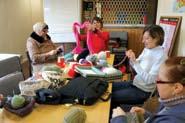
And beyond the trustees, there are a growing number of people that are taking a lead in running new activities. Amongst these are Joyce who set up the knitting circle, Amarjit who invited women to take part in an Asian women's support group, Chi who started a Chess club or Saadia who helps to organise the community breakfast.
In Lower Green, Neighbourhood Challenge has enabled Joy to get more involved in leading local activities...
Joy is an energetic, retired resident of Lower Green. Before Neighbourhood Challenge she was a member of the Gold and Silver Club and enjoyed going along to meetings every week. She was asked to represent the group on the Neighbourhood Challenge Steering Group and went on to start an art group, run art sessions with young people, and become an enthusiastic member of 'knit and natter'. After living in Lower Green for 38 years, Neighbourhood Challenge has introduced her to many local people she didn't know before. Joy has emerged as a new leader in Lower Green, someone who has passion and drive to make things happen and to bring other people along with her. Neighbourhood Challenge has enabled her to grow in confidence, it has provided an opportunity for her to become more involved in a way that is quite understated yet influential. She is now the newly appointed Chair of the Gold and Silver Club and is exploring running art sessions with under-12 year olds. In her own words, "(it is) expanding my horizons well as other people's."
Ark Academy, young people have been the visionaries...
"I think that adults have realised that not all teenagers are the stereotyped troublemakers, so now they take in account our opinions and have realised that we take initiative and are very creative individuals."
Student Al-Khoei Foundation
Being involved in the project has given the students a platform to be seen as individuals and has increased their confidence. For example, one of the students chaired a North London Citizens meeting with over 500 people present and they have also undertaken interviews at college. They would not otherwise have had these opportunities; as a result they have learnt lots of new skills including leadership and entrepreneurship, team working, communication skills. This has increased their self-esteem and built their self-confidence.

2.2.2 Embedding trust
"It was a slow start - people thought the project was something run by the Council, and it needed lots of outreach and promotion to get the message out there."
(Bolton Neighbourhood Challenge)
“We feel that we have a personal connection and stake in the individual Award Winners and their projects. We are as proud and happy with their success as they are."
(Bradford Moor Neighbourhood Challenge)
"You need to empower the community, give people the tools to do things for themselves; this makes it much more sustainable, rather than bringing in people who don't understand the area."
(Speak out Speke)
In Neighbourhood Challenge we have seen that the people leading the process need to be trusted by others. We have learnt that local people need to know and have some form of relationship with those who are driving the process forward. In some instances this trust already existed because there was a well known group or set of people at the helm, or there was an outside organisation with a track record of working in the community. In other cases, organisations had to spend time developing relationships in the community to build trust over time.
This was more time consuming than some had expected, particularly where existing levels of community involvement were very low, and as a result progress with community-led change did not happen at the rate it did in other projects. It was also the case that some of the methods used to engage new people and develop relationships were not as effective as some projects would have hoped. For example, where there was too much reliance on impersonal events-based engagement, without sufficient outreach activity to build one to one relationships, levels of community participation were low.
At a local level, we have learnt it is important for local groups to:
Create opportunities to connect with people as a foundation for developing trust
Community connections are a necessary building block for an active community. Often they start with 1:1 contacts that gradually built trust, and go on to give people the confidence to become more involved. This takes time and works best when there is a regular and visible presence in the community by those leading change. We have seen that familiarity provides a foundation for building trust and that trust is hard to build when there is not such a physical and regular presence.
An example from Neighbourhood Challenge
Bradford Moor shows the impact of having a well-known, locally situated and trusted organisation at the helm...
The Bradford Moor Neighbourhood Challenge sought to identify and invest in individuals with an enterprising spirit and a commitment to social change in Bradford Moor. The project created a collection of innovative social enterprises focused on improving the lives of local people. The Neighbourhood Challenge was hosted by Bradford Moor Play and Support Services (PASS), a community organisation, with a history of local youth work, which was run by young adults who had grown up in the area. PASS was run from a portacabin set in a very visible location by the local playground. They were joined in the Neighbourhood Challenge by UnLtd, a national charity which supports and develops social entrepreneurs. The result was a working alliance which blended PASS's local knowledge and UnLtd's experience and working practice.
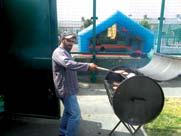
The fact that PASS was well known in the community meant two things. Firstly, they could see ways in which they capitalise on their physical location within and informal knowledge of the community to make sure the project was known about; their volunteers acted as 'ambassadors' for the project, promoting the twin messages of community benefit and enterprise in the neighbourhood, and encouraging ideas to be developed. They were visible and present in the community. Secondly, they could use their local contacts to create a panel of local volunteers and mentors to support the Award Winners with advice, guidance and networking.
2.2.3 Harnessing expertise, not directing it or depending on it
"Our partner, UnLtd, brought a model that has been 'Boltonised' to work well here."
(Bolton Neighbourhood Challenge)
"Trafford Housing, have brought a local expertise that has been pivotal for the work in that area."
(Changemakers Greater Manchester)
"We were able to move ahead with the community engagement very quickly because we could draw on the Foundation's expertise in generating entrepreneurial spirit and ability and its previous engagement experience.”
(Stand out Darwen)
Community-led change requires people with relevant skills and expertise. Some of the Neighbourhood Challenge projects focused on capitalising on the expertise in their community; others have partnered with other organisations which offer expertise in a particular method or technique; and at times some have sought expertise from outside agencies with particular issues or problems they were facing.
Nesta made resources available for projects to bring in additional expertise as needs arose as their work progressed. They placed a strong emphasis on ensuring that external support providers also built the capacity of the community to do things for themselves wherever possible. They accessed expertise and training in legal and constitutional matters, in social media and technology, and on specific engagement methods, for example; Asset Based Community Development from Nurture Development, or participatory budgeting from Involve.org. The important characteristic of this expertise was that it was not about doing things for people, but enabling them to grow their own confidence and competence; it did not create additional dependency.
At a local level, we have learnt it is important to do three things:
I. Select the right source of expertise
Expertise does not necessarily have to be parachuted into a community; it can also be found within communities by utilising the assets that already existed there. Many projects made the most of expertise that existed locally, as well as making good decisions about when outside help was needed. Communities were encouraged to draw on locally held strengths, to reduce dependence on outside organisations wherever reasonably possible and build their own resilience. For example, Brixham YES in Devon chose a local provider to give organisational support. This meant they were familiar with local networks and context, and so could deliver more appropriate advice.
II. Use expertise at the right time
Some expertise has been in place throughout the lifetime of Neighbourhood Challenge projects - for example, where partner organisations have been involved; in other cases it has been brought into projects as and when it was required (as identified by projects themselves) and provided in a flexible and tailored fashion. Timing has been particularly important however as there have been instances where expert input came too late to be of real benefit to the project. This was partly owing to logistical issues, such as constructing or sourcing appropriate provision, although in some cases support needs only emerged as projects have evolved and could not have been anticipated at the start.
III. Harness the skills and expertise of those that really understand how to involve and inspire people
In this final point we note the universal importance of expertise around community engagement. There have been a wide variety of Neighbourhood Challenge projects, and every one of them has shown how important it is for there to be a real understanding of community engagement at their core. Where experience and inspiration was drawn from external sources, such as Tessy Britton's asset mapping, or Talk About Local's digital training, or the facilitation skills of Jim Diers and Cormac Russell, Nesta ensured the providers were experienced in creative communication and engagement, and empowerment.
It is worth nothing that some people have this expertise as a result of professional training and some as a result of years of paid or voluntary experience, others involved in the community organisations seemed to have a natural understanding of what was needed to engage and enable others. The contribution of these individuals was transformational, in that it inspired people to think differently about what their role in the community could be - a lot was gained from finding them and harnessing their engagement potential.
2.2.4 Fostering support
An example from Neighbourhood Challenge
Daring to Dream in Brixham...
Brixham YES began their Neighbourhood Challenge with a collection of assets a sense of optimism, a 'can do' attitude and a belief in local people, as well as an old church they wanted to convert into a centre for community activity in the town and some money for a Challenge Prize. YES influenced local people by doing, and doing a lot - bringing the church into use as a thriving community hub, sponsoring 36 community enterprises and projects through the Challenge Prize, and holding a series of energetic, fun community events. The motto of the project became 'if in doubt, have a party!'
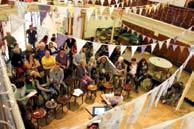
YES found inspiration in the Asset-Based Community Development approach which chimed with their wish to build on the skills of local residents, capture the power of local connections, and draw in support from local agencies. They hosted their own ABCD event in Torbay, which was facilitated by Cormac Russell of Nurture Development. The large-scale event included local people, voluntary organisations, local businesses and staff and managers from the public sector. The event posed the challenge of thinking positively and building on strengths and resources in the area. YES now find themselves leading the thinking in Torbay around community-led change, exerting a positive and optimistic influence on planning.
"The sessions with our NCVO mentor have been really helpful. She helped the staff to step back and look at things objectively. It's been good to know that she is always on the end of the phone."
(Peat Carr and Moorsley Neighbourhood Challenge)
"We are a small organisation but Nesta never made us feel small. They have helped us to think, and helped us to feel proud of what we've done."
(Brixham YES Neighbourhood Challenge)
“The programme-wide workshops were invaluable, with a lot of learning from other projects."
(Speak out Speke)
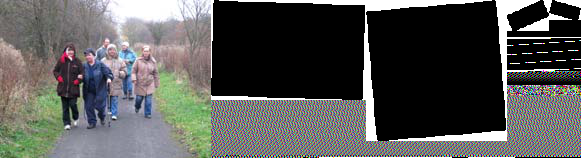
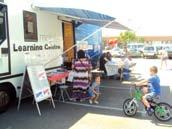
Elsewhere in this paper we have talked about how Neighbourhood Challenge projects have needed inputs from people, in terms of access to expertise, leadership and people's time. What we have also witnessed is the impact of supportive relationships at a number of levels; and by that we mean the kind of moral support that is affirming, encouraging and motivating in equal measure. It is a different kind of relationship from that of the expertise discussed above. Projects themselves refer to this as friendship or love for one another.
We have seen that community-led change is a complex and often intense process, particularly when new approaches are being tried and tested. The delivery partner, NCVO, acted as a mentor and 'critical friend' to the project leaders; giving people confidence to continue on their journey and to carry on being experimental. An independent eye, or a critical friend, can help a project keep focused on the change desired; and moral support can help boost energy when the people involved are flagging. People involved in the projects have said how important it is that they know others care about what they are doing, whether they are other local people, the funder or others associated with the programme. The interest taken in each group by Nesta, was really appreciated and some groups found this motivating.
At a local level, we have learnt it is important for groups to foster all types of supportive relationships. In Neighbourhood Challenge, support has come from many quarters and showed an active interest in what was happening in each community. Local people enthused and encouraged other people in their community; projects offered moral support and ideas to other projects. The camaraderie within communities and between projects helped create a supportive, friendly culture and to build trust and self-confidence.
An example from Neighbourhood Challenge
Support on the end of the phone...
The Neighbourhood Challenge Delivery Partner, NCVO, was charged with making a monthly phone call to each project. While this was partly an accountability measure, there was also a mentoring role. A number of projects have stated how they valued this regular contact. Even if they did not have questions to raise with NCVO, they found that the opportunity to speak to someone who knew their project well, and took a genuine interest in it, to be both supportive and affirming.
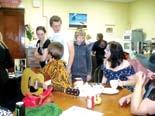
Fostering peer support...
In Brixham, projects chosen by the independent panel received a small amount of cash (on average around £700) to kick-start their work. YES then held periodic events to bring projects together to share resources and learning, and often acted as a connector, enabling people to benefit from each other's knowledge or skills.
One to one support...
At The Mill, anyone interested in running their own group or activity had the opportunity to talk through their idea with one of the trustees or paid members of staff. This tailored one-to-one support was the best way of developing ideas and giving people the confidence that they need.

3. ENABLING ACTIVITIES : WHAT HAPPENED ON THE GROUND AND HOW IT WAS DONE
"The process has been an enabling force, giving people the belief to turn their ideas into action."
(Bradford Moor Neighbourhood Challenge)
In Section 2, we described various qualities of the relationships created both with the external funding body, and within the local community. We believe that these qualities provide the fertile ground needed for any locally-led change to take place at neighbourhood level. In this section of this paper we will look more specifically at what happened in the Neighbourhood Challenge communities, and we will do this in two ways:
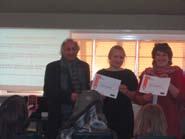
- Firstly, we will talk about the enabling features of the local approach by focusing on their style of working.
- Secondly, we will talk about the specific methods that the projects used to engage people and bring about change - we describe these as enabling methods.
All of the Neighbourhood Challenge projects described their communities at the outset as places of low social capital, this meant that they were areas where there were low levels of participation or connectivity or where community infrastructure (such as community facilities and community organisations) was underdeveloped. They set out with the intention to transform this situation by reaching out further into their communities and fostering the kinds of relationships that would motivate and support others to get involved and do things with other people. We would describe this as an 'enabling' approach; we will now go on to explain how it worked in Neighbourhood Challenge.
3.1 Enabling features: a style of working that helped to catalyse change
"It's the choreography of it all that is interesting and important to learn from.”
(Shiregreen Neighbourhood Challenge)

Figure 3: Enabling features of the Neighbourhood Challenge projects: a style of working that helped to the conditions for community-led innovation.
The diagram illustrates "An Enabling Approach" at its center, surrounded by seven key features:
- 1. Outward going to where people are
- 2. Collaborative connecting people together
- 3. Empowering enabling people to have influence
- 4. Open being open and welcoming to all
- 5. Fun ensuring the experience is enjoyable and positive
- 6. Bold taking risks
- 7. Visible making sure people know what's happening
We have identified seven enabling features that define how the Neighbourhood Challenge projects approached the change process. This is not to say that all seven have to be present for change to take place. However, where several of these features were prominent, a lot of new people became involved in new ways; creative new projects, clubs and business ideas began. Where these features were less evident, it was much harder for projects to bring about change. In other words, we learnt that it was not only what people did that made the difference, it was the potent combination of what they did and how they did it that really mattered. We have seen that an 'off-the-shelf' method alone is unlikely to enable change unless it also embodies some of the seven enabling features below.
| Enabling Feature |
Example from Neighbourhood Challenge |
| 1. Outward Many of the projects went out to places where people were (such as their doorsteps) and where they gathered (at bus stops, outside shops, at events, in public squares) to have conversations with them about their ideas and interests and talk to them about how they could get involved. This worked much better than using posters or newsletters to reach people. Some of the creative ideas included holding pizza parties in hair salons, (SE-Village, Peckham) and taking out a travelling living room to local shops and pubs (Darwen Academy). This created friendly spaces for conversations on people's own ground. |
Going to where people are “A key part of how the project has worked has been going to where the community is e.g. at local events and the Open Space event. We have made sure to go into the community and tried to make it as easy as possible for people to participate. So we have used known places where people feel safe and we have always coordinated with local community workers etc.”
(Speak up Preston) |
| 2. Collaborative Methods were designed to bring people, groups or organisations together so that they could share and develop their ideas or collaborate on new projects and activities. Some clustered people around common interests or built alliances between community organisations to create new opportunities for community action. Ark Academy students participated in informal gatherings to build alliances across different parts of Brent in London. One such gathering was a community Iftar during Ramadam which was attended by over 60 different groups, where people breakfasted at sunset and discussed how the London riots affected their community. |
Connecting people together “You've got like I said the Jewish community, the Islamic community and the Christian community...so if you can get these three communities to sit down and say right actually our common interests are opportunities for young people and safer streets, its just amazing, and that agenda doesn't come out of Christian ideology, or Jewish or Muslim ideology, it just comes out of the need for our community to be better.”
(The Ark) |
| 3. Empowering There has been a commitment to finding new ways to shift power and enable people to see themselves as agents of change and innovation within their own community. For example, community members have had opportunities to identify priorities or directly influence how financial investments are made such as the Participatory budgeting led by Changemakers in Manchester Leadership and mentoring schemes have helped to grow confidence and capability so that people can direct and lead new projects and initiatives, such as support given to mentoring new project leaders in Brixham, Devon. |
Empowering people to have influence “We've given people trust. We've taken a chance on people...We've taken away the bureaucracy as some people can have great ideas and be great assets in the community, but not be good at filling out forms.”
(Bolton Neighbourhood Challenge) |
| 4. Open Events and activities have been widely promoted through word of mouth, poster campaigns, press releases, radio broadcasts and social networking so that people know what is happening and how they can get involved. The doors of community spaces have been opened at all times of the day and visitors have been greeted with a friendly and welcoming face, as has been the case at The Mill. There has been an open invitation for people to get involved in any way they want, for example at Peat Carr and Moorsley's Make A Change days. |
Being open and welcoming to all “You just walk in and it feels like home. And once you come in, you want to get involved and you want to help to make it a success."
(The Mill) |
| 5. Fun There have been attempts to keep participation enjoyable and to avoid it becoming a hard slog for those involved. In addition, many opportunities have been created for people to simply have fun together. Behind all the community breakfasts, talent shows, community BBQs, sports marathons and awards ceremonies has been a desire to ensure that people enjoy being together, so they want to get involved. Shiregreen in Sheffield held a series of really exciting events with different themes including record-breaking badminton activities |
Ensuring the experience is enjoyable and positive “I went to the community BBQ because of a free burger and now I'm running the football team.”
(Coopers Edge Trust) |
| 6. Bold The projects have been open to taking risks. They have tried out methods they have never used before; they have invested in ideas without any guarantee that they will work; they have taken a chance on people that have no track record (but a bucket load of enthusiasm!). In Lower Green for instance, a whole raft of project ideas, all in different stages of development, were awarded Challenge Prize funding. The prevalent attitude amongst many has been: 'let's give it a go'. Holy Trinity also trialled the use of Listening Matters in a faith community for the first time. There were things that havn't been done before, and they required some amount of courage on the part of the groups. People were often surprised by what they could do. |
Being prepared to take some risks “One of the things we are known for is innovation and riskiness. People remember the crazy things we've done and come to us because we are not a regular venue. We've never turned an idea away because it's too crazy.”
(The Mill) |
| 7. Visible Ideas and activities have not been hidden from view. They've been actively promoted and celebrated through newsletters, websites and word of mouth. Coopers Edge Trust were particularly successful in using Facebook to publicise what was going on in the community. Activities have taken place in public spaces and places like community halls and local parks. There has been a recognition that people need to see things happen to be confident that change is possible. |
Making sure people know what's happening “People put up ideas on the Facebook page and then other people comment on them. It encourages accountability to each other and demonstrates that people care.”
(Coopers Edge Trust) |
3.2 Methods library: tools and techniques for mobilising communities
Here we describe the methods that have been used to enable change within communities and we have split them up into several useful sections that relate to their core purpose. We are not advocating any one particular approach or method over another because their effectiveness depends on how they are applied in practice.
Neighbourhood Challenge projects have consistently demonstrated just how important it is for local people to choose from a menu of methods, to adapt them and to create locally appropriate ways of mobilising their community. They designed their own processes that used a combination of individual tools and techniques, sometimes simultaneously and sometimes sequentially. What follows is not an exhaustive list but it gives a flavour of the kinds of methods that have been used. They worked best when they were applied in a way which reflects the features in section 3.1. You can read much more detailed descriptions of how these methods really worked by accessing the individual project papers at www.nesta.org.uk/neighbourhood_challenge.
A) Methods for uncovering potential
These are the methods that projects used to reach out into their communities, to engage new people and to start conversations about what matters to local people and the changes they would like to see.
- Open events, often making use of outdoor spaces.
- Often open to all.
- They provide opportunities for people from different parts of the community to come together and take part in fun activities.
- Have also been used to capture ideas and find out about skills within the community.
- Publicised through multiple routes; flyer publicity found to be least effective.
Example: Over 1,000 residents attended the Let's Celebrate Shiregreen summer event, where they got involved in a wide range of activities ranging from snooker demonstrations, cake stalls, music concerts to treasure hunts, fairground rides and open top bus tours. All the activities were designed to get people talking to each other and capture ideas for new initiatives in the community.
Touring living rooms and conservatories
- Touring living rooms that go to where people are gathered.
- They have provided a space to have conversations with people about 'what they are good at' or 'what they like about their local community', before inviting them to contribute project ideas or attend a local event. This is very different from a more traditional 'needs' assessment. People found it motivating and empowering to talk about assets and skills.
- A comfortable, recognisable space, but in an unusual/unexpected place, makes people stop and chat.
Example: In Darwen, armchairs, potted plants, a standard lamp and a toy cat accompanied the project staff to community venues, events, supermarkets and anywhere people gathered. The Living Room became a common sight in the town, creating new ways to talk to people about their community.
Photography
- Residents are provided with cameras and encouraged to use them to photograph things they like or don't like about their community.
- Photographs are then shared and used to prompt discussion and ideas for new projects and initiatives.
- Can help to encourage participation among those who don't like reading and writing.
Example: In Cambridgeshire, the process of engaging local residents in community planning was kicked off with a photography day. Residents were invited to pick up a camera and go out and take photographs that reflected their response to questions like "What is your favourite place in your village?" and "Can you get to the places that you need to? Please take a picture which shows your feelings about transport in your village."
Walkabouts
- Residents get together in daylight and walk around the local neighbourhood to talk about assets, problems or issues they could actually see.
- Helps prompt discussion and thought about the potential to tackle problems using existing physical resources differently.
Example: In Peat Carr and Moorsley a walkabout was used to help identify where there were issues that could be addressed through Neighbourhood Challenge.
- Local people themselves, given some research training, go out into their community to gather views and ideas from other local people or to uncover hidden skills and talents exist.
In Shiregreen, community researchers took a 'talent spotting questionnaire' out to schools, shopping centres, events and barbeques to talk to people about their interests, ideas and abilities. All the information that was collected was then used to create a database of local skills and bring together clusters of people with the same interests or skills to develop new projects and activities.
Yarn bombing
- Involves colorful displays of knitting or crochet instead of paint in public space.
- Provides a way of drawing attention to particular issues in a humorous, non-confrontational way which captures people's attention.
Example: In Brixham, street furniture took on a whole new look as belisha beacons, street lamps, benches and the harbour railings were used to promote project activities and encourage people to participate.
B) Methods for developing relationships and ideas
These methods were used to start to build relationships and networks in the community, and to generate ideas about what mattered to local people and the changes they would like to see.
- Open events in school buildings, sports halls and community centres that bring together large numbers of people from within the community to share and develop ideas, or make choices about local projects.
- Widely promoted and skillfully facilitated, they involve high levels of community participation in their promotion, design and delivery.
- The facilitation techniques used vary in detail, but include a range of ways of encouraging interaction and ideas sorting using discussions in pairs, table discussions and post-it note commenting, voting on priorities and much more.
Example: Darwen organised 'ideas into action days' at which local people found out about each other's ideas for change in the town by 'speed networking' and were then given the chance to choose which ideas would be taken forward. The events were positive in approach, focused on solutions rather than problems and involved everyone who attended.
Open Space events
- Events that bring together a range of people, to discuss issues around a central theme.
- The events are based around workshops that participants identify, create and manage themselves.
- The events allow anybody to start a discussion around a topic important to them, which means no one person or group can dominate disproportionately.
Example: Speak up Preston encouraged people to attend an Open Space event where they were shown a short video about their area filmed by community journalists. The video sparked ideas and comments that were then explored in workshops where people talked about possible actions that could improve the neighbourhood.
- On line social platforms providing a space to exchange ideas, communicate what is going on and generate interest in local initiatives.
- Can enable those to participate who are unable (or unwilling) to come to meetings in real life as it is not time/place dependent.
Example: In Coopers Edge, virtual connections were made on the Coopers Edge Facebook page which people used to introduce themselves to each other and share their ideas for new community activities. With over 200 followers, Facebook proved to be a good way of getting people together quickly to do things in the community.
Ideas Labs
- Designed to bring together people that are leading new projects or initiatives so that they can talk about their ideas and support and advise each other.
- Has a specific focus around peer support so can help people to create new supportive relationships around their own ideas.
Example: SE-Village in Peckham brought together people with an interest in setting up a new local club or group so that they can present and develop their ideas in a safe and supportive environment. The Ideas Labs sparked some new collaborations and helped to foster a sense of collective identity amongst the people involved.
C) Methods for inspiring people to take action
The following lists methods that projects used that energised, encouraged and motivated local people to take action on the issues that mattered to them, to help create the changes that they wanted to see.
Alternative currency/time banking
- Enabling people to make non-monetary payments for the hire of spaces for their newly established groups.
- Provides a means of rewarding people for their contribution to the community. For each hour of service that time banking members give, they earn an hour's worth of alternative currency which can be traded for other services.
Example: SE-Village in Peckham gave all new clubs and groups a stipend of ten hour bank credits (Peckham Pounds) per week for three months to enable them to get started at little or no personal financial expense. After this period, club leaders paid for room hire in Peckham Pounds, which they could earn from other voluntary activities such as doing administration work for SE-Village. Also, people attending classes or groups had the option of paying in Peckham Pounds.
Filmmaking
- Used to capture and convey people's views about their local community.
- Sometimes themed around a specific issue such as older people and other times they were designed to reflect a diverse range of perspectives.
- Helps to highlight individual stories, or difficult issues in a variety of ways; success depends on who views the films.
Example: In Cambridgeshire, ideas for action in the community were gathered and then crystalised before they were presented in films featuring local residents. When the films were shown, they attracted good audiences, brought the issues alive and created an interest around the actions that had been highlighted.
- Provide a space for people to come together, meet each other, exchange ideas and find common interests.
- A venue for all types of community events and offered meeting spaces for fledgling groups or clubs.
Example: Transformed by local people from a disused, neglected building into a self-running community hub, The Mill hosts local events, provides meeting rooms for groups and exhibits local art and craft work. It has an honesty library, a well equipped play room and a 'living room' space for people who want to drop in and read a paper, play a game of cards with friends or simply have a cup of tea.
- A way of testing out the level of interest within the community for a particular idea and raising some additional finance from local partners.
- Can provide a concrete indication of community support for specific ideas.
Example: SE-Village trialled Crowdfunding at a celebration event. Members of the community had the opportunity to invest Peckham Pounds in their favourite SE-Village initiative. This investment was then matched in £ stirling by a local sponsor, Restore. The event generated a buzz within the community and considerable media interest and acted as a confidence-boost for the club leaders.
Award ceremonies
- Special events to celebrate achievements and reward people for their contributions to the community.
- They are upbeat, fun and enable people to hear about what others are doing in their community.
- Spark off new relationships and ideas, providing a catalyst for more activity.
- A visible celebration of positive achievement which can help combat negative stereotypes in some areas.
Example: In Shiregreen, an Awards Night was organised for over 300 people to celebrate neighbourliness and reward the things that people do for their community. The event highlighted the many positives about living in Shiregreen whilst also helping to connect together some of the individuals and groups that had been active over the previous year.
Mentoring
- Mentors are recruited to support individuals with the implementation of their project idea.
- Mentor relationships can work in a variety of different ways; personal chemistry is important in achieving long-term success.
Example: SE-Village carefully matched local leaders and business people from within the community with new people coming forward with a new project idea.
D) Established methodologies
The following section is slightly different from those above; it highlights examples of projects which adapted specific and established methodologies to fit local circumstances.
About one-third of the Neighbourhood Challenge communities used a methodology – a specific group of methods, tools and approaches that were already quite established. However, they weren't necessarily replicating what had been done before. They made adaptations and adjustments to suit local conditions and the one-year timescale of the programme; they introduced additional elements to their approach; or they applied the methods in a different kind of setting.
Example: Ark Academy, Area: Brent, North London.
A Community Organiser from Citizens UK worked to create an alliance of community-based organisations and trained their members to run a Listening Campaign. This involved one-to-one conversations, small group discussions and then larger meetings to discover common concerns and find ways to make change happen. A coalition was formed between the community-based organisations and relationships were developed around collective activity. At larger meetings and assemblies, shared priorities were identified and local politicians, and decision makers engaged around the identified priorities and commitment sought to address these.
Key adaptation: A Challenge Prize was added into the organising methodology. It may have attracted more rapid engagement owing to the time-limited competition element. Whether this was sustained remains to be seen. You can read more about challenge prizes on the Nesta webpage www.nesta.org.uk.
Root Matters Listening Solutions
Example: Holy Trinity, Area: NG24 postcode (Newark and surrounding villages).
RE:generate's Listening Matters process entailed the training of a team of local people to be listeners. The team went out into the community and had one-to-one conversations with people about what they love about their area, what are the local issues and what could be done about them. Groups of people with common interests were brought together to discuss how issues in their community could be addressed. Projects were developed with the support of experienced facilitators and the leaders of these projects used the listening process with friends, family and neighbours to test out and build support for their project.
Key adaptation: applied simultaneously in a faith community and a geographic community which meant that different engagement methods were used to reach the communities.
Participatory Budgeting
Example: Manchester Neighbourhood Challenge, Area: Old Trafford, Moss Side and Collyhurst.
Participatory budgeting is often used by local government to engage citizens in allocating council spend. In the case of Change Makers, this process was driven by the local community themselves, using their own organisational powers and addressing their priorities rather than councils.
Local steering groups were formed as the basis of Participatory Budgeting and were made up of known community leaders and organisations in each neighbourhood. Each steering group designed, promoted and hosted a local event for residents where all the attendees were given a budget and asked to vote on project proposals drawn up by local people, groups or organisations. This helped build ownership of, and engagement in the projects.
Key adaptation: A blending of Participatory Budgeting-led by the communities and Alinsky Organising which was used to take on the issues after the events. (see previous page for description of Alinsky Organising.)
Example: Speak Up Preston, Area: Deepdale, Ribbleton and St Michaels.
People from three adjacent neigbourhoods were recruited and trained as community journalists, so that they could interview people and use digital and social media to report on a wide range of stories and concerns of local people. These were reported on local radio and TV and through blogging, with the aim of stimulating debate and action.
Key adaptation: Challenge Prize and using journalism to effect local change, and to actually lead campaigns and run local projects. In reality this proved very challenging as the engagement and action skills required are very different from journalistic, reporting skills.
Example: Cambridgeshire Neighbourhood Challenge, Area: Somersham, Pidley, Prickwillow and Tydd St Giles.
This involved a wide range of people in a step-by-step process that started with the prompting of ideas and opinions about the local community through photography. These ideas then provided the stimulus for conversations about how to address problems and make the most of local resources. As these ideas were crystallised they were transformed into local action projects.
Key adaptations: Photography, filmmaking and a prize were combined to bring a visual, creative, and 'fun' competitive element to what can be quite technical community planning discussions.
Investing in Social Entrepreneurs
Example: Bradford Moor Neighbourhood Challenge, Area: Bradford Moor.
The project included a package of funding and support to identify and sponsor social entrepreneurs in communities. It was adapted from the UnLtd model of finding and investing in social entrepreneurs, usually run at a national level. The usual model involves searching for talented potential social entrepreneurs, and providing them with financial support and mentoring.
Key adaptation: collaboration and direct delivery with a local organisation, meant that the method was adapted to local circumstances, and reached further into the local community using a trusted network to encourage participation and build confidence.
3.3 Methods Library: using small local funds to galvanise action
Many of the 17 community organisations used part of their Neighbourhood Challenge budget to offer a range of small funds to people who wanted to start up their own small initiatives.
The thinking behind the use of small financial awards alongside the community engagement methods described above was that if applied in the ways described they could help generate involvement, drawing in a large number of new people, and creating a significant level of action and community connection that reached far beyond the core project teams in each area (rather than say, simply purchasing materials or equipment that may or may not be used).
It was important to Nesta therefore, that any small local funds would largely be used in this outward facing way to catalyse action. However, in practice this shift in mindset proved to be a real challenge for some organisations, particularly those used to funding based on needs. NCVO and Nesta found that all of the communities who were trying to run small funds in an 'asset-based' way, needed support and challenge on their decision making processes to maintain a focus on investment in assets rather than spending on needs.
If applied in an enabling way, we found that small local funds can have a catalysing effect in two broad ways.
Ripple effect
Making a number of small awards can reach far beyond the core organisation, to galvanise the wider community if they are invested in the right kind of projects. They can have a multiplier or ripple effect by supporting activities that bring new people together, grow local skills, catalyse new relationships and new initiatives. These can be understood as open, outward facing funds. Conversely, if money is invested inwardly for something that will only benefit one organisation, for example for the purchase of a new printer, then the catalytic potential is limited.
In practice the distinction was hard for groups to make. One example of a group that worked hard to make this a success is in Lower Green where a wide range of new, active clubs were started by local people using equipment and not just purchasing items without testing local demand for them. Some clubs found they hardly needed much equipment in the end, like the cooking club who met in people's homes.
Magnet effect
The opportunity to bid in for money or to decide on how money is spent can draw in new people who have not been previously engaged. Neighbourhood Challenge has demonstrated that the opportunity to influence how money is spent can be a powerful magnet, bringing together new groups of people for the first time to talk about the kinds of changes they would like to see in their community. For example in Boothtown, Halifax, the project worked hard to design a welcoming, cross-cultural participatory budget process that was transparent and fair for all. This led to the best-attended community event the group could remember!
Where we saw these types of catalytic effect taking place in the communities, the following dynamic was observed and reported:
- New people were prompted to talk about and develop project ideas that could happen as a result of accessing the funds.
- New ideas were developed through conversations with other people.
- The levels of support for an idea were tested out because people had access to 'try it out' using small start up funding.
- Visible activity served to motivate and inspire others, promoting a 'can do' atmosphere which encouraged new people to get involved.
- People had new opportunities to influence decisions about how local investments are allocated which may not have been evident or accessible before.
- Supportive relationships were fostered between community organisations administer-ing awards and local people trying to start a new idea.
However, in some cases the funding became unhelpfully distracting or divisive. This was particularly true where a small group of peers were involved in 'judging' whether other project ideas could go forward, and was lessened where the decision making was done either through a collective vote, or an independent panel. We have observed how different approaches to allocating such incentives affected local circumstances and local sensitivities and where possible we have given examples of both the catalysing and divisive effects of the funding in the following table. It is very important to remember that all of these methods represent only one small part of the overall approach to catalysing change in each local area; the community engagement methods used in each community was also a key factor of success.
You can read more detail about each method below in the individual case studies at: www.nesta.org.uk/neighbourhood_challenge
Time match funding
- An open call for ideas with minimal bureaucracy attached to the application.
- The requirement that people applying for funding also put forward some of their community 'volunteer time' as a match fund to make the project happen on the ground.
- A 'what can you do?' asset-based approach to asking people not only for their ideas but for a collective contribution of time and skills.
Example: The Mill: Attracted people to contribute project ideas and then funded a wide range of start-up clubs and groups. The time match idea was used to make sure that people would be actively engaged through the projects being funded. It was also used along with requirements to show how the project would benefit the local community. It was challenging for local people to be judges of others, so the panel was made up of a mix of people who were slightly removed from the day-to-day work of The Mill. This helped the group to make decisions that were, and were seen to be, fair and independent.
Entrepreneur development awards
- Invite people to put forward their business idea.
- Support them if needed to develop a feasible plan.
- Plans go to a panel to be assessed.
- Final awards are made to ideas judged to be viable.
- Feedback and support given to those who weren't successful, and to those who were.
Example: Bradford Moor PASS: used UnLtd methodology (the foundation for social entrepeneurs) and adapted it to suit their local circumstances. Their adaptation and customising was an important part of embedding the work locally. They focused on inspiring local young people to submit enterprise ideas for funding and then supported them through connecting them to locally-based mentors. The local mentor approach was seen by the group as an important factor in making the project successful.
Staged 'prize' funding
- Begins with an open call for ideas, groups are seed-funded at the first stage to trial their idea/gather momentum and local interest to take it forward.
- Mentoring/support may be provided to help shape the idea.
- A second stage then sees a final 'prize' fund being allocated to the ideas judged best by the panel.
Example: Brixham YES: Put out an open call to local people, backed up by a significant and creative community engagement process. They received 36 entries at the first seed-fund stage. Twenty-six of those entered the second 'prize' stage. A very supportive mentoring process took place with all who wanted access to idea development support. Many were young people. In the final stage, those who had entered set out an exhibition to promote their idea. Local judges made a final decision and prizes were awarded based on the criteria. Although lots of ideas were set up and a great buzz was created, the project found it very challenging to pick winners and losers from the community, and felt that although the seed-funding stage was very beneficial and ‘catalytic’, the second judging stage dampened many groups' enthusiasm. The group reflected that although the prize catalysed action and involvement, that they would use a less competetive method in future.
Dragons' den funding
- A panel of 'dragons' is drawn together to judge the award - usually local business experts.
- Very small pots of funding are made available to applicants.
- A very simple application process is publicised.
- A face-to-face 'pitching session' takes place where people pitch their idea.
- A decision is taken on funding on the spot; some 'mentoring' may also be provided alongside funding.
Example: Coopers Edge recruited local business experts to be the judges on their panel. They then invited people to put their idea forward through a simple application form.
Projects made a pitch to the 'dragons' on the night of the project at a fun community event. The group also used 'crowd' voting as part of the final decision making process. It was felt this encouraged new people to lead projects. The process was designed to be a welcoming and fun community event rather than an intimidating panel interview process.
- Pooled funds are made available to the community and widely publicised.
- Engagement takes place to build interest in being involved in the PB event itself.
- A large event takes place in the community, people are split into discussion tables to encourage debate on the ideas.
- Projects explain their ideas and present them at this event.
- A transparent voting process is used to collectively allocate funding across the ideas.
- Sometimes people also are asked to pledge their time as part of their vote.
Example: Boothtown Partnership ran a large participatory budgeting (PB) event in a local centre. They had previously carried out a series of smaller engagement events and 'dragons' den' pitching panels to build community confidence and awareness. The combination of PB and dragons' den meant they had a good turnout of interested people, including those new to community participation. The project worked hard to make sure their voting system was fair and transparent. This was a big challenge but they produced a good system with some support from the participation charity Involve. The result was that funds were allocated to projects, and some people volunteered to help make them happen.
Crowdfunding events
- People are invited to attend a public event where they pitch their ideas to a crowd of potential supporters.
- Supporters pledge funds to the ideas there and then.
- Groups then receive the cash contribution raised to carry out their work on the idea.
Example: Peckham - SE Village began testing out crowdfunding events in their community. People were invited to come to a large social event, part of the evening was given over to people who wanted to pitch their ideas and a number received some funding through the process. The project team recognised that this would have to be combined with mentoring and support to make the most of the funding available.
Looking at the examples above, we can see that as in the previous section (3.2) the 'method' alone is not enough to make funding work in a catalytic and transformative way; it is very much more about the combination of the way the funding has been applied; the engagement that has taken place, and the way decisions are taken.
Below, we have outlined three suggestions for those who would consider local funds as a method for catalysing community-led action:
i) Introduce awards as part of a process – not a stand-alone method
Neighbourhood Challenge has demonstrated that financial awards are only enabling if they are part of a coherent approach to engaging people. They should not be the starting point for promoting community action, particularly where relationships within an area are under-developed and there are low levels of community activity. Awards work best where they are based on a foundation of good community connections and trust. Where this isn't present, it is necessary to first invest some time in activities that build relationships and invite people to talk about and explore their ideas with others. This takes time, and for some Neighbourhood Challenge projects, one year was not sufficient to enable people to fully engage with a Challenge Prize process. Many groups were just beginning their work on the ground by the time the project year ended.
ii) Adopt a nurturing approach
We've learnt that it is important to spend time talking with people about the opportunities to access financial awards. Not only does this ensure that people understand the purpose of the local finance and the process for accessing it, it also creates opportunities to explore with individuals how they could use the funds. It helps to demystify what can seem like a very intimidating process. This is particularly important if a fund is trying to attract new participants who haven't been actively involved in community action before. Neighbourhood Challenge has shown that this personal approach can work well, particularly where people who are known and trusted locally act as awards ambassadors. Paper-based promotional methods such as posters and leaflets have been shown to be less effective.
Most people don't have experience of initiating projects in their community. If an awards scheme is intended to bring new people into community action, then one-to-one support and encouragement is vital. Some Neighbourhood Challenge projects invested considerable time in this - helping people to develop their idea or connecting them with others so that they could collaborate on a project. Finding the resources to offer this support can be challenging particularly where the responsibility for the support role rests with a small number of people.
Access to ongoing support, for example through mentoring, can help award winners to maintain momentum and overcome challenges as they are encountered. Leadership of a project can be a big commitment; there are examples within Neighbourhood Challenge of projects faltering in the early stages because of people's lack of confidence or experience. Mentoring from NCVO was very important at these points. Creating opportunities for award winners to come together and share their experiences can also be a powerful enabler of new supportive, local relationships and connections.
iii) Think carefully about the scale and purpose of awards
We have seen from Neighbourhood Challenge that the size of award is an important consideration. A large fund can be problematic for a number of reasons: firstly, an inexperienced community organisation can find the task of administering, distributing and accounting for a large sum of money both daunting and distracting. Secondly, a substantial single fund can be off-putting for local people because of its association with high levels of responsibility and commitment. Finally, some organisations were not comfortable with the idea of one project (the winner) receiving a substantial award, whilst others (the 'losers') received nothing. As a result, some organisations chose to distribute their Challenge Prize award amongst a number of projects or themes. What effect this dispersal may have had in the long term remains to be seen.
Smaller amounts of funding have had more appeal; some Neighbourhood Challenge areas were awash with ideas for new 'micro-projects' that required a relatively low level of investment. One project learnt an important lesson about finding the right scale of award to attract young people and reduced their second round of funding down to just £100.
4. UNDERSTANDING WHAT CHANGED
So far in this report we have focused on the type of relationships that catalyse local change, the way in which work is carried out on the ground through those enabling relationships, and the methods and funding tools that provide a structure for local projects to take place.
We now turn our attention to understanding what changed as a result of the programme, and the nature of the changes that took place.
4.1 Our starting point for understanding what has changed
Unlike most grant programmes, Neighbourhood Challenge was not seeking to impact upon a narrow set of pre-defined targets, outputs and outcomes. It had a broad ambition to learn about how communities could catalyse change and be sources of innovation. It didn't have a strict definition of what that change must look like at the outset in each local area. Broad ambitions for the programme were therefore communicated, such as drawing in new people and enabling others to lead. These ambitions tended to imply an 'outward facing' way of working rather than providing a specific set of goals or targets. Nesta's rationale for adopting this approach combined some assumptions about community-led change.
Rationale
- Community-based organisations know what methods will work in their local area. They need the freedom to experiment, reflect and adapt in order to discover engagement approaches that are effective within their local context. Outputs and outcomes, if too tightly defined, have the potential to inhibit risk-taking and creativity.
- Community-led change is an evolutionary process. As more people get involved, new leaders emerge and new activities and projects develop. It is therefore not possible, at the outset of the project, to predict with any degree of confidence the precise outputs and outcomes that will be achieved.
On one level, Nesta's approach was very liberating for the projects. It gave the 17 Neighbourhood Challenge groups the permission to follow their own locally-led journey of change without having to worry about meeting one-size-fits-all programme level targets, outputs or outcomes.
On another level though this presented a significant challenge to the funder, Nesta. The programme had the clear aim of learning from 17 projects; but if they were all following their own journey of experimentation and adaptation, how could their experiences be compared and how could the learning be aggregated?
Nesta's response, led by the Learning Partner, Icarus, was to draw on the extensive community organising, community development and well-being literature that tells us that strong and dynamic communities are evident where:
a. Communities are making the most of local assets - in particular the skills, passions and energies of local people, and the places and spaces where people can meet and make things happen.
b. People and groups are well connected with each other and with those outside their community.
c. People have opportunities to influence what happens in their community.
d. People have the ability and ambition to drive change.
Using these four themes as an organising device, Icarus analysed the 17 project plans that groups had written to construct a framework of 'change statements' that were then used to understand the nature of the change that groups wanted to see in their areas. It consisted of a series of 'change statements' organised under four themes, with each statement representing a clearly defined outcome.
Change Statements: helping us understand what changed.
a. Making the most of LOCAL ASSETS
- New people are involved in formal or informal voluntary activity in the community.
- There is an increase in the number of hours of formal or informal voluntary activity in the community.
- New group/organisation activities have been developed to meet local priorities.
- New financial resources that benefit the community have been identified.
- Better/increased use is being made of community buildings and green space.
- Better/increased use is being made of skills within the community.
- People are identifying the personal and community benefits of being active and involved in making changes in their community.
b. Making CONNECTIONS
- There are new relationships and more links between groups/organisations.
- People feel more connected to other people in their community.
- There is a greater range of people involved in making changes within the community.
- Local people are supporting and helping each other more.
- People use and maintain their connections in different and better ways.
- People are more active in groups that aren't just on their doorstep but stretch or reach beyond their local area.
- Different groups understand more about each other which allows them to work together better.
c. More opportunities for INFLUENCE
- There is a better understanding of how the resources within the community (such as people and buildings) can contribute to change.
- People are more interested in local issues.
- People are more active in making changes in their community.
d. Ability and ambition to drive change
The statements were used in a number of ways:
- The projects themselves were able to select and prioritise the statements they most wanted to use to understand their own local work.
- Nesta was also able to understand key common factors of change through a coherent framework which also allowed for local variety.
- The statements provided a reference point for the groups through the lifetime of the programme, drawing them back to their original overarching ambitions.
- They provided a mechanism to pinpoint specific illustrations of change.
In essence, the change statements provided a lens through which it was possible to view the changes that were happening on the ground. Using language that was accessible, this approach helped both the projects and Nesta to consider change in a flexible and locally relevant way.
4.2 Change at a glance in the 17 communities
In our learning papers about each of the Neighbourhood Challenge projects, we describe in some detail the changes that have happened on the ground for each one. You can read more about those individual learning stories at: www.nesta.org.uk/neighbourhood_challenge
The decision to place more emphasis on change statements than a list of outputs did not mean that some significant 'outputs and outcomes' were not created in the local areas. In fact, there was a real range and variety of output and outcomes that emerged naturally through this more flexible co-developed approach.
To illustrate this, we present some local examples of this type of change, as achieved under each of the four themes in the framework:
a. Communities are making the most of local assets
- In Bradford Moor and Bolton 26 social entrepreneurs and five young entrepreneurs are beginning new social enterprises. The value of the assets attracted to these enterprises and the voluntary time invested exceeded the cash value of the awards (over £70,000).
- In Boothtown new people from within the community have become involved – over 130 took part in the project's Community Budgeting event and a thriving Community Shop has been created, staffed by new volunteers.
- Brixham YES has created 36 local community projects and enterprises. The volume of voluntary hours and commitment given to the work exceeded 400 hours in the final month of the project.
- At The Mill, a vast range of skills from 'new' people has been donated to help transform the derelict former library building into a thriving community centre.
- In Lower Green, the community centre has become so busy it is running out of time and space for activities led by local people.
- In SE-Village, ten volunteer mentors have given business and coaching skills to local people.
b. People and groups are well connected with each other and with those outside their community
- Ark has created an alliance of eight diverse organisations, with Ark academy and Citizens UK at the centre.
- In Coopers Edge, new relationships with external partners have attracted new resources into the community, including youth provision and health services.
- In Peat Carr and Moorsley new connections have led to youth work services being delivered in the area for the first time.
c. People have opportunities to influence what happens in their community
- Changemakers Greater Manchester enabled over 550 people to vote on how a budget for their community should be spent. They have influenced a social landlord to adopt Participatory Budgeting. This will see a further £200,000 spent by local people.
- Because of Speak out Preston, community views have influenced local community plans.
- Because of Stand out in Darwen the Local Authority now has Ward Solutions sessions rather than Ward Forums to steer dialogue away from problems and towards ideas for change.
d. People have the ability and ambition to drive change
- Changemakers Greater Manchester trained 50 people as Community Organisers.
- In Shiregreen, local people now have the skills and confidence to run a website and newsletter.
- Because of the work of Holy Trinity in Nottingham, 15 new community projects led by local people have been established.
- Speak up Preston has trained 25 community journalists.
- New residents have started attending the Parish Council meeting in one of the villages. Cambridgeshire ACRE worked in for the first time; there is a new energy to use the Council's power and authority to lead change.
4.3 A closer look at community-led change – understanding its transformative qualities
We have discovered that community-led can have a catalytic energy and a mobilising effect on those who come into contact with it. As it is owned and led by a network, it evolves as the group develops its approach; because of this it can be challenging to 'pin down' and measure in conventional terms. In order to understand community-led change, and its transformative nature, we think it is helpful to understand its defining qualities:
| Transformative qualities of community-led change: |
Illustrations from Neighbourhood Challenge |
| Catalytic |
|
| Community-led change can be catalytic. It creates a reaction in individuals that prompts involvement and engagement with others. This in turn changes the way people think and feel about their community. New ideas and new projects are sparked creating new opportunities for change. It can offer an organic process of influence which works 'with the grain' of local networks, broadening them. |
"The process has a multiplier effect - we invested in ideas...now those people are connecting with others in the community and involving them in their projects. These benefits will grow as the projects develop, generate income and become more sustainable. This is an important distinction – the money could have been spent on the direct alleviation of need, but once spent, it would be gone. In this way, resources continue to be used to benefit local people." (Panel member and mentor, Bolton Neighbourhood Challenge) |
| Connecting |
|
| Community-led change links people to one another. It is rooted in human interaction. It produces connections across communities, across cultural and ethnic identities, and generations. It is based on the goals that people have in common rather than what separates them from each other. This strengthens networks, and could increase social capital. |
"It has been a collection of little projects, but it has brought people together in a big way." (Ward Councillor, Boothtown Challenge) |
| Empowering |
|
| Community-led change is empowering. It gives people the confidence to believe they can make a difference, that they have something to contribute, and that they really can have a place in the life of their community. It encourages ideas and solutions, that are led by local people, and begins with 'we can', not 'we need'. This makes people more confident and pro-achive. |
"It has been absolutely amazing - there is no way I would have had the confidence to set up my own business without this process. It has honestly been life changing for me.” (Challenge Prize beneficiary, Brixham YES Neighbourhood Challenge) |
| Influential |
|
| Community-led change disturbs the status quo and creates new power dynamics. It offers new opportunities for people to have influence over decisions that affect their lives. Its social nature means that it can also act to connect people without political or economic influence to those who have it. It enables a group to gather influence in a wider neighbourhood. |
“We would be a powerful force if we ever needed to put some pressure on the local authority. It's easier to ignore a petition that a community centre full of diverse residents." (The Mill) |
The degree to which these qualities have been evident across the 17 communities has varied. We found that these characteristics were very much a product of the relationships that were fostered at both the programme and the local level. This is why we have placed so much emphasis on relationships in the earlier stages of this report. For example, where there were multiple trusting and supportive relationships and where new leaders were encouraged, these characteristics were clearly evident. In contrast, where leadership was not dispersed and it rested in the hands of a select few, or where people were not confident about their approach, the changes on the ground lacked a collective energy. This has shown us that interpreting change is a challenging task - it is not a simple matter of documenting what has happened, but involves understanding how the characteristics of community-led change interact in each place and group of people. We explore the four qualities in more detail below. Where we observed strong indicators of the qualities, we considered this as evidence of potential transformation. This in turn led to new projects and connections.
4.3.1 The catalytic qualities of change - examples from Neighbourhood Challenge
Community led change has created a chain reaction; as people have spoken with others about their ideas, new project ideas have emerged. This in turn has sparked new activities prompting new relationships and further opportunities for people to get involved in some way. For example, in Brixham, Darwen and Lower Green, Surrey; projects used challenge prizes to draw people in and support them to enter and to meet each other at social events.
The dramatic increase in unpaid time devoted to community activity across the Neighbourhood Challenge projects is one measure of this catalytic change. We've found that quantifying this exponential growth in activity is quite challenging; it is not simply a matter of counting 'volunteer time', although this helps understand the significance of this important contribution of time and skill by local people. Neighbourhood Challenge has demonstrated that unpaid activity can take different forms: from wielding a paintbrush to renovate a community space; to starting up a gardening project to bring different parts
Our approach was to try and capture this using a snapshot approach. We asked the projects to estimate the number of unpaid hours donated by local people in an early month of their project's life and then again in the the final month. The figures were self-reported and as such we are reporting these only as an approximation of the broad levels of change. The margin of error is likely to be high. However, as illustrated below, even if self-reporting was inaccurate to the point where the increase was half what projects estimated, the change would still represent a dramatic increase in unpaid hours being put into the projects. In reality, we suspect that the estimates may have actually led to underreporting rather than overreporting owing to difficulties associated with counting informal and dispersed activity. The question is – how much of this can sustain?
A line chart titled "Unpaid hours" shows hours volunteered at two points in a programme. The X-axis indicates "Early in programme" (0 hours) and "End of programme (circa 9 months)". The Y-axis ranges from 0 to 4500. The line starts at 850 unpaid hours early in the programme and rises to 4076 unpaid hours at the end of the programme.
The Mill provides a good illustration of the catalytic nature of the change that we have seen in Neighbourhood Challenge. Its transformation from a derelict ex-library building to a thriving community centre was possible because of a vast amount of local effort. Over 100 people turned up on the first day the doors were opened to offer their skills and time to the refurbishment task: local residents have decorated the building, made shelves, built window boxes, sewn cushions, helped to build furniture and even donated their jeans to be turned into curtains. This level of visible community activity acted as a catalyst in itself. As people got involved they talked about their ideas for how the building could be used, and from here new groups and activities emerged. Month-by-month, the programme of community-led activities on offer at The Mill has grown, and more and more people have come forward and offered their time to help with the day-to-day running of the building. The community created building became a showcase and inspiration in itself.
- "You just walk in and it feels like home. And once you come in, you want to get involved and you want to make it a success."
(Volunteer; the Mill)
4.3.2 The connecting qualities of change - examples from Neighbourhood Challenge
Community-led change has prompted new networks and collaborations that have brought new possibilities and opportunities. We have learnt that networks provide the platform from which new initiatives are launched and that a healthy, productive network is a dynamic, moving structure, not a static and permanent one. The transformational potential of connections has been evident in the following ways:
- Common interests have been discovered. Many of the project activities have revealed common interests, for example around cooking, sports or crafts. People have then organised around their shared passions, developing projects together or organising one-off events and activities. In many cases, this has enabled new connections to be established across generations and cultures. For example, the intergenerational Cook-ery Project at Brixham YES has delivered new experiences for young and old in working together and contributed to a growing relationship and acceptance between young and old with each generation feeling valued by the other.
- Information and knowledge has been shared. People became more aware of what was happening in their neighbourhood because they were better connected with others. In some areas, community spaces have acted as hubs for face-to-face information exchange, whilst in others, financial awards (such as seed funding) have prompted the sharing of resources and knowledge across the sponsored projects. Stand out in Darwen, for example, have seen many of the 60 community projects they have sponsored making connections between each other, sharing resources and supplying each other with skills, such as the young people who worked with the local business and fire service to move an old skate park into a new area. Many of these connections have happened spontaneously, without suggestion from the project leads, using local networks.
- Local priorities have been identified as people from different parts of the community have begun to share opinions and hopes for their area. In Cambridgeshire, for example, villagers have connected hopes together to create Community Plans. In Manchester, residents have shared concerns about issues affecting local children and young people and are now organising around those concerns.
- New resources from outside the community have been harnessed as the communities have connected with others who can support their work. In Darwen, for example, the NHS and the Local Authority have been drawn into work alongside local people through a shared interest in the asset-based approach being used to deliver the Neighbourhood Challenge.
Ark Academy provides an illustration of how connections across different parts of a community can consolidate local priorities and prompt new actions. Ark, with its partner London Citizens, used community organising as a way of building alliances between community-based organisations in an area of very diverse ethnic and cultural backgrounds. At the heart of this approach were one-to-one conversations between people, where they identified common issues and concerns and through which relationships were developed between individuals and the groups they were a part of.
School students played an important part in building community relationships: Al-Sadiq and Al-Zahra schools took the opportunity of the Muslim festival of Eid to make and give Eid Mubarak (Blessed Eid) cards to the schools neighbours; the local church reciprocated with Christmas cards. The relationships developed through informal gatherings like these, made it easier for groups to collaborate to form Brent Citizens and to jointly agree on the big issues that were important to the community.
- "You've got like I said the Jewish community, the Islamic community and the Christian community...so if you can get these three communities to sit down and say right actually our common interests are opportunities for young people and safer streets, its just amazing, and that agenda doesn't come out of Christian ideology, or Jewish or Muslim ideology, it just comes out of the need for our community to be better."
(Pastor, of local member church)
4.3.3 The empowering qualities of community led change - examples from Neighbourhood Challenge
Community-led change has been an empowering experience for those people involved in it. The ability and ambition of individual people can be a powerful force for change in any community. Too often, this potential remains hidden, unspoken or misunderstood. Neighbourhood Challenge has provided ways of enabling people to share and realise their abilities and to be ambitious for themselves and their communities.
The empowering qualities of change have been evident in the following ways:
People have learnt new skills and gained new confidence through their actions
The experience of being active in their community has, in itself, been empowering for people. Much of the best and most powerful learning for people came from discovering their abilities through doing, and through working with others. There have been many accounts across the Neighbourhood Challenge programme of people gaining skills ranging from project planning, public speaking and team working through to event organising and digital communication. Some people have benefited from organised training but, for many, their growth in ability and ambition has been gradual and closely associated with the expansion of activity on the ground. Stand Out in Darwen for example, saw a huge growth in confidence across their Community Champions. One parent of five children started a community clean up involving her neighbours which was very successful. This spurred her on to organise a Christmas party involving cookery and crafts. Similarly, the Digital Champions that ran the Virtual Library at the Academy grew so much in confidence that they offered to train others to share their new found skills.
People are more motivated because their skills and abilities have been affirmed
Neighbourhood Challenge has, in many different ways, given people the opportunity to apply their skills and abilities within their community. Some people were awarded small amounts of money (often by their peers) to support their work; others were given access to physical space at little or no cost to host their activities; or linked up with other people that shared the same interests. These processes, of recognising and investing in the talents and abilities of individuals, have been both affirming and motivating, helping to build confidence and local ambition. In Bradford Moor, for example, community entrepreneurs said that being involved in Neighbourhood Challenge had confirmed that they were worthwhile, and that someone believed in their ideas and ability.
Talent spotting in Sheffield, on Shiregreen housing estate.....
In Shiregreen, the process of uncovering local talents galvanized people and motivated them to get involved in community life in new ways. Community researchers used a 'talent spotting questionnaire' to get people talking about their interests, abilities and ideas. These were recorded and used to bring people together who shared the same interests or skills, to develop new projects and activities. Connecting people that care about the same things and encouraging them to try out their ideas was the hallmark of this approach. As local people clustered around common interests, new initiatives emerged such as a ten-week cookery course bringing food enthusiasts together within the newly refurbished community cookery facilities.
- "In estates like Shiregreen there is high unemployment and people lose a lot of confidence and they feel abandoned. Neighbourhood Challenge is helping to build confidence back up again. It's a tremendous job, which is harder than physical regeneration. It's trying to change the way people think and feel."
(Shiregreen resident and volunteer)
4.3.4 The Influential qualities of community-led change
Community-led change has grown the influencing potential of local people and local organisations. As people became more active and more connected with each other and with 'powerful people' outside their community, opportunities arose for the community to have greater levels of influence on those with decision making powers.
The contribution that community-led change can make to a community's influencing potential was evident in the following ways:
Opportunities for outward influence have been created
In some communities, agencies and organisations have been drawn into the activity of the projects, finding something which clicked with what they want to achieve. Trafford Housing Trust, a partner in Changemakers Greater Manchester, has now adopted the project's Participatory Budgeting approach to distribute over £200,000 of their Community Budgets through the choices of their tenants. In Darwen, the local NHS has picked up the asset-based approach used by the Neighbourhood Challenge work to design and deliver 'Healthy Streets' – a community-based health promotion project. The Local Authority in the town has caught the bug too, changing their Ward Forum meetings into Ward Solutions sessions, and working with the Darwen team's influence to remain asset focused.
The creation of visible community hubs has grown capacity to influence
Places and spaces where people can come together, think together and begin to act together were important in giving chances for influence to grow. These places enabled people to be seen, to voice opinions, challenge assumptions, discover support and shape plans. Those involved in The Mill have found that it creates new opportunities for influence. It provides a welcoming, neutral venue for local consultations with decision makers. It provides access to 'official channels' of influence, for example the local Ward Forum is now held there and the regular surgeries of a local councillor are now located there. In addition to all of this, it acts as a source of information about local issues for the local community.
Stand Out in Darwen has revealed the influencing potential of community-led change. The project set out to discover the assets and the potential of the town and its communities and encourage local people to put those assets to good use. As well as supporting the creation of over 60 pioneer projects, Stand Out in Darwen created a strong brand that people could identify with and would associated with positive change. An impressive amount has been accomplished in a short period of time, to the extent that the project has drawn allies into its network – local businesses, the Health Service, Fire Brigade, Police, Local Authority. All have found themselves involved in supporting the Pioneer Projects and have begun to think about their own roles. New approaches to community engagement have been discovered with both the Health Service and the Local Authority piloting asset-based methods in communities. The project's lead, Darwen Aldridge Community Academy, seized the opportunity to bring influential organistions together by developing the Stand Out in Darwen Together partnership, a vehicle to take forward the work after the Neighbourhood Challenge.
5. BEYOND NEIGHBOURHOOD CHALLENGE
- "Sustainability is about having more people who are prepared to take action in their community. This is the real prize - committed people who believe that they can make change happen.”
(Stand Out in Darwen Together member)
The actions and ambitions of the different communities as they move beyond Neighbourhood Challenge balance the optimism and knowledge that community-led change is possible with the challenge of moving on from a period of investment. Many groups have identified new resources to draw on, and have developed and strengthened their local networks. However, whether the changes we have seen in the community can continue and leave a legacy of increased community resilience remains to be seen.
Neighbourhood Challenge funds have been used to enable change, transferring the impact away from the immediate point of investment and dispersing the energy created out into communities. It is interesting to note that some of the micro-funds that were distributed will now remain in use for a period of time, providing some ongoing benefit in the local areas. However, the funding environment continues to be tough and ever more competitive which will undoubtedly still impact the projects worked with.
Where community activity has grown and multiplied, communities now face the challenge of maintaining support to those whose energy and commitment have taken the work this far. A one-year investment has provided impetus and momentum to the Neighbourhood Challenge, but the prospect of moving forward has led those involved to re-appraise the scale and pace at which it is possible to drive change on.
A number of the organisations involved in the programme were seeking to continue their work at time of writing.
The current status/next steps for each of the 17 projects are summarised below, and draw from a range of sources including community interviews, and peer surveying.
| Project Name | Status/Next Steps | Challenge | | Challenge Project | |
| --- | --- |
4.3.2 The connecting qualities of change - examples from Neighbourhood Challenge
Community-led change has prompted new networks and collaborations that have brought new possibilities and opportunities. We have learnt that networks provide the platform from which new initiatives are launched and that a healthy, productive network is a dynamic, moving structure, not a static and permanent one. The transformational potential of connections has been evident in the following ways:
- Common interests have been discovered. Many of the project activities have revealed common interests, for example around cooking, sports or crafts. People have then organised around their shared passions, developing projects together or organising one-off events and activities. In many cases, this has enabled new connections to be established across generations and cultures. For example, the intergenerational Cook-ery Project at Brixham YES has delivered new experiences for young and old in working together and contributed to a growing relationship and acceptance between young and old with each generation feeling valued by the other.
- Information and knowledge has been shared. People became more aware of what was happening in their neighbourhood because they were better connected with others. In some areas, community spaces have acted as hubs for face-to-face information exchange, whilst in others, financial awards (such as seed funding) have prompted the sharing of resources and knowledge across the sponsored projects. Stand out in Darwen, for example, have seen many of the 60 community projects they have sponsored making connections between each other, sharing resources and supplying each other with skills, such as the young people who worked with the local business and fire service to move an old skate park into a new area. Many of these connections have happened spontaneously, without suggestion from the project leads, using local networks.
- Local priorities have been identified as people from different parts of the community have begun to share opinions and hopes for their area. In Cambridgeshire, for example, villagers have connected hopes together to create Community Plans. In Manchester, residents have shared concerns about issues affecting local children and young people and are now organising around those concerns.
- New resources from outside the community have been harnessed as the communities have connected with others who can support their work. In Darwen, for example, the NHS and the Local Authority have been drawn into work alongside local people through a shared interest in the asset-based approach being used to deliver the Neighbourhood Challenge.
Ark Academy provides an illustration of how connections across different parts of a community can consolidate local priorities and prompt new actions. Ark, with its partner London Citizens, used community organising as a way of building alliances between community-based organisations in an area of very diverse ethnic and cultural backgrounds. At the heart of this approach were one-to-one conversations between people, where they identified common issues and concerns and through which relationships were developed between individuals and the groups they were a part of.
School students played an important part in building community relationships: Al-Sadiq and Al-Zahra schools took the opportunity of the Muslim festival of Eid to make and give Eid Mubarak (Blessed Eid) cards to the schools neighbours; the local church reciprocated with Christmas cards. The relationships developed through informal gatherings like these, made it easier for groups to collaborate to form Brent Citizens and to jointly agree on the big issues that were important to the community.
- "You've got like I said the Jewish community, the Islamic community and the Christian community...so if you can get these three communities to sit down and say right actually our common interests are opportunities for young people and safer streets, its just amazing, and that agenda doesn't come out of Christian ideology, or Jewish or Muslim ideology, it just comes out of the need for our community to be better."
(Pastor, of local member church)
4.3.3 The empowering qualities of community led change - examples from Neighbourhood Challenge
Community-led change has been an empowering experience for those people involved in it. The ability and ambition of individual people can be a powerful force for change in any community. Too often, this potential remains hidden, unspoken or misunderstood. Neighbourhood Challenge has provided ways of enabling people to share and realise their abilities and to be ambitious for themselves and their communities.
The empowering qualities of change have been evident in the following ways:
People have learnt new skills and gained new confidence through their actions
The experience of being active in their community has, in itself, been empowering for people. Much of the best and most powerful learning for people came from discovering their abilities through doing, and through working with others. There have been many accounts across the Neighbourhood Challenge programme of people gaining skills ranging from project planning, public speaking and team working through to event organising and digital communication. Some people have benefited from organised training but, for many, their growth in ability and ambition has been gradual and closely associated with the expansion of activity on the ground. Stand Out in Darwen for example, saw a huge growth in confidence across their Community Champions. One parent of five children started a community clean up involving her neighbours which was very successful. This spurred her on to organise a Christmas party involving cookery and crafts. Similarly, the Digital Champions that ran the Virtual Library at the Academy grew so much in confidence that they offered to train others to share their new found skills.
People are more motivated because their skills and abilities have been affirmed
Neighbourhood Challenge has, in many different ways, given people the opportunity to apply their skills and abilities within their community. Some people were awarded small amounts of money (often by their peers) to support their work; others were given access to physical space at little or no cost to host their activities; or linked up with other people that shared the same interests. These processes, of recognising and investing in the talents and abilities of individuals, have been both affirming and motivating, helping to build confidence and local ambition. In Bradford Moor, for example, community entrepreneurs said that being involved in Neighbourhood Challenge had confirmed that they were worthwhile, and that someone believed in their ideas and ability.
Talent spotting in Sheffield, on Shiregreen housing estate.....
In Shiregreen, the process of uncovering local talents galvanized people and motivated them to get involved in community life in new ways. Community researchers used a 'talent spotting questionnaire' to get people talking about their interests, abilities and ideas. These were recorded and used to bring people together who shared the same interests or skills, to develop new projects and activities. Connecting people that care about the same things and encouraging them to try out their ideas was the hallmark of this approach. As local people clustered around common interests, new initiatives emerged such as a ten-week cookery course bringing food enthusiasts together within the newly refurbished community cookery facilities.
- "In estates like Shiregreen there is high unemployment and people lose a lot of confidence and they feel abandoned. Neighbourhood Challenge is helping to build confidence back up again. It's a tremendous job, which is harder than physical regeneration. It's trying to change the way people think and feel."
(Shiregreen resident and volunteer)
4.3.4 The Influential qualities of community-led change
Community-led change has grown the influencing potential of local people and local organisations. As people became more active and more connected with each other and with 'powerful people' outside their community, opportunities arose for the community to have greater levels of influence on those with decision making powers.
The contribution that community-led change can make to a community's influencing potential was evident in the following ways:
Opportunities for outward influence have been created
In some communities, agencies and organisations have been drawn into the activity of the projects, finding something which clicked with what they want to achieve. Trafford Housing Trust, a partner in Changemakers Greater Manchester, has now adopted the project's Participatory Budgeting approach to distribute over £200,000 of their Community Budgets through the choices of their tenants. In Darwen, the local NHS has picked up the asset-based approach used by the Neighbourhood Challenge work to design and deliver 'Healthy Streets' – a community-based health promotion project. The Local Authority in the town has caught the bug too, changing their Ward Forum meetings into Ward Solutions sessions, and working with the Darwen team's influence to remain asset focused.
The creation of visible community hubs has grown capacity to influence
Places and spaces where people can come together, think together and begin to act together were important in giving chances for influence to grow. These places enabled people to be seen, to voice opinions, challenge assumptions, discover support and shape plans. Those involved in The Mill have found that it creates new opportunities for influence. It provides a welcoming, neutral venue for local consultations with decision makers. It provides access to 'official channels' of influence, for example the local Ward Forum is now held there and the regular surgeries of a local councillor are now located there. In addition to all of this, it acts as a source of information about local issues for the local community.
Stand Out in Darwen has revealed the influencing potential of community-led change. The project set out to discover the assets and the potential of the town and its communities and encourage local people to put those assets to good use. As well as supporting the creation of over 60 pioneer projects, Stand Out in Darwen created a strong brand that people could identify with and would associated with positive change. An impressive amount has been accomplished in a short period of time, to the extent that the project has drawn allies into its network – local businesses, the Health Service, Fire Brigade, Police, Local Authority. All have found themselves involved in supporting the Pioneer Projects and have begun to think about their own roles. New approaches to community engagement have been discovered with both the Health Service and the Local Authority piloting asset-based methods in communities. The project's lead, Darwen Aldridge Community Academy, seized the opportunity to bring influential organistions together by developing the Stand Out in Darwen Together partnership, a vehicle to take forward the work after the Neighbourhood Challenge.
5. BEYOND NEIGHBOURHOOD CHALLENGE
- "Sustainability is about having more people who are prepared to take action in their community. This is the real prize - committed people who believe that they can make change happen.”
(Stand Out in Darwen Together member)
The actions and ambitions of the different communities as they move beyond Neighbourhood Challenge balance the optimism and knowledge that community-led change is possible with the challenge of moving on from a period of investment. Many groups have identified new resources to draw on, and have developed and strengthened their local networks. However, whether the changes we have seen in the community can continue and leave a legacy of increased community resilience remains to be seen.
Neighbourhood Challenge funds have been used to enable change, transferring the impact away from the immediate point of investment and dispersing the energy created out into communities. It is interesting to note that some of the micro-funds that were distributed will now remain in use for a period of time, providing some ongoing benefit in the local areas. However, the funding environment continues to be tough and ever more competitive which will undoubtedly still impact the projects worked with.
Where community activity has grown and multiplied, communities now face the challenge of maintaining support to those whose energy and commitment have taken the work this far. A one-year investment has provided impetus and momentum to the Neighbourhood Challenge, but the prospect of moving forward has led those involved to re-appraise the scale and pace at which it is possible to drive change on.
A number of the organisations involved in the programme were seeking to continue their work at time of writing.
The current status/next steps for each of the 17 projects are summarised below, and draw from a range of sources including community interviews, and peer surveying.
| Project Name | Status/Next Steps |
| Cambridgeshire ACRE will incorporate learning from the Neighbourhood Challenge into their current community planning initiatives. Each involved village will advance their distinct community plans. Individually identified village projects through the planning process will persist and grow. Cambridgeshire ACRE also utilises its insights to inform the ongoing Localism agenda within the county and the larger ACRE network. |
| The Coopers Edge Trust | A new community space will open soon within the newly built school. Community events, building on activities from the challenge, will continue under the Trust. Volunteering efforts will be sustained and encouraged. The Trust is actively seeking new funds to support volunteer coordination and youth programmes. |
| The Mill | The Mill hopes to continue supporting and encouraging new projects and groups to form and establish within the centre. The trustees of The Mill are actively seeking grant funding to cover core operational costs and building maintenance. Volunteering will continue to be supported and encouraged. |
| Peat Carr and Moorsley Neighbourhood Challenge | A new community building is planned for use in Moorsley. Groundwork will continue to support the Community Association in developing the community building for a period. |
| Holy Trinity Community and Partnership Centre | The 'listeners' trained by Re:Generate will continue their community work. Community-led projects will continue to provide services and activities for local people. A team from the national Community Organisers programme will help further develop the work in the area. |
| Lower Green Neighbourhood Challenge | The Endowment Fund will make small contributions to support community activity, building on new links between different parts of Esher. A donor has offered to provide funds to pay for facilitator input in the community for a time. The community organisation will carry on with support from its new members. |
| Changemakers Greater Manchester | Changemakers will continue to support the processes initiated in Old Trafford, Moss Side and Collyhurst. Changemakers plan to begin new Participatory Budgeting and Community Organising work in Salford, supported by Trafford Housing Trust. Trafford Housing Trust may second a staff member to Changemakers. The Trust has adopted Participatory Budgeting approaches within its community budgets across Trafford. The issues identified in Old Trafford and Moss Side will be taken forward by local people with support from Changemakers, and support will be given to the churches in Collyhurst to develop community engagement in the area. |
| SE- Village | The host, Peckham Settlement, applied for new funds to support the SE village concept beyond the Neighbourhood Challenge. However, this was not successful, and the organisation unfortunately had to close over the summer of 2012. |
| Shiregreen Neighbourhood Challenge | Sanctuary Housing is employing two new workers to continue support for those involved in the Neighbourhood Challenge. The project will continue to develop the networks and momentum established during its initial stages. |
| Speak out Speke | The Community Foundation is considering a continued presence in the area. A funding surgery is planned by the foundation to give people information and encouragement to seek funds. |
| Speak up Preston | Preston FM will continue to support the community journalists, although Prescap itself will no longer operate in the community. The Speak up Preston website will continue. A social enterprise has offered support to Challenge Prize winners with the potential to become social enterprises. |
| Stand out in Darwen | The Academy will continue to support the work of the Pioneer projects and the Community Champions. An Endowment Fund has been created to support community activity in the future. A new partnership has been formed to take forward the work of Stand Out In Darwen. This will include a Delivery Panel to support work in the community and a Pegasus Fund panel to administer the Endowment Fund. The project website is being re-designed to provide an 'asset finding' function to help connect local people, ideas and projects. The Academy is creating a toolkit to distribute learning further afield. |
As for the programme itself, Nesta will be following up on its impact in a number of different ways:
- Follow-up research will be carried out across those projects willing to participate, an update report will be published in 2013.
- Some personalised further support will be provided to projects who requested it.
- The products including this paper will be published online at http://www.nesta.org.uk/neighbourhood_challenge for all to use and share.
- Nesta will continue to work with mainstream funders to challenge them to innovate and tap into the active, creative potential that communities have to offer.
- Nesta and BLF will continue to develop asset-based approaches to funding and supporting communities.
Nesta
1 Plough Place
London EC4A 1DE
[email protected]
www.twitter.com/nesta_uk
www.facebook.com/nesta.uk
www.nesta.org.uk
July 2012
Nesta Operating Company. English charity no. 7706036. Scottish charity no. SC042833.