Information on the challenges, process and background of the £10 million Longitude Prize 2014.
Longitude Prize 2014, a challenge with a prize fund of £10 million, has been launched to help solve one the greatest issues of our time. The British public will cast the deciding vote to choose the issue that the prize will tackle.
The briefing document contains information on the six challenges, the process and background of Longitude Prize 2014.
Methodology
You can also download a methodology, which outlines the process we are undertaking to develop and design six Longitude challenges before the prize opens in autumn 2014.
WHAT IS A CHALLENGE PRIZE?
Challenge prizes offer a unique way to stimulate innovation by offering a large financial reward to whoever can first or most effectively develop an idea to solve a defined challenge.
Prizes attract the interest of the people with the right knowledge and expertise and they are compelled to compete by the powerful motivations that competitions tap into: the promise of a large cash reward, the glory of being the first or best, and the satisfaction of putting their skills to use to change the world for the better. Longitude Prize 2014 will incentivise talented individuals and teams to focus their unique talents and resources to solve the most pressing global problems.
HOW DID WE SELECT THE LONGITUDE CHALLENGES?
The process of selecting the challenges began in the summer of 2013 with a round table consultation with over 40 of the country's leading scientists, engineers, and politicians at Number10 Downing Street. Ideas were discussed under broad themes and the group identified a number of global challenges suitable for Longitude Prize 2014.
These initial ideas were subjected to multiple rounds of critical analysis and deliberation, working with over 100 scientists and academics across a variety of disciplines to review, question and comment on them. The public have also influenced the challenge areas by identifying the those that they felt were the most important in a series of focus groups across the UK.
From these multiple rounds of research and refinement and with the steer and support of the Longitude Committee at every stage, Nesta has developed six challenges that will go forward to the final public vote on the 22 May 2014. The challenge that receives the most votes will be announced on 25 June 2014 and will become the prize area for Longitude Prize 2014. Nesta will then further engage with scientists and others until September, at which time the final details of the prize will be released and the clock will start - competitors will have five years to find the winning innovation.
Nesta's Centre for Challenge Prizes is leading the development and design of each of the six challenge prizes using its bespoke challenge prize methodology.1 This process is ongoing and Nesta will continue to speak to experts from across the world to help design a prize that will stimulate innovations that will change the world.
THE LONGITUDE COMMITTEE
- Astronomer Royal – Lord Martin Rees (Chair)
- Editor in Chief, Nature – Dr Philip Campbell
- Head of BBC Science Unit – Andrew Cohen
- Professor of Anatomy, Oxford University – Professor Dame Kay Davies
- Chief Medical Officer – Professor Dame Sally Davies
- Professor of the Experimental Physics, Cambridge University – Professor Dame Athene Donald
- Director of the Vodafone Foundation – Andrew Dunnett
- Head of Innovation, GSK – David Gibson
- Chief Executive, Technology Strategy Board – Iain Gray
- Professor of Computer Science, University of Southampton – Professor Dame Wendy Hall
- Director of External Affairs, Science Museum – Roger Highfield
- Chief Executive, British Science Association – Imran Khan
- Chief Scientific Adviser, DECC – Professor David Mackay
- Chief Executive, Nesta – Geoff Mulgan
- Director General of Knowledge and Innovation, BIS – Sir John O'Reilly
- Editor, Wired Magazine – David Rowan
- Vice-President External Affairs, Royal Academy of Engineering – Dr Martyn Thomas
- Chief Scientific Advisor – Sir Mark Walport
THE LONGITUDE PROBLEM
... nothing is so much wanted and desired at sea, as the discovery of the longitude, for the safety and quickness of voyages, the preservation of ships, and the lives of men ... The Longitude Act, 1714
For any maritime nation, investment in long distance trade, outposts and settlements overseas made navigation increasingly important and determining longitude critical. As nations such as Spain, the Netherlands and France, sought to dominate the world's oceans, each offered rewards for solving the longitude problem. But it was in Britain that the approach paid off as a result of the 1714 Longitude Act.
WHAT IS LONGITUDE?
Global position is described by two coordinates, latitude and longitude, measured in degrees. Lines of latitude measure positions north and south and run parallel to the equator. Lines of longitude run pole to pole and measure positions east and west. Latitude is easy to measure from the sun. Longitude presents a bigger challenge.
Because of the earth's rotation, a difference in longitude can be thought of as a difference in local time (given by the sun's position). Today we are familiar with the idea of travelling across time zones: the further east or west you travel, the greater the time difference. For every 15° one travels eastward, the local time moves one hour ahead. Similarly, travelling west, the local time moves back one hour for every 15° of longitude. If we know the local times at two points on earth – at the ship and at some known reference location (e.g. Greenwich) – we can use the difference between them to calculate how far apart those places are in longitude.
LONGITUDE SOLUTIONS
Most proposals for finding longitude were based on the principle of time difference and aimed to allow sailors to determine the time at the reference point for comparison with their local time from the Sun. By 1714, the most promising ideas seemed to be to carry the reference time with a mechanical clock or to use astronomical observations to find it. Much effort had already gone into both methods. Accurate pendulum clocks existed by the early 18th century, but attempts to make them work at sea failed due to the motions of the ship and changes in humidity and temperature.
On the astronomy side, Charles II founded the Royal Observatory in 1675 to carry out observations 'to find out the so much desired longitude of places for the perfecting of the art of navigation'. If an accurate catalogue of the positions of the stars was made, the moon's motion relative to the stars could be used as a celestial clock to calculate Greenwich Time. This was known as the 'lunar distance method'. In principle, sailors would measure the moon's position relative to a star and use tables of its predicted position to calculate the time at Greenwich (or another chosen reference). The problem was to predict the moon's complex motions and to perfect instruments to make the necessary observations.
THE LONGITUDE ACT
In 1714, by Act of Parliament, the British Government offered, £20,000 for a solution which could find longitude to within half a degree (equivalent to two minutes of time), and a group later known as the Board of Longitude was set up to assess submissions and offer rewards. These experts included the Astronomer Royal at Greenwich and other scientific, maritime and political leaders.
Under the Act, the methods were to be tested on a voyage from Britain to the West Indies 'without losing their Longitude beyond the limits before mentioned' and should be 'tried and found practicable and useful at sea'.
With life-changing rewards on offer, the challenge became the talk of London's coffee houses and captured the imaginations and talents of astronomers, artisans, politicians, seamen and satirists. The Board received more than a few weird and wonderful suggestions. Like the search for eternal life or perpetual motion, the phrase 'finding the longitude' became a catchphrase for the pursuits of fools and lunatics. Many people believed that the problem simply could not be solved.
THE SOLUTION(S)
One of the remarkable things about the longitude story is that two practical solutions were developed at the same time.
In the field of mechanical timekeeping, John Harrison, a working-class joiner and clockmaker with little formal education came closest to receiving the reward money through his extraordinary mechanical talent and determination, culminating in his marine timekeeper, H4. This would become the instrument known as the marine chronometer. At the same time, the work of British mathematician John Hadley, German astronomer Tobias Mayer and others perfected the instruments and astronomical tables necessary for the lunar distance method.
Greenwich was central to the story. Above all, Astronomer Royal Nevil Maskelyne's observations at the Royal Observatory, his work on the Nautical Almanac and the Board of Longitude demonstrated the complementary nature of astronomical and timekeeper methods, ultimately leading to the successful determination of longitude at sea. As solutions were developed, the Royal Observatory became a testing site for marine timekeepers and the place at which the astronomical observations needed for navigational tables were made. It was this work that would eventually lead to Greenwich becoming the home of the Prime Meridian, zero degrees longitude for the world.
Text by: Richard Dunn, Senior Curator for the History of Science and Curator of Ships Clocks & Stars: The Quest for Longitude exhibition, Royal Museums Greenwich
To mark the tercentenary of the Longitude Act of 1714, Ships Clocks & Stars: The Quest for Longitude opens at the National Maritime Museum on 11 July 2014.
This page showcases a collage of images related to the six challenge areas of the Longitude Prize 2014.


BUILD TOMORROW TODAY
Longitude Prize 2014 is a challenge with a £10 million prize fund to help solve one of the greatest issues of our time.
It is being developed and run by Nesta, the UK's innovation foundation. It was launched by the Prime Minister at G8 last year, and is being supported by the Technology Strategy Board, the UK's innovation agency, as launch funding partner.
In 1714 the British government threw down the gauntlet to solve one of the great scientific challenges of that century – how to pinpoint a ship's location at sea by knowing its longitude. The problem with not accurately knowing longitude was that ships got lost at sea, causing frequent shipwrecks and disrupting global trade. The challenge was solved by watchmaker and carpenter John Harrison who designed the chronometer, the first sea-faring clock that allowed people to pinpoint their exact position at sea. The solution not only led to safer sea travel, but opened up global trade.
Commemorating the 300th anniversary year of the Longitude Act, the Longitude Prize 2014 aims to find and tackle one of the greatest challenges of our era.
Over the last two years, Nesta and Astronomer Royal Martin Rees have brought together an illustrious committee to bring the prize to life and to identify some of the equivalent challenges facing us today.
This time it will be the British public, rather than the Government, who will decide which one of six major issues facing humanity, shortlisted by the Longitude Committee, should become the focus of Longitude Prize 2014.
The whole of the UK can get involved and have their say in deciding what the biggest challenge is that we face today.
The public will be asked to vote for one of six potential challenges shortlisted by the Longitude Committee.
The six challenge prize areas for public vote:
- Flight - How can we fly without damaging the environment?
- Food - How can we ensure everyone has nutritious sustainable food?
- Antibiotics - How can we prevent the rise of resistance to antibiotics?
- Paralysis - How can we restore movement to those with paralysis?
- Water - How can we ensure everyone has access to safe and clean water?
- Dementia - How can we help people with dementia live independently for longer?
By June, the vote will have decided which challenge will be set with a £10 million pound prize fund and up to five years to find a solution.
DEMENTIA
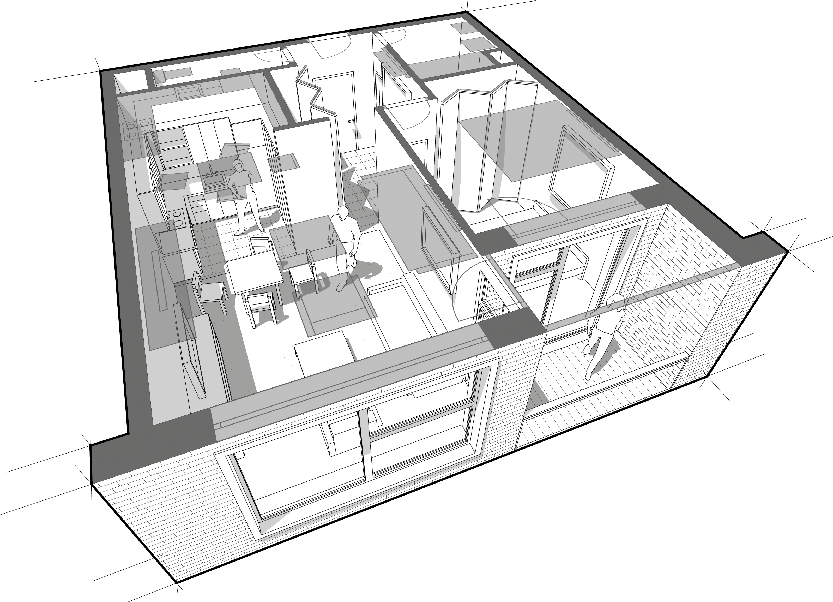
How can we help people with dementia live independently for longer?
PROBLEM
More people are developing dementia with a great personal and financial cost to society. With no existing cure for dementia, there is a need to find ways to support a person's dignity, physical and emotional wellbeing and extend their ability to live independently.
Dementia places a burden not just on the healthcare system but on individuals, families and networks of care. According to the Alzheimer's Research UK 820,000 people in the UK suffer from dementia and 25 million have a close friend or family member with the condition.2 It is predicted that by 2050 135 million people globally will have the disease.
Furthermore, social care costs for the elderly are growing and placing a greater burden on individuals, families and the healthcare system. With a growing global financial and social cost, an integrated care solution is required.
CASE
If a condition-altering treatment were developed that slowed symptoms, but did not reverse them, this could result in more people living longer with dementia.
Current assistive technology products involve devices that address specific needs, such as wayfinding, social interaction (e.g. Japan's Paro Therapeutic robot), memory or health management. Some robotics projects begin to integrate these domains, but they are still at early stages. Equally, social networks exist to support care systems, but these operate separately from other assistive technologies for dementia. An integrated system is required.
CHALLENGE
If Dementia wins the vote, the challenge for Longitude Prize 2014 will be to develop intelligent, yet affordable technologies that revolutionise care for people with dementia enabling them to live truly independent lives.
IMPACT
An integrated technological solution would allow dementia suffers to remain in their homes for longer, enabling carers to spend more quality, interactive social time with them. All would live in a world where care was more about interactional quality and less about everyday chores, meaning dementia became a less distressing disease.
FLIGHT
How can we fly without damaging the environment?
PROBLEM
The rapid growth of carbon emissions caused by air travel needs to be addressed to help tackle climate change. The potential of zero carbon flight has been demonstrated but it has had little impact on the carbon footprint of the aviation industry, which still relies almost exclusively on fossil fuels.
The 1999 Intergovernmental Panel on Climate Change (IPCC) study found that if aircraft carbon emissions continue to rise they could contribute up to 15 per cent of global warming from all human activities within 50 years. The majority of flights from UK airports are short haul, therefore to reduce emissions we need to find a sustainable solution to short haul air travel.
CASE
In order to reach global targets from the 2008 Climate Change Act, the world's first legally binding climate change target, air travel must be addressed. The UK has agreed to aim to reduce its greenhouse gas emissions by at least 80 per cent (from the 1990 baseline) by 2050.
So far, green flights have been achieved with small aircraft running on solar or battery power, but these have either been over short distances and/or have carried few people (e.g. Pipistrel Aircraft from Nasa's Green Flight Challenge or the Solar Impulse). We need to bring novel technologies into the mainstream to stimulate significant change. Like the original solution to find longitude at sea, this innovation could significantly change the capabilities of transport.
CHALLENGE
If Flight wins the vote, the challenge for Longitude Prize 2014 will be set to design and build a zero or close to zero carbon aeroplane that is capable of flying from London to Edinburgh, at comparable speeds to today's aircraft.
Competitors must also produce a design study with a technology maturation path for the general aviation aircraft of 2025. Then demonstrate a zero or close to zero carbon flight that can support that future vision and meet practical requirements for general aviation.
Importantly, this challenge should not just be a demonstration prize, but one that shows real practical applications.
IMPACT
This prize will promote the development of aviation that has the potential to make short haul air travel zero carbon. This will be the first step towards the application of zero carbon technology for the commercial airline industry.
FOOD
How can we ensure everyone has nutritious sustainable food?
PROBLEM
By 2050 it is estimated that 9.1 billion people will be living on our planet. As the world's population grows, gets richer and moves to cities, their tastes will turn to more resource-hungry foods such as meat and milk. In the face of limited resources and climate change, we must learn how to feed the world using less resources.
The problem is multifaceted; solving the global food supply problem is not just about tackling starvation. Many people are not starving, but they do lack micronutrients in their diets, making them unhealthy. We cannot rely on replicating carbon intensive and unhealthy western diets in order to solve this problem.
CASE
It is clear that the western diet impacts on the rest of the world. For instance increasing demand for meat may raise grain and land prices and commercial fishing practices can deplete stocks relied on by subsistence fishing communities.
The meat rich, varied, western diet which many aspire to enjoy, incurs huge environmental costs. The planet simply cannot support the increased demand generated by the spread of western habits. We're running out of room, we're running out of resources and we're running out of time. We need a new, big food innovation.
CHALLENGE
If Food wins the vote, the challenge for Longitude Prize 2014 will be set to invent the next big food innovation, helping ensure a future where everyone has enough nutritious, affordable and environmentally sustainable food that people want to eat. A successful solution will demonstrate benefit at a small scale now and show projections of the potential environmental and social impact of scaling up to provide for millions of people.
IMPACT
This prize will bring us a step further towards a sustainable and long lasting solution to addressing the complex global food imbalance. The solution will be scalable and have the potential to improve nutrition across the world in both rich and poor countries.
PARALYSIS
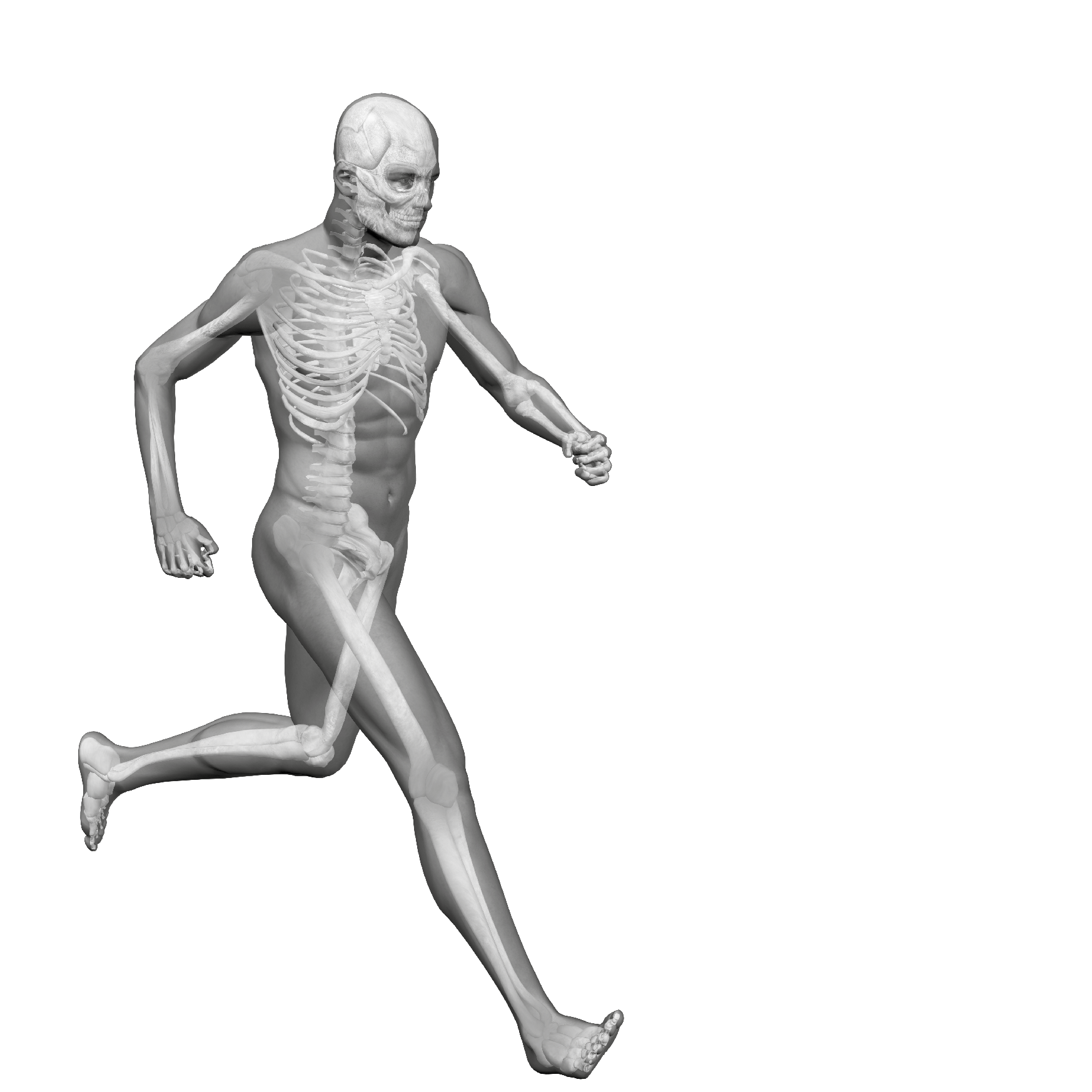
How can we restore movement to those with paralysis?
PROBLEM
Paralysis can emerge from a number of different injuries, conditions and disorders and the effects can be devastating. Every day can be a challenge when mobility, bowel control, sexual function and respiration are lost or impaired.
Paralysis can be the result of damage to pathways in the brain which affect motor function, such as in the case of a stroke or Parkinson's disease. Paralysis can also occur when communication is impaired between the brain and the spinal cord, or the spinal cord and the limb, as in the context of spinal cord injury.
CASE
Paralysis can be life changing. But with advances in neural interfaces, assistive technology and regenerative medicine there is the potential to overcome it. Bringing these disciplines together is the key to innovation within and across these fields.
Rehabilitation can be laborious and there is no effective treatment to restore the function of the limbs after serious injury. Brain controlled interfaces, nerve stimulation technologies, assistive technologies, wearable devices and regenerative medicine have the potential to restore the ability to conduct everyday activities and significantly improve quality of life. Many of these technologies however still need development and are currently too intrusive for everyday life.
CHALLENGE
If Paralysis wins the vote, the challenge for Longitude Prize 2014 will be set to invent a solution that gives people with paralysis close to the same freedom of movement that most of us enjoy.
It should be reliable over a long period of time, be comfortable to use, compatible with the user's body, improve the quality of life for the user and alleviate some of the broader challenges of paralysis beyond the loss of movement.
IMPACT
This prize has the potential to change the lives of many disabled people by restoring motor function, effectively making paralysis a curable condition. Collaboration between the fields of neuroscience and robotics will push forward new forms of computer-neural interface technologies for future applications both within and outside of medicine.
WATER

How can we ensure everyone has access to safe and clean water?
PROBLEM
Water is becoming an increasingly scarce resource. 98 per cent of the earth's water is too salty for drinking or agriculture, and one in ten of the world's population don't have access to safe drinking water. 44 per cent of the world's population and 28 per cent of the world's agriculture are in regions where water is scarce. As water requirements grow and our water reserves shrink, many are turning to desalination - but current technologies are too expensive and damage the environment.
As demand continues to increase alongside population and consumption, overuse and altered weather patterns due to climate change restrict water supply. The implications go beyond drinking, when drought hits agricultural regions food prices rise. As populations converge in cities, demand for water soars whilst pollution from the accompanying development and industry may impact local supply.
CASE
Existing desalination plants represent billions of pounds of upfront investment. Developed nations may struggle to abandon and/or replace them outright, even if offered a significantly more energy efficient technology. Some technologies formerly regarded as promising were never able to leave the lab, and others have been in lab development for decades.
Alongside the output of clean water, desalination plants are also left with the contaminants, usually in the form of concentrated brine. This brine can further pollute the nearby water supply. This is a particular problem when drawing water from enclosed seas or limited ground supplies.
CHALLENGE
If Water wins the vote, the challenge for Longitude Prize 2014 will be set to alleviate the growing pressure on the planet's fresh water by creating a cheap, environmentally sustainable desalination technology. It should demonstrate low carbon, sustainable production of water for drinking or agriculture.
IMPACT
The technology produced by this prize could provide a new sustainable source of fresh water to those that need it most. The solution will also help to ensure future food security by finding cheaper and more efficient supplies of water for irrigation in dry regions.
ANTIBIOTICS
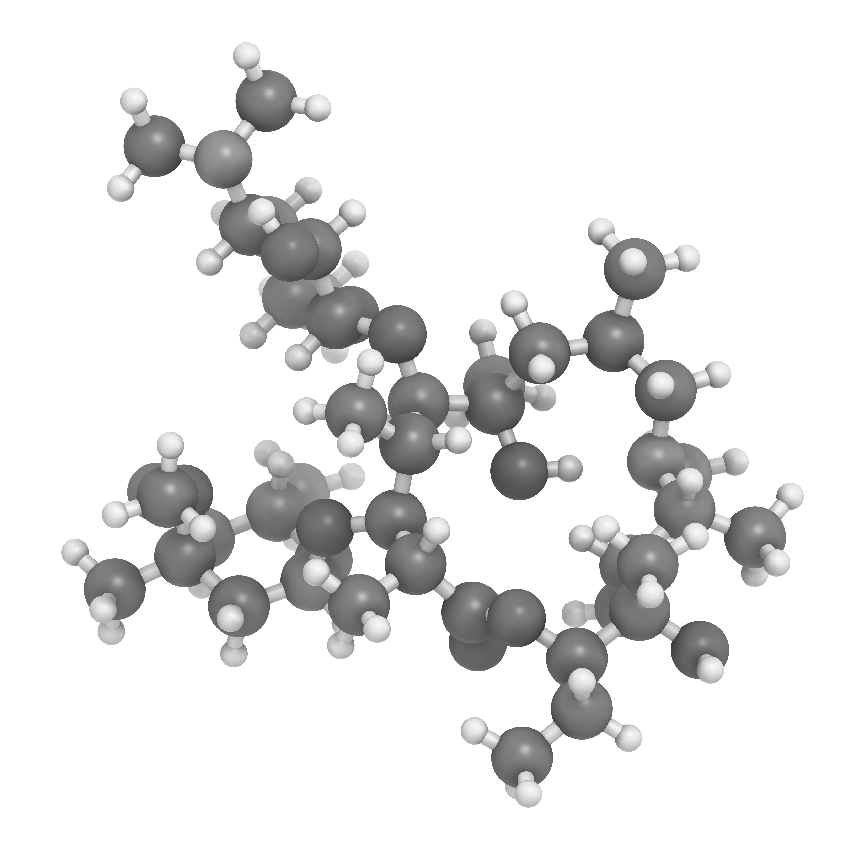
How can we prevent the rise of resistance to antibiotics?
PROBLEM
The development of antibiotics has been vital to our survival, yet the rise of antimicrobial resistance is threatening to make them ineffective in the future. The World Health Organization estimates that antibiotic treatments add an average of 20 years to all of our lives. But in the 80 years since the discovery of penicillin, our overuse of antibiotics has put pressure on bacteria to evolve resistance, leading to the emergence of untreatable superbugs that threaten the basis of modern medicine.
Clinicians often prescribe broad spectrum antibiotics to sick patients because doctors have to act quickly on imperfect information. These methods put selective pressure on microbes to evolve resistance to antibiotics.
CASE
Radical change is needed to address the global problem of growing anti-microbial resistance, to ensure a health care system that can sustainably control and treat infections.
We cannot outpace microbial evolution. A new broad-spectrum antibiotic, if applied with current methods, would eventually meet new forms of resistance. The overall solution involves a long term path towards a more intelligent use of antibiotics enabling a future of more effective prevention, targeted treatments and smart clinical decision support systems.
CHALLENGE
If Antibiotics wins the vote, the challenge for Longitude Prize 2014 will be set to create a cheap, accurate, rapid, and easy to use test for bacterial infections that will allow doctors and nurses all over the world to better target their treatments, administering the right antibiotics at the right time.
IMPACT
Point-of-care test kits will allow more targeted use of antibiotics and an overall reduction in misdiagnosis and prescription. This will ensure that the antibiotics we have now will be effective for longer and we can continue to control infections during routine and major procedures.
AN INITIATIVE OF
FUNDING PARTNER
SUPPORTED BY
Nesta...
Technology Strategy Board Driving Innovation
BBC
NATIONAL MARITIME MUSEUM
-
To find out more about The Centre for Challenge Prize's bespoke prize design process see ‘Challenge Prizes: A practical guide.' Available at: www.nesta.org.uk/challenge-prizes-practice-guide ↩